
Cancer Survivors Lead the Charge Against Radiotherapy Myths at Texas Cancer Centre
By Peace Muthoka
NAIROBI, Kenya, September 7, 2026 — The fear that once gripped Nancy Andwati when she first heard the word “radiotherapy” has now transformed into something far more powerful: a mission to save lives by speaking truth to misconception.
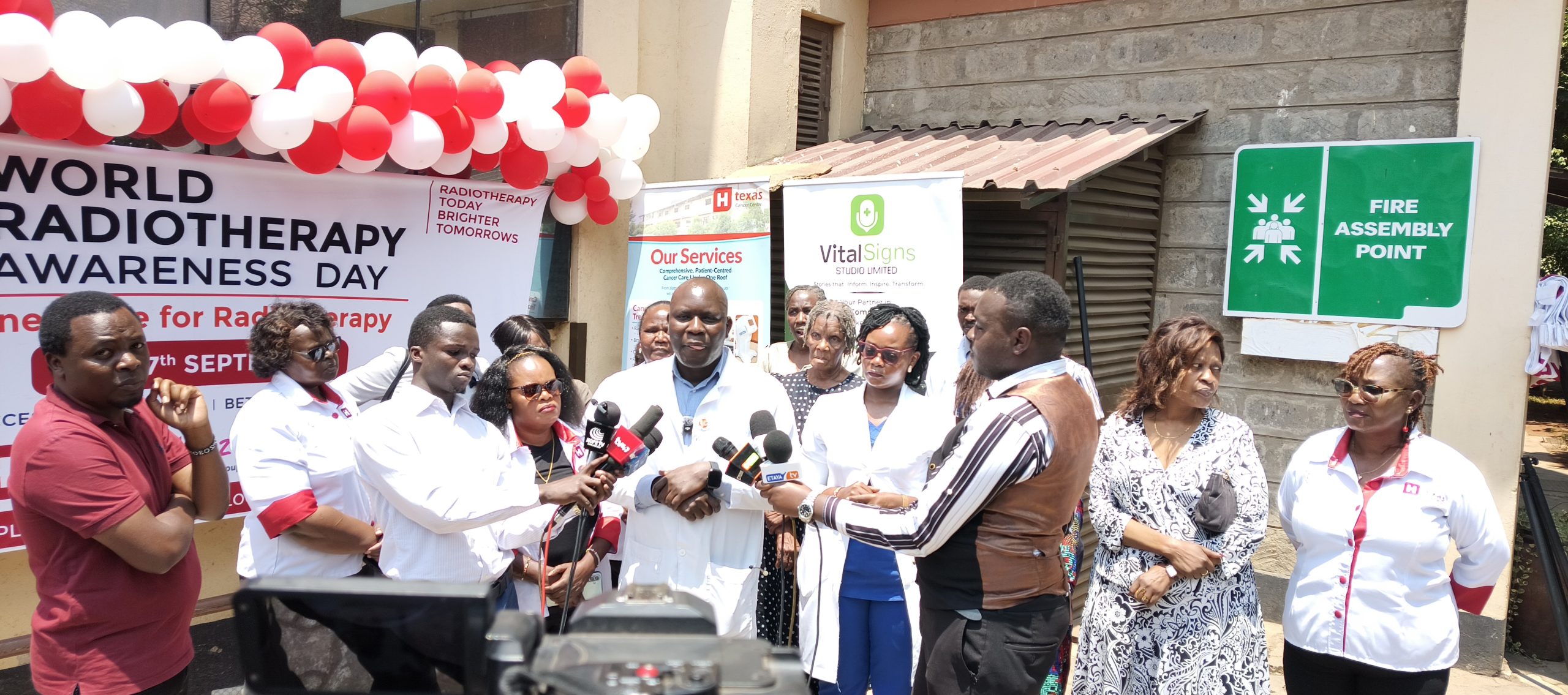
Standing before fellow survivors, healthcare professionals, and stakeholders at Texas Cancer Centre along Raila Odinga Road, Andwati recounted the journey that began with a stage-four cancer diagnosis in September 2021. By January 2022, she was deep in treatment—chemotherapy, surgery, and finally 25 sessions of radiotherapy, each one administered every morning.
“When I first heard the word radiotherapy, I was scared because of what I had heard about it,” she confessed to the gathering, held under the theme “One Voice for Radiotherapy.” Yet the reality, she emphasised, was far from the terrifying tales that circulate in whispers and on social media. The targeted radiation destroyed the cancer cells that chemotherapy and surgery might have left behind, significantly reducing the risk of recurrence.
She experienced fatigue and occasional pain, but she followed every instruction from her doctors, oncologists, and radiotherapy technicians without wavering. That discipline, she believes, is what carried her through.
Andwati’s voice grew firmer as she addressed a troubling trend she has witnessed firsthand: patients abandoning professional medical care for expensive herbal remedies and unproven alternatives peddled by people without oncology training. Some, she said, have lost their lives because they delayed or abandoned proper treatment.
“I want people to know that even at stage four, you can survive,” she declared, her own life standing as living proof.
Behind her, Dr George Obonyo, a cancer specialist at Texas Cancer Centre, offered the clinical backbone to her testimony. He explained that radiotherapy harnesses high-energy radiation to damage cancer cells and prevent them from multiplying. The treatment can be delivered externally using a linear accelerator—commonly known as a LINAC—or internally through brachytherapy, a technique particularly effective for cervical, vaginal, vulval, endometrial, and prostate cancers. Systemic radiation, administered orally or intravenously, is also used for certain thyroid cancers.
Dr Obonyo stressed that radiotherapy is not a one-size-fits-all intervention. It can cure cancer outright, relieve symptoms in advanced disease, or destroy residual cells after surgery. For patients with locally advanced cancers, it is often combined with chemotherapy to maximise outcomes. The treatment plan, he noted, depends entirely on the type and stage of cancer, while side effects vary according to the area being treated.
“Radiotherapy is a form of cancer treatment just like chemotherapy,” Dr Obonyo said, urging patients not to let radiation-related misconceptions steer them away from life-saving care.
The awareness event was not merely an educational exercise; it was a call to action. Texas Cancer Centre used the occasion to push for greater investment in cancer treatment technology, infrastructure, financing, and a skilled oncology workforce. The message was clear: access to radiotherapy must expand, and public understanding must deepen, if Kenya is to turn the tide against a disease that claims far too many lives unnecessarily.
For Andwati, however, the day carried a deeply personal resonance. She reflected on the contrast between her chemotherapy experience and her radiotherapy sessions, noting that she would personally choose the latter daily if given the choice though she acknowledged that every patient responds differently. Her advice to those enduring pain, joint aches, or other side effects was simple: speak to your doctor. Do not stop treatment on your own.
She closed her remarks with a declaration that silenced the room, not through volume, but through the weight of survival.
“Today is one radiotherapy day to celebrate my life,” she said.
And in that celebration, Texas Cancer Centre found its most potent weapon against fear: a survivor willing to stand up and say that the end of a cancer diagnosis is not the end of life but often, the beginning of a new one.