
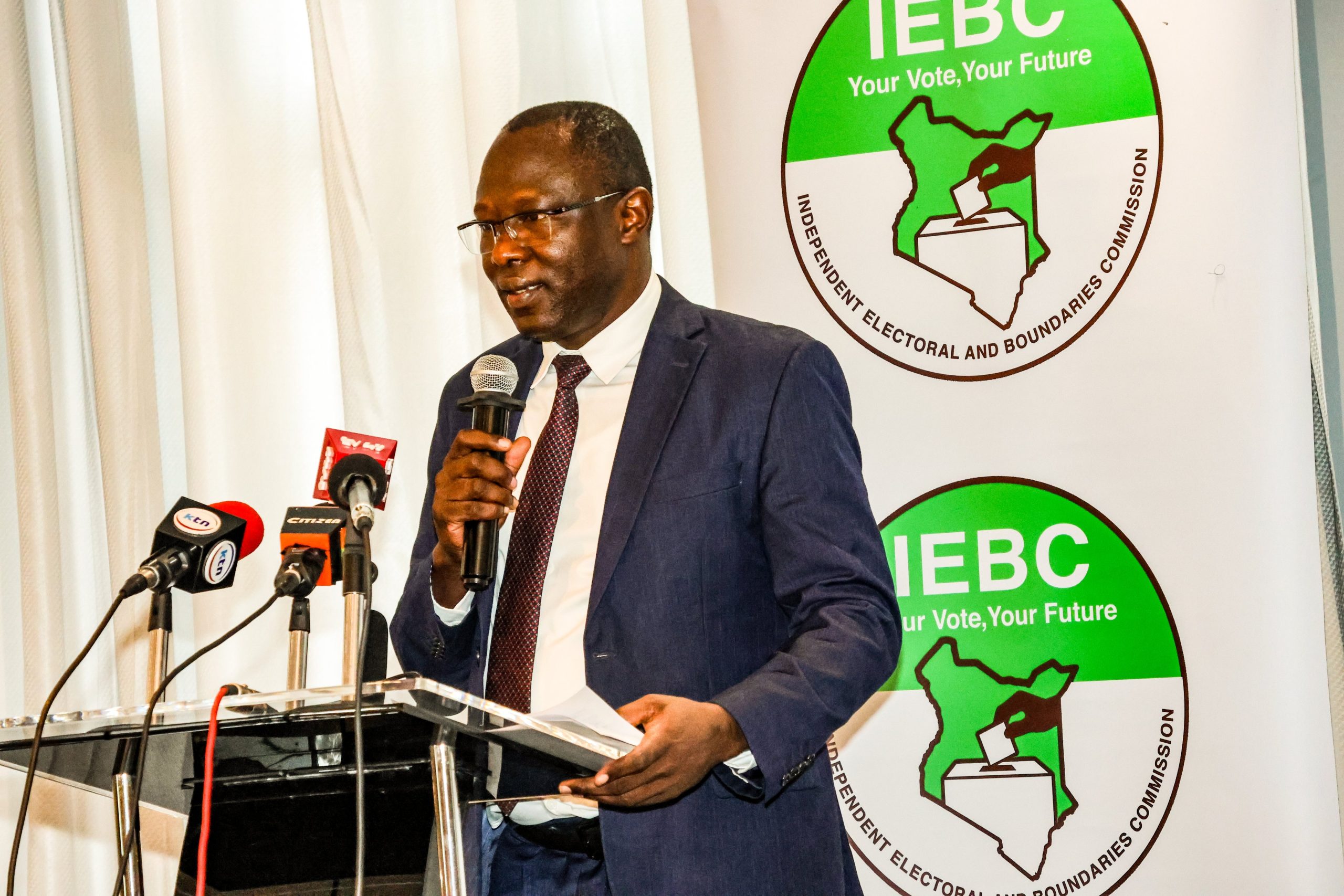
IEBC Chairperson Erastus Edung Ethekon
By Peace Muthoka
Nairobi, Monday — The Independent Electoral and Boundaries Commission (IEBC) today convened a high-level Stakeholder Engagement Forum at the Radisson Blu Hotel, bringing together political parties, civil society, security agencies, observer missions, and the media to review the November 27th by-elections. The forum, supported by the Centre for Multiparty Democracy (CMD-Kenya), provided an open and constructive platform to assess the Commission’s performance and map out priority areas ahead of upcoming polls.
IEBC Chairperson Erastus Edung Ethekon delivered a clear and candid briefing on the electoral process, detailing the Commission’s preparations and operational milestones. He highlighted the recruitment and training of election officials, deployment and performance of KIEMS kits, enforcement of the Electoral Code of Conduct, and the Commission’s coordination in managing diverse security environments across 22 electoral areas.
Under his leadership, he noted, the by-elections recorded significant operational gains. Polling stations opened on schedule, KIEMS kits delivered over 99 percent functionality, vote counting was transparent, and results were transmitted promptly. He also commended the strong collaboration with security agencies and the efficient handling of disputes and complaints.
Despite the successes, Ethekon acknowledged challenges such as voter apathy, attempts to influence election officials, logistical limitations, misinformation, and isolated security incidents in select counties. He stressed that all issues were addressed firmly and professionally to safeguard the integrity of the vote.
Commission Secretary and CEO Marjan Hussein Marjan, MBS, applauded IEBC staff, security teams, political actors, media, observers, and community leaders for ensuring orderly polling, timely deployment of materials, and smooth voter identification through KIEMS. He noted that the scale of conducting elections in 22 areas offered valuable insights into the Commission’s logistical capacity, field operations, and stakeholder engagement. The participation of 173 observer groups, voter educators, and the media significantly reinforced transparency and voter confidence.
Marjan underscored the need for continuous improvement, pointing to persisting gaps around voter apathy, logistics, misinformation, and isolated security challenges. Electoral management, he said, is an ongoing learning process that demands adaptive planning, stronger coordination, and proactive communication.
The Chairperson further revealed that the Commission’s operational readiness was secured through a KSh 798 million budget allocation, which helped cushion initial delays in exchequer releases. Recruitment, vetting, and training of officials were completed on time, supported by extensive voter education campaigns delivered through media platforms, observers, and community outreach initiatives.
Ethekon also commended the Dispute Resolution Committee for enforcing the Electoral Code of Conduct during the Kasipul Constituency by-election, where fines were issued to candidates who breached campaign rules. He urged political aspirants especially those preparing for the 2027 General Election to avoid rushing to the media with unverified claims. Instead, he encouraged them to channel grievances through Returning Officers, including himself, as he will serve as the Presidential Election Returning Officer in 2027.
Today’s forum ended with renewed commitment among all stakeholders to strengthen Kenya’s electoral processes, deepen public trust, and ensure future polls uphold the highest standards of transparency, credibility, and efficiency.