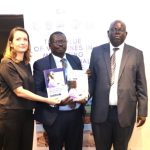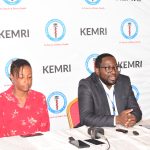
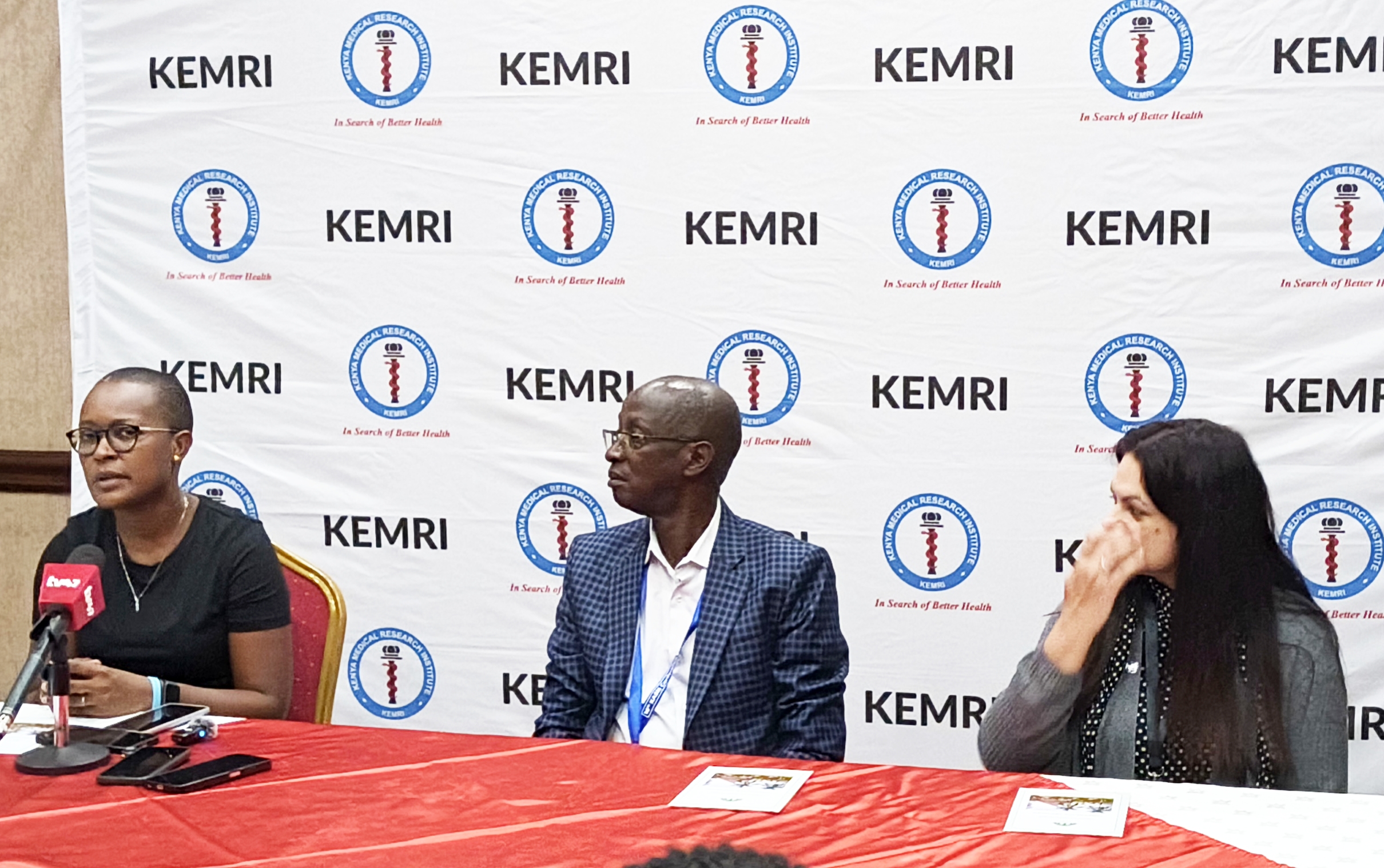
(L-R) Dr. Sophie Uyoga, Research Scientist at the KEMRI-Wellcome Trust Research Programme and Deputy Director at the KEMRI Centre for Geographic Medicine Research–Coast; Dr. Frederick Sawe, Director of the Henry Jackson Foundation for the Advancement of Military Medicine Kenya Program under the Kenya Medical Research Institute–Walter Reed Army Institute of Research collaboration in Kericho; and Sandhya Vasan, Director of the HJF Component of MHRP and EIDB, during the KASH Conference in Nairobi
By Peace Muthoka
Nairobi, February 13, 2026 – The Kenya Medical Research Institute (KEMRI), working closely with the Walter Reed Army Institute of Research, is strengthening HIV research and care across Western Kenya. Together, they are focusing on HIV cure studies, expanding diagnostic services, and testing long-acting treatments that could ease the burden of daily medication.
Speaking during the 16th KEMRI Annual Scientific and Health Conference, Dr. Frederick Sawe said the collaboration operates on a strong partnership model. KEMRI hosts Walter Reed, with support from the Henry Jackson Foundation, creating a structure that blends global expertise with local leadership.
At the heart of this partnership is the Kericho program, built on two main pillars: medical research and direct HIV care. The program serves patients across Kericho, Nandi, Homa Bay, and Narok counties. Every year, the facility conducts about 250,000 HIV viral load tests, giving doctors crucial information to monitor treatment and make timely decisions.
For many patients, these tests mean more than just numbers. They mean reassurance. They mean clarity. And most importantly, they mean hope.
Beyond HIV testing, the center also provides advanced tuberculosis diagnostics, especially for complicated or drug-resistant cases referred from across the region. This dual focus on HIV and TB addresses two diseases that often intersect and continue to affect thousands of families in Western Kenya.
However, as research moves toward finding a cure, Dr. Sawe acknowledged that confusion remains among the public. Some clinical trials involve what doctors call medically supervised treatment interruption. In simple terms, patients temporarily stop taking their medication under strict medical supervision to help scientists understand whether the virus can remain suppressed without drugs.
Unfortunately, this process has sparked fear and misunderstanding.
“We need to demystify HIV cure research. There is a lot of misunderstanding,” Dr. Sawe said. He called for stronger engagement with healthcare workers, civil society groups, religious leaders, and the media to ensure communities receive clear and accurate information.
Without proper communication, he warned, misinformation could slow down progress and weaken public trust.
At the same time, researchers are exploring long-acting HIV treatments, including injectable drugs that patients may only need every few months instead of taking pills daily. Such treatments could transform lives, especially for people who struggle with adherence due to stigma, busy schedules, or limited access to clinics.
Yet challenges remain.
Affordability is a major concern. While global pressure has opened doors for generic production, strong supply chains, trained health workers, and reliable infrastructure are necessary to make these drugs widely available. The Kericho team is now studying how these injectable treatments can be delivered efficiently in resource-limited settings like many parts of Western Kenya.
Globally, only a few patients have achieved sustained HIV remission, often after complex procedures such as bone marrow transplants. These rare cases prove that a cure is scientifically possible. However, such procedures are risky and not practical for widespread use.
That is why sub-Saharan Africa must play a central role in cure research.
“The world needs us. We have the patients and can generate the data that benefits everyone,” Dr. Sawe said. He noted that the Kericho facility operates at international standards, allowing its findings to contribute directly to global scientific efforts.
Sub-Saharan Africa is home to nearly two-thirds of people living with HIV. This reality places the region not only at the center of the epidemic but also at the center of the solution.
As trials continue, Dr. Sawe expressed cautious optimism. Sustained remission without lifelong therapy may one day become achievable. However, he stressed that research alone is not enough. Communities must understand the science. Health systems must remain strong. And investments must continue.
While there is still no HIV vaccine, prevention tools have improved significantly over the years. Since 2012, pre-exposure prophylaxis, commonly known as PrEP, has offered protection to people at risk of infection. In 2015, the World Health Organization recommended tenofovir-based oral PrEP for people at substantial risk of HIV.
When taken correctly, oral PrEP is highly effective. Researchers are now exploring additional prevention options, including multipurpose products that combine HIV prevention with contraception.
For communities across Western Kenya, these scientific advances are not abstract concepts. They touch real lives—mothers protecting their children, young people safeguarding their futures, and families hoping for a day when HIV no longer defines their story.
In Kericho, that future is being shaped one test, one trial, and one breakthrough at a time.