
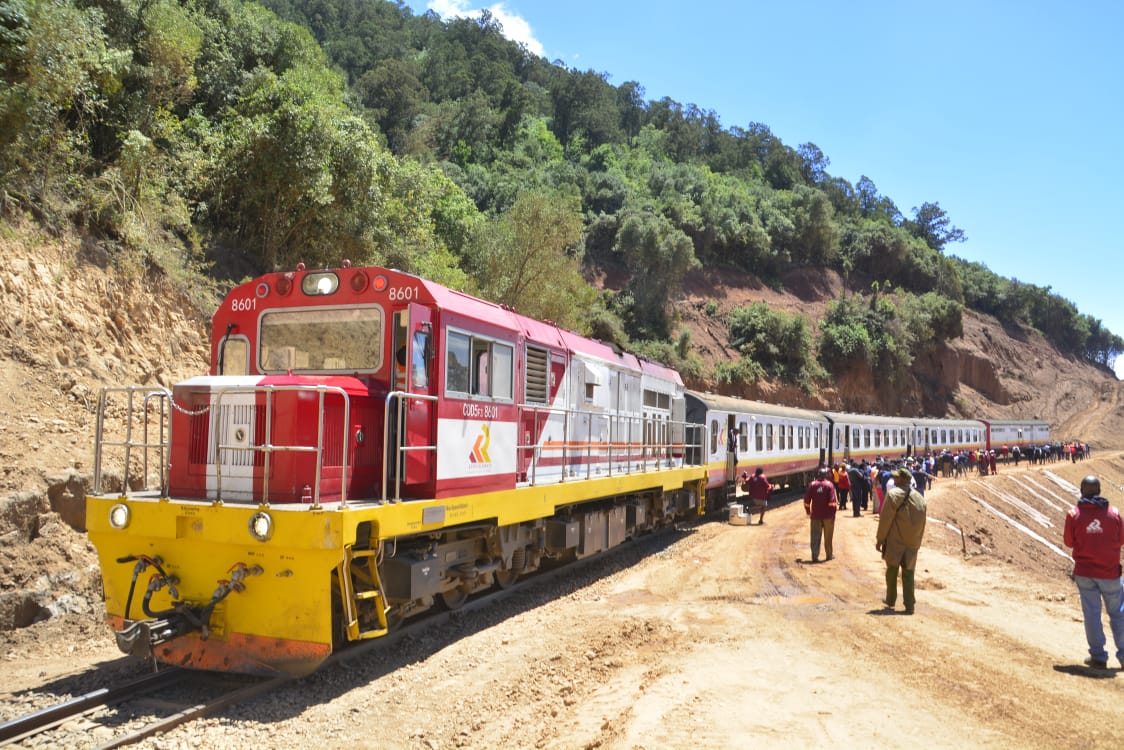
Photo Courtesy: Elijah Odanga
Kijabe Line Lives Again as Trains Return After Months of Silence
By Peace Muthoka.
NAIROBI, Kenya, January 19,2026 — The hills of Kijabe are no longer quiet. After months of waiting, watching and worrying, trains are ready to pass through again. Kenya Railways has completed successful test runs on the Uplands–Kijabe–Longonot section, marking the return of a railway line that floods tried, but failed, to erase.
For Kenya Railways Managing Director Philip Mainga, the moment carried weight. Standing near the repaired tracks, he spoke with the tone of someone revisiting a painful chapter and finally closing it.
“This railway has remained strong and resilient for over 136 years,” Mainga said. “But around April and May 2024, God sent a lot of rain in our country.”
The rain did more than fall. It tore through the hills. It swept away culverts. It damaged about 12 kilometres of track. Six kilometres collapsed completely. By May 2024, trains had to stop.
As a result, cargo bound for western Kenya and neighbouring countries stalled. Farm inputs delayed. Produce waited. Steel and containers piled up. A corridor that links Mombasa to the wider region went silent.
When Mainga and his team first came to assess the damage, the scale shocked them.
“We did the first round from this site and we could not move around,” he said. “We could not come this way.”
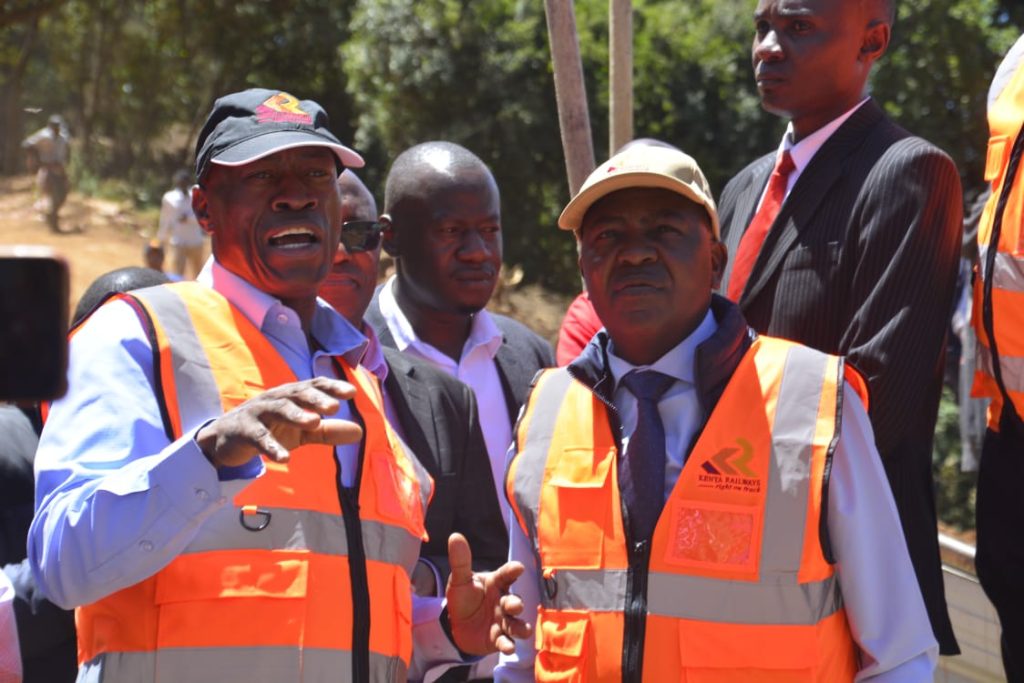
At that point, the decision became unavoidable. Kenya Railways brought in a contractor to rebuild the broken section. What followed was one year and seven months of dangerous, exhausting work in steep terrain.
Moving around the site was a risk on its own.
“When work was going on here, if you went down the culvert, you could not come up,” Mainga said. “You either went down and went home, or you came up and stayed on top.”
Workers operated on sharp slopes. Machines crawled where people feared to walk. Some drivers refused to continue.
“There are drivers who came here and ran away,” Mainga said. “But these guys stayed.”
They handled caterpillars. They drove lorries. They operated tavers. They worked under the earth and inside culverts. Day after day, they showed up.
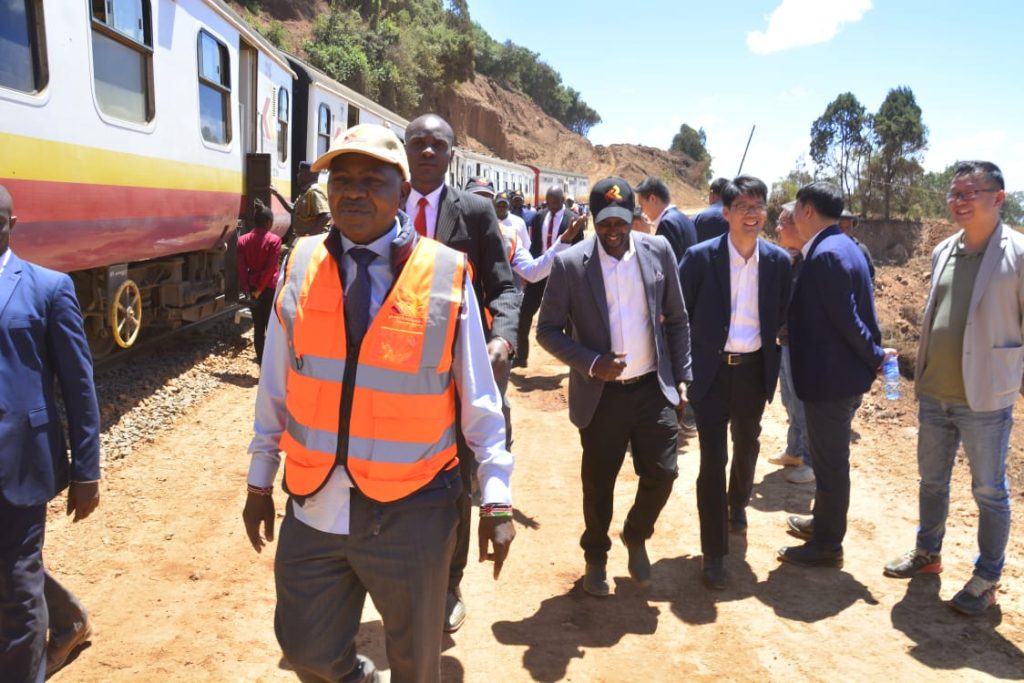
For Mainga, their safety mattered as much as the tracks.
“These people worked in a very risky environment, and we have not lost anybody,” he said. “They are all safe, and we thank God for that.”
That relief runs deep. The memory of loss still lingers along this line.
“In 2023, during culvert works at kilometre 606, water came suddenly,” Mainga recalled. “It found our staff inside and swept them away. One succumbed.”
That tragedy shaped how the current works unfolded. Every completed section felt personal.
Now, the transformation is visible.
“It is amazing that we can sit here,” Mainga said. “This area was not a place to sit.”
As the inspection moved from one point to the next, confidence grew.
“I don’t know what has been done,” he said, smiling. “But it has been done very well.”
The journey was not smooth. Disagreements surfaced. Payments delayed progress. Tensions rose.
“We had a lot of fights with the contractor at times,” Mainga admitted. “But we engaged. We agreed. And the commitment brought us this far.”
With final tests complete, Kenya Railways has reopened the line to operations. Trains will now move from Kijabe through Longonot and all the way to Malaba.
“From today, we are opening this line to operations,” Mainga said. “From this section all the way to Malaba, this line should be stable.”
The reopening carries regional significance. This is not just a Kenyan railway.
“This line was not repaired because of Kenya alone,” Mainga said. “It is because of our partners in the East African Community.”
From Mombasa, the line stretches through Nairobi, Nakuru and Eldoret. It crosses Malaba and pushes on to Kampala, Tororo and beyond. It serves Uganda, Rwanda, South Sudan and the Democratic Republic of Congo.
As Mainga spoke, a Congo-bound train waited nearby.
“That train will help move much-needed cargo from Mombasa,” he said.
At the same time, Kenya Railways has resumed activity on the Nakuru–Kisumu feeder line. Lake transport will also pick up pace. MV Uhuru I and MV Uhuru II will return to work.
“We now have two exits to the region,” Mainga said. “We must use them.”
Regional partners have followed every step closely. Calls kept coming.
“They kept asking us, ‘When are you completing Kijabe?’” Mainga said.
Now, the answer stands in steel and stone.
As trains prepare to roll again, Mainga reflected on the line’s roots. In 1896, the railway arrived in these hills. It brought more than transport.
“Kijabe Hospital and the schools you see here were born from this railway,” he said. “They came from Ijambe Railway Station.”
More than a century later, that same railway has risen again. It carries history. It carries trade. Most of all, it carries people’s hope.
“This is the artery that serves the region,” Mainga said. “And today, it is back.”