
TISA Calls for Protection of Indigenous Seeds, Greater Support for Women Farmers
By Peace Muthoka
NAIROBI, November 17, 2026 – The Institute for Social Accountability (TISA) has called for stronger protection of indigenous seeds and greater investment in women farmers, warning that unequal access to agricultural resources and limited recognition of traditional farming knowledge threaten food security and sustainable food production.
The organisation said protecting indigenous seeds was critical to preserving agricultural biodiversity, strengthening farmers’ resilience to changing environmental conditions and ensuring communities retain control over their food systems.
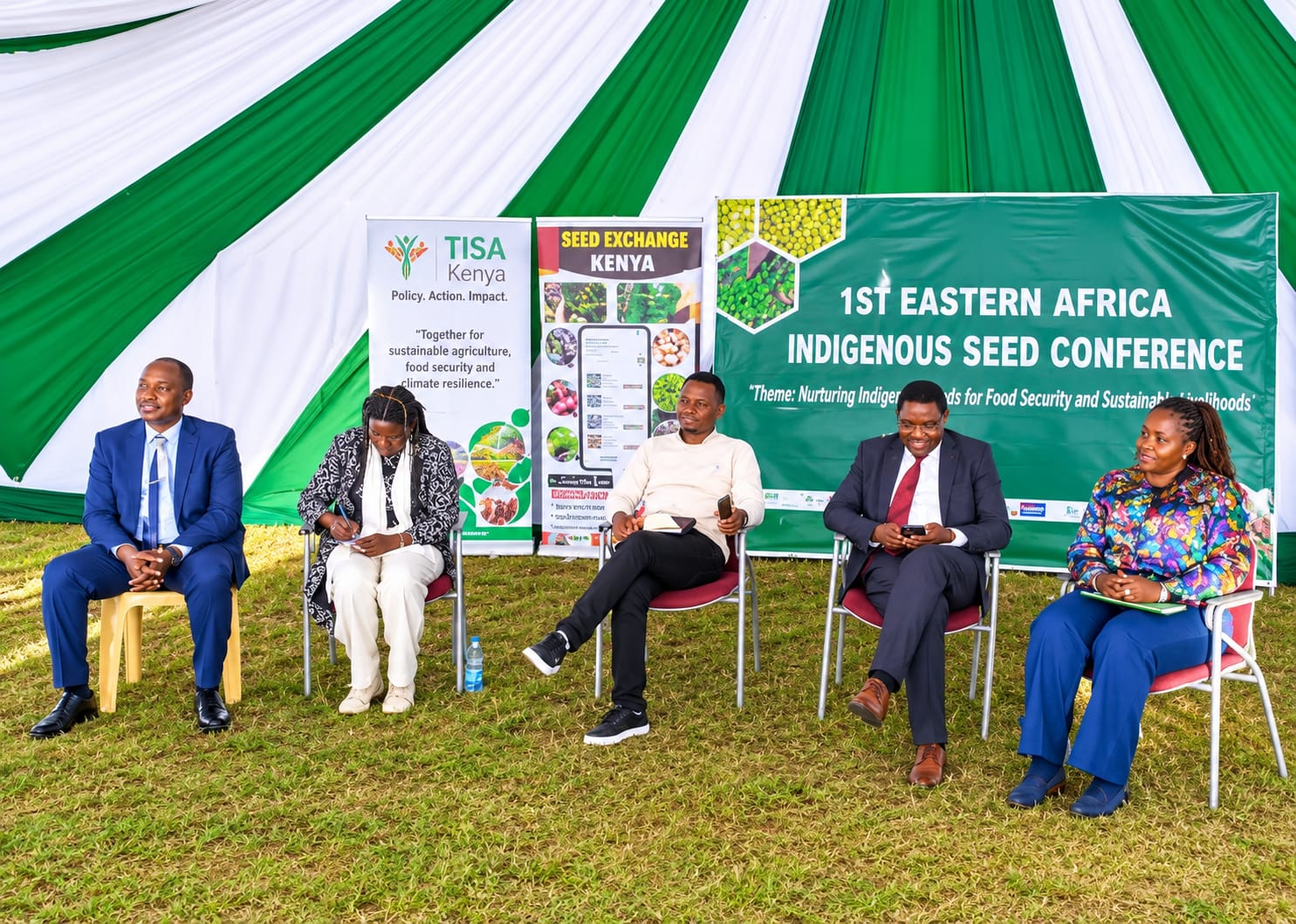
The call was made during discussions held on the sidelines of the first East Africa Indigenous Seed Conference, which brought together farmers, policymakers, civil society organisations and development partners to explore ways of strengthening community-led seed systems across the region.
Judy Nyokabi, Happy Family Captain, said indigenous maize varieties remained important to farming communities because of their ability to withstand long-term storage, adapt to local growing conditions and provide food for both households and livestock.
She noted that preserving traditional seeds was not only about maintaining different crop varieties but also ensuring that agricultural knowledge passed down through generations was not lost.
Nyokabi said community training and mobilisation had encouraged farmers to embrace indigenous seed preservation, leading to the establishment of a Community-Based Organisation (CBO) dedicated to promoting traditional seed varieties.
She added that the initiative had received positive support from residents, with farmers increasingly participating in seed exchange programmes and working towards establishing a community seed bank to conserve indigenous varieties.
At the county level, Kiambu County Executive Committee Member for Agriculture Wilfred Mwenda called for policies that give farmers access to a wider range of seeds, including indigenous varieties suited to their local environments.
Mwenda said Kiambu County had made progress in promoting sustainable farming through the development and enactment of the Kiambu County Agroecology Development Policy and the Agroecology Development Act 2026.
He said the frameworks support indigenous seeds, traditional breeding practices and natural food production, urging other counties to adopt similar legislation to strengthen agroecological farming and improve farmers’ access to diverse seed varieties.
Meanwhile, Canada Seed Change Gender and Social Inclusion Analyst Dr Sheila Rao said building effective seed systems required more than introducing agricultural technologies, noting that community participation, infrastructure and institutional support were equally important.
Rao observed that women played multiple roles in seed production, preservation and exchange but continued to face inequalities that limited their participation and influence in agricultural decision-making.
She said inadequate data on women’s contribution to seed systems had contributed to the challenges they faced, making it difficult to address the barriers affecting their access to agricultural resources and opportunities.
Rao called for increased access to funding, agricultural inputs and decision-making platforms for women and resource-constrained communities, saying their contribution to food production should be matched with meaningful support.
She also emphasised the need to educate farmers on existing laws and intellectual property frameworks governing seeds to ensure they understood their rights to seed ownership, access and control.
The discussions highlighted the importance of combining community initiatives with supportive government policies to build seed systems that recognise the contribution of women and protect farmers’ traditional knowledge.
The first East Africa Indigenous Seed Conference brought together TISA, Welthungerhilfe (WHH), the Food and Agriculture Organisation (FAO), the SUN Civil Society Alliance Network Kenya and the Right to Food Coalition, among other stakeholders, to discuss the future of indigenous seeds and gender-responsive food systems in the region.