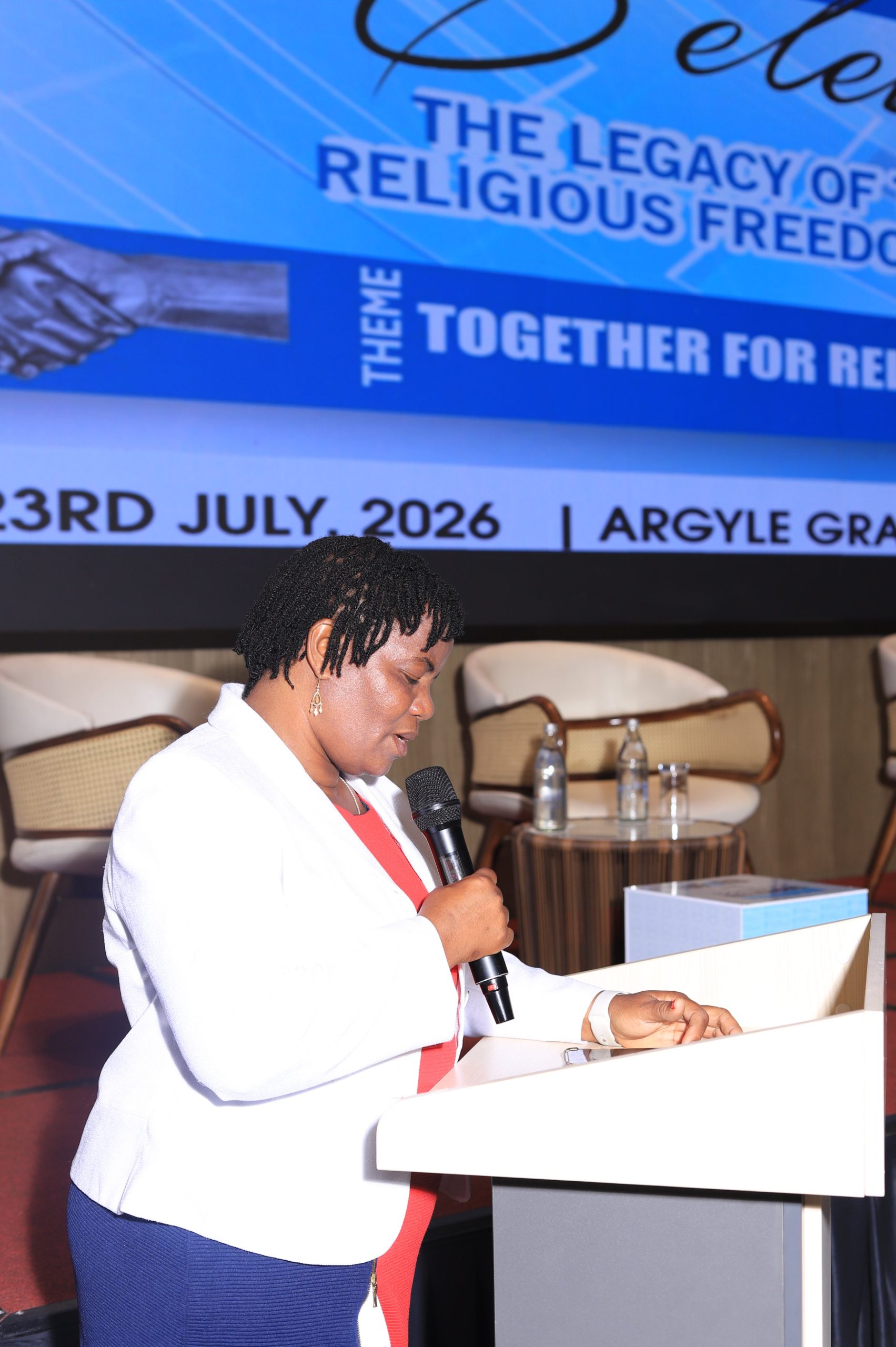
Phyllis Muema, Director of the Kenya Community Support Centre (KECOSCE).
By Peace Muthoka
NAIROBI, Kenya — A two-year peacebuilding initiative has strengthened cooperation between communities and security agencies, advanced the protection of religious freedom and helped shape more inclusive security policies in Garissa, Lamu and Tana River counties.
The achievements were highlighted during a national dialogue forum that brought together government agencies, Members of Parliament, civil society organisations, faith leaders and community representatives to review the impact of the Together for Religious Freedom project and discuss how its gains can be sustained.
The initiative was implemented by a consortium led by Search for Common Ground in partnership with the Kenya Community Support Centre (KECOSCE) and other organisations. The project focused on protecting freedom of religion and belief while promoting peaceful coexistence, accountability and collaboration between citizens and state institutions.
Speaking during the forum, Phyllis Muema, Director of the Kenya Community Support Centre (KECOSCE), said the programme was designed to strengthen community resilience to violent extremism while ensuring that security interventions respect constitutional rights.
She said the project sought to bridge the gap between communities and security agencies by promoting dialogue, accountability and trust, particularly in counties that have experienced insecurity, marginalisation and violent extremism.
“Although freedom of religion and belief is guaranteed under the Constitution, we have seen instances where security operations overlooked these rights. Through this programme, we have worked to ensure that citizens receive dignified services while security agencies carry out their mandate in a manner that respects human rights,” Muema said.
She noted that the programme strengthened interfaith dialogue and equipped communities with the skills to engage constructively with security institutions, helping reduce tensions and improve cooperation in addressing local security concerns.
According to Muema, the project also encouraged government agencies and service providers to become more sensitive to religious practices, reducing conflicts that previously arose when security measures interfered with worship and other religious activities.
Beyond promoting religious freedom, the initiative addressed long-standing human-wildlife conflict in Tana River County by engaging the Kenya Wildlife Service (KWS) over delayed compensation for victims of elephant and crocodile attacks.
Muema said sustained engagement under the programme contributed to the allocation of Sh179 million to compensate about 180 families affected by human-wildlife conflict.
“For many years, affected communities received little or no response despite suffering significant losses. We are pleased that sustained dialogue has resulted in compensation for these families,” she said.
The project also partnered with the National Counter Terrorism Centre (NCTC) to promote a human rights-based approach to preventing violent extremism.
Muema said the initiative challenged narratives linking terrorism to religion, noting that extremist groups often exploit religious teachings to recruit vulnerable young people.
“Terrorism has no religion. It targets innocent citizens and seeks to undermine democracy. No religion supports terrorism,” she said.
She added that communities are now working more closely with security agencies by reporting early signs of radicalisation and addressing local grievances before they can be exploited by extremist groups.
The programme also sought to rebuild trust between citizens and law enforcement agencies through dialogue and accountability.
While acknowledging that confidence in the police remains low in many parts of the country, Muema said community-level engagement has improved relations in the target counties, with women and young people increasingly feeling safe to report security concerns.
“Police officers are public servants just like teachers and healthcare workers. Communities deserve professional, accountable and dignified policing,” she said, adding that sustaining local partnerships will be key to maintaining public trust.
Search for Common Ground Country Director Judy Kimamo said the programme has shown that protecting freedom of religion and belief is essential to building lasting peace and strengthening community security.
She said the project promoted human rights, religious freedom and peaceful coexistence in Garissa, Lamu and Tana River, counties that continue to face complex security challenges linked to violent extremism.
“Over the past 22 months, we have witnessed important policy and institutional shifts that have expanded the protection of rights and freedoms through the promotion of freedom of religion and belief,” Kimamo said.
She said one of the project’s greatest achievements has been strengthening collaboration between communities and security agencies, enabling local residents to play a more active role in preventing violence and resolving conflicts before they escalate.
According to Kimamo, women, youth and faith leaders have become key partners in peacebuilding, while community-led early warning and early response systems have improved coordination in identifying emerging threats.
She highlighted successful collaborations involving women’s groups in Lamu, including refugee women from Dadaab, who have worked alongside security agencies to safeguard the rights of minority religious communities and promote peaceful coexistence.
Kimamo also said the initiative encouraged public participation in discussions on policies and legislation aimed at addressing religious intolerance and preventing the misuse of religion to fuel extremism.
In addition, she noted that some schools reviewed practices that had previously limited learners from minority faiths, making learning environments more inclusive.
The project reached more than 203,000 people through community dialogues, media campaigns and public awareness initiatives, significantly increasing understanding of religious freedom, inclusive security and peaceful coexistence.
“The lessons from this programme demonstrate that when communities, government institutions, religious leaders and civil society work together, it is possible to build trust, protect rights and create sustainable peace,” Kimamo said.
She added that the consortium has documented the project’s experiences in a learning brief that will guide future peacebuilding initiatives and support continued collaboration between communities and government institutions in addressing security challenges across Kenya’s border counties.