MPs Pledge Bigger Budget for KEMRI to Strengthen Health Research and Homegrown Innovations
By Peace Muthoka
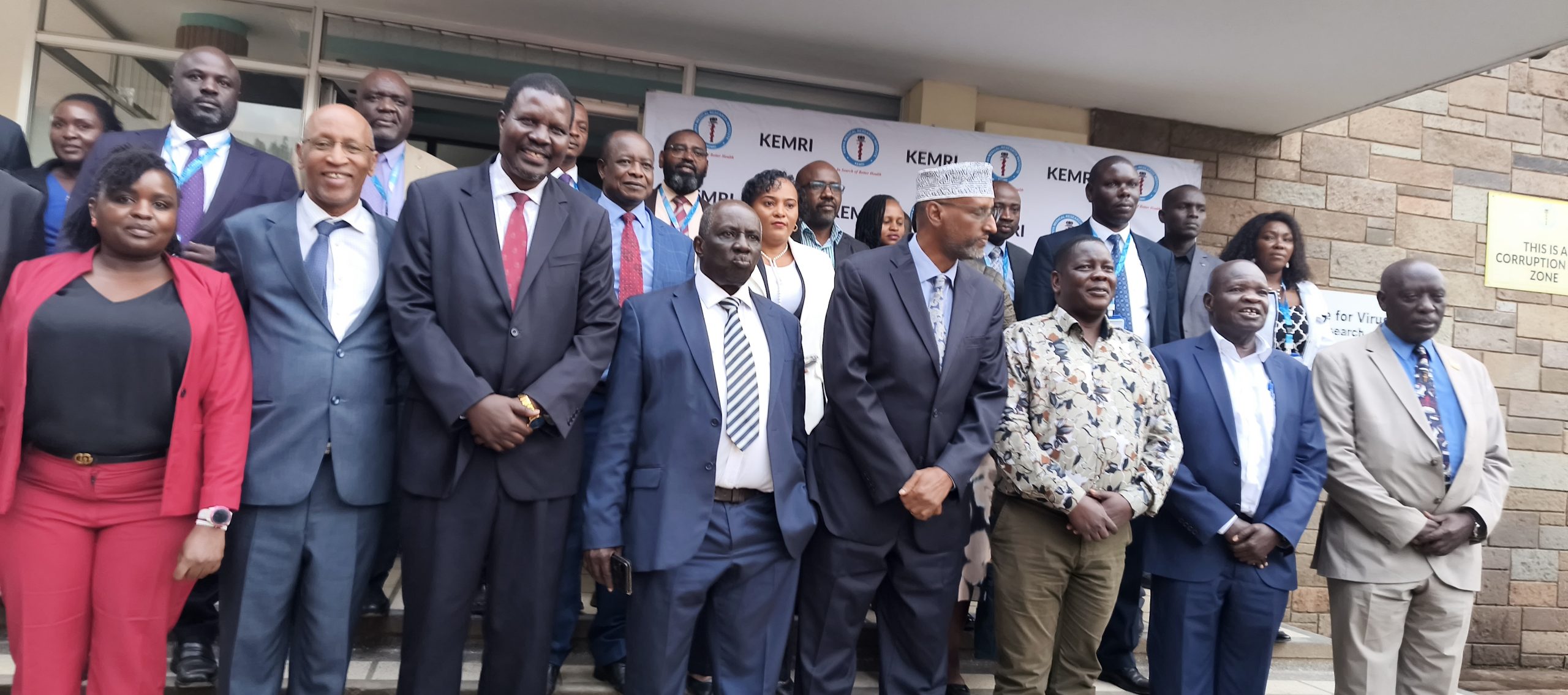
NAIROBI, Kenya — Members of the National Assembly Departmental Committee on Health have pledged to support increased funding for the Kenya Medical Research Institute (KEMRI), citing the institution’s growing contribution to health research, disease surveillance and the development of locally produced medical innovations.
The commitment followed an oversight visit to KEMRI’s Nairobi facilities, where the lawmakers assessed the institute’s research capacity, infrastructure projects, innovation programmes and overall contribution to Kenya’s health security.
Led by Committee Chairperson and Seme MP Dr. James Nyikal, the delegation began its tour at the KEMRI Multi-Phase Laboratories, Training and Office Facility currently under construction within the Kenyatta National Hospital Complex. The MPs also inspected the Biosafety Level 3 (BSL-3) High Containment Laboratory before touring several research centres at KEMRI headquarters, including the newly established Polio Laboratory.
The visit ended with a consultative meeting involving the parliamentary committee, the KEMRI Board and the institute’s senior management. Discussions centred on funding requirements, commercialisation of research innovations, infrastructure expansion and ways of strengthening collaboration among Kenya’s health research institutions.
Speaking after the tour, Dr. Nyikal praised KEMRI for its achievements, describing the institute as one of the country’s most important pillars in medical research and public health.
He noted that KEMRI had entered a new phase following the award of its university charter, which now allows the institution to offer its own academic programmes while continuing to lead advanced medical research.
“The institution now has a dual responsibility of carrying out cutting-edge research while training the next generation of health professionals. That calls for stronger institutional structures and adequate government support,” said Dr. Nyikal.
He added that the committee was impressed by the quality of KEMRI’s laboratories and research infrastructure, saying the institute continues to strengthen Kenya’s ability to detect, monitor and respond to disease outbreaks.
In addition, Dr. Nyikal observed that KEMRI has developed numerous innovations, including vaccines, diagnostic tools, medical products and other technologies with significant commercial value. However, he noted that many of these innovations have yet to reach the market.
He said putting in place effective commercialisation mechanisms would enable KEMRI to generate additional revenue, reduce its dependence on donor funding and ensure that locally developed medical solutions benefit more Kenyans.
The committee also acknowledged the institute’s growing financial needs, particularly for ongoing infrastructure projects. According to Dr. Nyikal, KEMRI requires about KSh500 million to complete the Nairobi laboratory complex, alongside additional resources for similar projects in other parts of the country.
“We have seen the progress that has been made and appreciate the importance of these investments. We shall consider these funding needs as we undertake our budget responsibilities,” he said.
KEMRI Director-General Prof. Elijah Songok welcomed the lawmakers, describing the visit as an important opportunity to demonstrate how public investment has strengthened research, innovation and public health in Kenya.
He noted that the oversight visit was the first by Parliament since KEMRI attained its university charter, marking a significant milestone in the institution’s history.
At the same time, Prof. Songok clarified that although KEMRI is now a specialised degree-awarding institution, it remains under the Ministry of Health, while the Ministry of Education oversees only its academic functions.
“Our core mandate remains health research, innovation and capacity building to improve healthcare and public health outcomes in Kenya,” he said.
Prof. Songok also urged Parliament to champion policies that would enable KEMRI-developed products to access government markets through the Buy Kenya, Build Kenya initiative.
He explained that locally developed innovations including vaccines, diagnostic kits, sanitisers and traditional medicine products still face regulatory and procurement challenges despite their proven potential.
“If locally developed innovations receive government support and priority in public procurement, they will not only improve healthcare delivery but also stimulate local manufacturing and create jobs,” he said.
Furthermore, the Director-General called for increased domestic investment in scientific research, revealing that nearly 70 per cent of KEMRI’s research funding currently comes from international partners.
He argued that greater government investment, including dedicated seed funding for research, would allow the institute to pursue national health priorities more effectively while attracting additional support from global partners.
The visit underscored KEMRI’s expanding role in disease surveillance, outbreak preparedness, vaccine development, evidence-based policymaking and the implementation of Kenya’s Universal Health Coverage agenda.
As Parliament prepares future budget allocations, both the Health Committee and KEMRI expressed optimism that stronger collaboration, sustained government funding and increased support for locally developed innovations will position the institute to drive scientific excellence, improve healthcare outcomes and enhance Kenya’s preparedness for future public health challenges.