
Kenya Launches 2026–2036 Bioeconomy Strategy to Drive Jobs, Investment and Value Addition
By Peace Muthoka
NAIROBI, Kenya — Kenya has launched its National Bioeconomy Strategy 2026–2036, a 10-year framework aimed at transforming the country’s biological resources into higher-value products, industries and jobs while strengthening research, innovation, investment and sustainable development.
The strategy, developed under the State Department for Science, Research and Innovation, seeks to connect research and innovation with enterprise development, finance and markets. It also promotes the sustainable use of biological resources to create new economic opportunities and support green growth.
Speaking during the launch in Nairobi on Monday, Principal Secretary for Science, Research and Innovation Professor Shaukat Abdulrazak said the strategy would provide a clear framework for unlocking the economic potential of Kenya’s biological resources.
The strategy targets the mobilisation of Sh100 billion by 2036, with investments expected to support the development of bio-based industries, value chains, research, innovation and sustainable jobs.
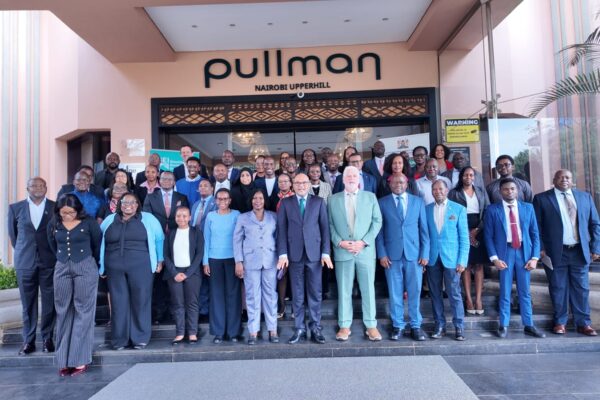
The launch brought together government officials, researchers, development partners, entrepreneurs and other stakeholders involved in advancing Kenya’s bioeconomy.
Niall O’Connor, Centre Director of the Stockholm Environment Institute (SEI) Africa Centre, said Kenya was not starting its bioeconomy journey from scratch, noting that biological resources already underpin a significant part of the country’s economy.
“Kenya’s bioeconomy is not new. It’s something that’s been here a long time and it’s developing,” O’Connor said.
He said the priority should now be to make the existing bioeconomy more productive, innovative, sustainable and attractive to investors.
According to O’Connor, agriculture accounts for about 24 per cent of Kenya’s gross domestic product and provides livelihoods for roughly 72 per cent of the population, while bioenergy supplies an estimated 68 per cent of the country’s energy demand.
He said East Africa has significant potential to develop industries based on agricultural residues, organic waste and other biological resources, creating opportunities in areas such as renewable energy, bio-based materials, fertilisers, animal feeds and industrial products.
“The opportunity is substantial,” O’Connor said, noting that the region has rich biodiversity, strong agricultural production, abundant organic waste and a young entrepreneurial population.
He cited biodegradable packaging, industrial enzymes, natural fibres, renewable oils, bio-based construction materials, biogas and locally adapted biorefineries among the areas with potential for value addition, import substitution and green job creation.
O’Connor, however, said governments and other stakeholders must address challenges that continue to prevent promising innovations from becoming competitive industries.
He called for a shift from exporting raw biological resources to processing and manufacturing them locally, saying this would allow countries to retain more value within their economies.
He also urged stakeholders to move beyond isolated pilot projects by creating stronger networks linking producers, researchers, processors, financiers, technology providers and buyers.
“Enterprises need patient capital, reliable biomass supplies, quality assurance, shared infrastructure, stronger management and access to markets,” he said.
O’Connor said many promising innovations remain dependent on grants and small-scale pilot projects because they lack the financing and support needed to scale up.
He also highlighted sustainable energy as a critical area for the region’s bioeconomy, noting that biomass already provides a major share of household energy in East Africa but is often used inefficiently, with negative health and environmental consequences.
He said the focus should therefore be on sustainable biomass supply systems, clean cooking technologies and alternatives to unsustainable charcoal, including biogas, bioenergy and briquettes.
O’Connor further called for stronger regional cooperation, harmonised standards and certification systems to help bio-based enterprises access larger markets.
He said the State of the Bioeconomy in East Africa 2026 report, the third in a biennial series, highlights the progress made across the region and identifies areas requiring further investment and policy support.
According to O’Connor, East African countries must also strengthen research-industry linkages, technology transfer, industrial skills and financing mechanisms suited to the longer-term needs of bio-based enterprises.
He said the region should also improve monitoring of the economic contribution of the bioeconomy by tracking indicators such as employment, enterprise growth, trade, value addition and bioenergy.
O’Connor urged governments to ensure that the development of the bioeconomy remains sustainable and inclusive, warning that biological resources must be managed within ecological limits.
He said communities, women and young people should benefit from the emerging opportunities, adding that the success of the bioeconomy should ultimately be measured by the number of enterprises that grow, jobs created and incomes generated.
The strategy is expected to provide a roadmap for Kenya to move from research and innovation towards commercially viable bio-based industries while contributing to sustainable economic growth and environmental protection.