
University Academic Staff Launch Strike Over Delayed CBA, Unpaid Dues and Sh13 Billion Funding Shortfall
By Peace Muthoka
NAIROBI — University academic staff have officially launched a nationwide strike, demanding that the government honour a return-to-work agreement, address outstanding financial obligations and implement a collective bargaining agreement covering the 2025–2029 period.
The striking staff, represented by the Universities Academic Staff Union (UASU), say they will remain off duty until the government addresses their grievances, which include delayed salary-related payments, harmonisation of allowances, funding for car loans and the release of funds through the Exchequer rather than reliance on student fees.
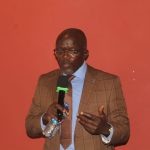
Speaking during the strike, Technical University of Kenya (TUK) Organising Secretary Leonard Siro said the government had failed to honour a return-to-work formula signed with the university, despite the agreement being backed by a court order.
Siro said the government had also failed to provide the institution with promised strategic intervention funding, while years of inadequate capitation had left the university with a shortfall estimated at Sh13 billion.
He said the funding deficit had affected staff welfare, including pension contributions and bank deductions, leaving many employees facing financial difficulties.
“Our pension is inside there. Our bank deductions are inside there. Most of us are on CRB,” Siro said, referring to the Credit Reference Bureau, where some employees have been listed over outstanding credit obligations.
He further lamented that staff were unable to access health cover through the Social Health Authority (SHA), saying the university’s financial constraints had affected its ability to meet the required payments.
Siro described the implementation of the return-to-work formula as a minimum requirement for resolving the dispute, urging the government to honour the commitments it had already made.
“Can the government honour the return-to-work formula signed by the Technical University of Kenya?” he posed.
David Wangunyu, the Organising General Secretary of the UASU TUK Chapter, said the strike followed a seven-day notice issued by the unions over three major grievances.
The first concerns the negotiation, signing, registration and implementation of the 2025–2029 collective bargaining agreement (CBA), which Wangunyu said remains unresolved despite being among the issues raised in the strike notice.
The second is the need for a firm government commitment to fund collective bargaining agreements and other staff-related obligations.
Wangunyu opposed the practice of relying on student fees to pay university employees, arguing that staff salaries should be guaranteed through government funding.
“You do not tell a police officer you will be paid out of the number of people you have arrested. So why are you telling us as university workers that we will be paid out of student fees?” he asked.
He said university workers had rejected the arrangement and were demanding a sustainable funding framework that would ensure their salaries and other obligations are met.
The third grievance concerns generic human resource instruments proposed by the Public Service Commission (PSC). Wangunyu argued that matters contained in the instruments should be negotiated between unions and their employers rather than imposed without meaningful consultation.
He said the unions would not accept any move that undermined their role in negotiating employment terms, citing Article 41 of the Constitution, which guarantees workers’ labour rights.
Wangunyu called for purposeful public participation to ensure that the views of university workers are considered before the instruments are adopted.
He also criticised what he described as a pattern in which agreements reached during negotiations with the Cabinet Secretary for Education and the Principal Secretary for Education are not followed through during implementation.
“We sit down, we sign documents, we negotiate, we come to an agreement, and then when it comes to implementation, all of a sudden that is forgotten. We are not going to allow that,” he said.
The union official urged the government to take the workers’ concerns seriously and ensure that negotiated agreements are implemented.
As the strike takes effect, Wangunyu appealed to students to stay at home and use their money for other needs until the government addresses the dispute.
He maintained that the academic staff would not relent until their concerns were resolved, calling on government officials responsible for the education sector to fulfil their obligations.
The strike places renewed pressure on the government and university management to address the funding and labour disputes affecting public universities, with academic staff insisting that negotiated agreements must translate into tangible action.