From Empty Stomachs to Full Classrooms: Viwandani School Calls for Equal Access to Nairobi’s Feeding Program
By Peace Muthoka
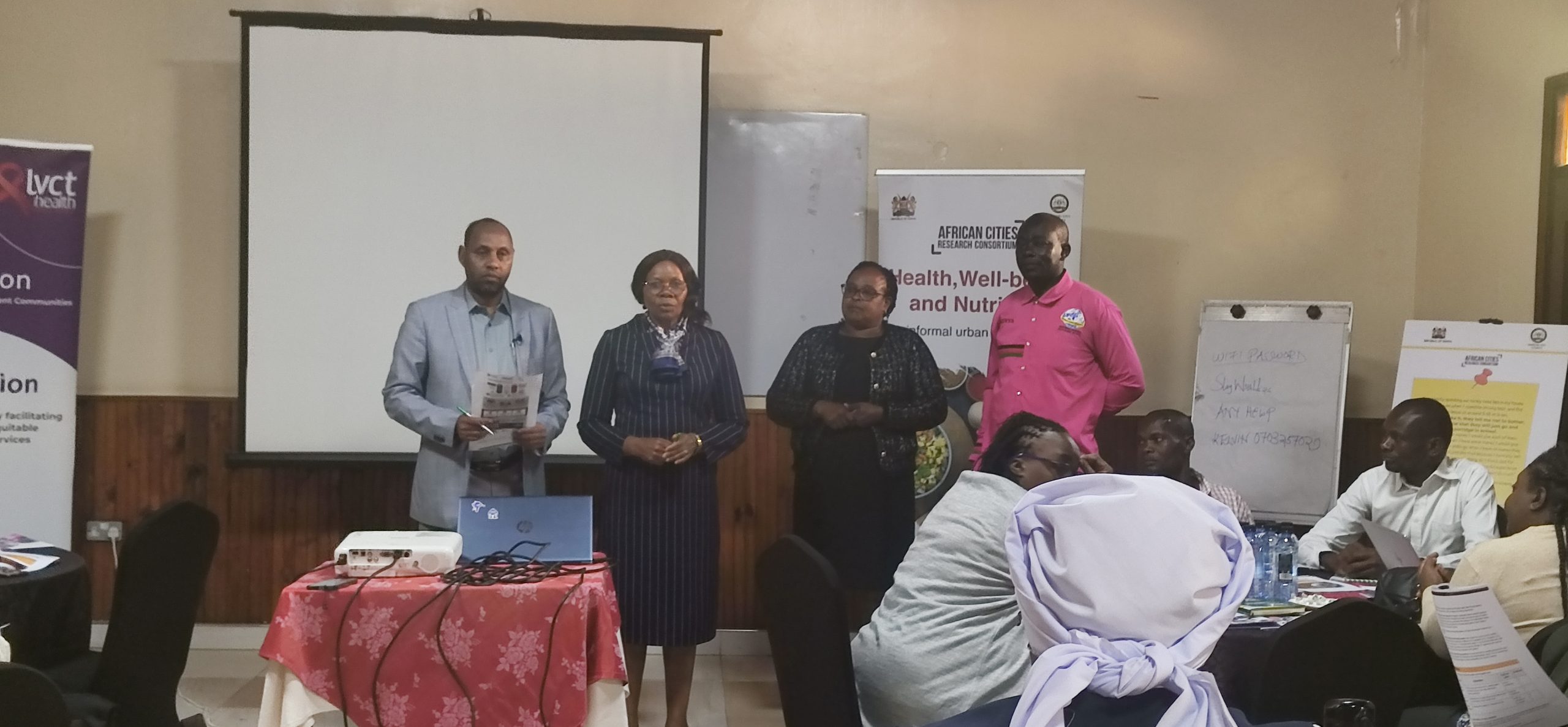
During a press conference held on the 26th February 2026 in Nairobi, education stakeholders and other leaders gathered to address a growing concern in the city’s informal settlements: the link between hunger and learning. In the informal settlement of Viwandani, within Makadara Constituency, the sound of utensils clanging in a modest school kitchen has become a symbol of hope. For many children, that sound represents more than lunchtime—it signals relief, dignity, and the difference between staying in school and walking away.
Lunga Lunga Baptist School, Head Teacher Amos Kuremu has witnessed firsthand how hunger shapes a child’s academic journey. Addressing participants at the forum, he spoke with urgency and conviction about his school’s feeding initiative and the broader inequality affecting children in informal schools.
“So far, we have implemented a model that we tried to adopt from other institutions. And this model concerns feeding programs. The whole thing is about feeding the children,” Kuremu said.
A Necessary Intervention
The school launched its feeding program in May 2025, charging parents 30 shillings per plate. Although the initiative has improved attendance and classroom concentration, the cost remains a heavy burden for many families.
“We are charging 30 shillings per plate,” Kuremu explained. “But it is also a challenge to most of the parents. They are not able to pay.”
In Viwandani, where many households survive on informal daily wages averaging around 200 shillings, the financial strain is evident. A parent with three children must spend 90 shillings each day on meals alone—nearly half of their daily income.
Nevertheless, Kuremu insists that the alternative is far more costly.
“You cannot leave a child hungry and then expect results when it comes to academics,” he said firmly. “Lack of food in schools will lead to low performance. It will also lead to absenteeism.”
Before the feeding program began, the impact of hunger was visible. Pupils would report to school early in the morning, ready to learn. However, by mid-afternoon, many would leave in search of food and fail to return.
“Before the start of the feeding program, most children reported to school early,” Kuremu recalled. “But at around two o’clock, when we allowed them to go home to find something to eat, they did not come back.”
Instead, some children wandered toward the banks of the Ngong River, where mounds of garbage locally known as “takataka” became a survival ground.
“They would collect plastic bottles and metals to sell,” he said. “They could get 10 or 20 shillings just to buy food.”
For teachers, watching pupils trade textbooks for trash bags was heartbreaking.
Research Strengthens the Case
The challenges facing Lunga Lunga Baptist School are echoed in findings released by LVCT Health. The organization conducted a study examining school feeding models in informal settlements across Nairobi.
“My name is Inviolata Njoroge. I am a researcher with LVCT Health,” she said during the forum. “The aim of the study was to increase access to healthy diets for children in informal schools and informal settlements.”
Researchers worked with four schools two in Viwandani and two in Mathare developing a co-created feeding model informed by lessons from existing programs, including the county-led Dishi na County initiative.
“What we learned is that school feeding programs are really appreciated,” Njoroge explained. “Most of the children in informal schools come from vulnerable families and lack access to basic nutrition. School feeding becomes a very important avenue for physical development and future potential.”
However, the study also highlighted a stark inequality. Under Dishi na County, parents in public schools contribute just five shillings per meal due to heavy subsidies. In contrast, parents in informal private schools must pay 30 shillings.
“If you compare the 30 shillings and the 5 shillings,” Njoroge noted, “it means the 30 shillings a parent pays per day could feed a child in the county program for a week and even one extra day.”
As a result, many parents recommended extending Dishi na County to include informal, low-cost private schools commonly known as APBET schools.
“Children are children,” Njoroge emphasized. “If there is a public good that the government is running, then children in informal schools have a right to it.”
She further proposed that even a partial subsidy such as 15 shillings per plate could significantly reduce the financial burden. Additionally, support in kitchen infrastructure, water supply, and energy could make school-based feeding programs more sustainable.
County Promises Expansion
Representing Nairobi City County, a representative acknowledged both the success of Dishi na County and the need for inclusivity.
“Nairobi City County is the only county in the country implementing Dishi na County, targeting over 300,000 children, especially in public schools,” the representative said. “We are here to receive findings from LVCT and partners on how we can improve and possibly integrate APBET schools.”
According to the representative, the results of the program have been significant.
“Attendance has increased. Absenteeism has reduced. Performance has improved,” he stated. “Some schools that previously had about 1,000 pupils now have over 2,000 because of the feeding program.”
Consequently, some children have transferred from informal schools to public schools in order to access subsidized meals.
“There is a lot of need for school feeding programs across the county,” he added. “All children are equal to us in terms of health and education.”
While he did not provide a specific timeline, he confirmed that discussions are underway to expand the program. “It is a multi-sectoral approach,” he explained. “We require partnerships, donors, and increased budgets. We also need policies and guidelines to ensure the program continues consistently not just for one term, but sustainably.”
Beyond Food, A Question of Equity
Ultimately, the debate is not merely about meals it is about fairness.
“We do not have children who are public or private,” Kuremu said. “All children should be given an opportunity to access food.”
As the press conference concluded, one message stood out clearly: hunger undermines education, while nutrition empowers it. Where feeding programs exist, classrooms fill and performance improves. Where they do not, children drift away sometimes to the streets, sometimes to garbage dumps.
In Viwandani and other informal settlements across Nairobi, a simple plate of food has become a powerful equalizer—restoring dignity, strengthening learning, and giving children a reason to remain in school.
The pressing question now is whether that promise can be extended to every child—so that in Nairobi, no pupil is forced to choose between education and their next meal.