
GBB Forum in Nairobi Connects Green Startups to Capital for Industrial Growth
By Peace Muthoka
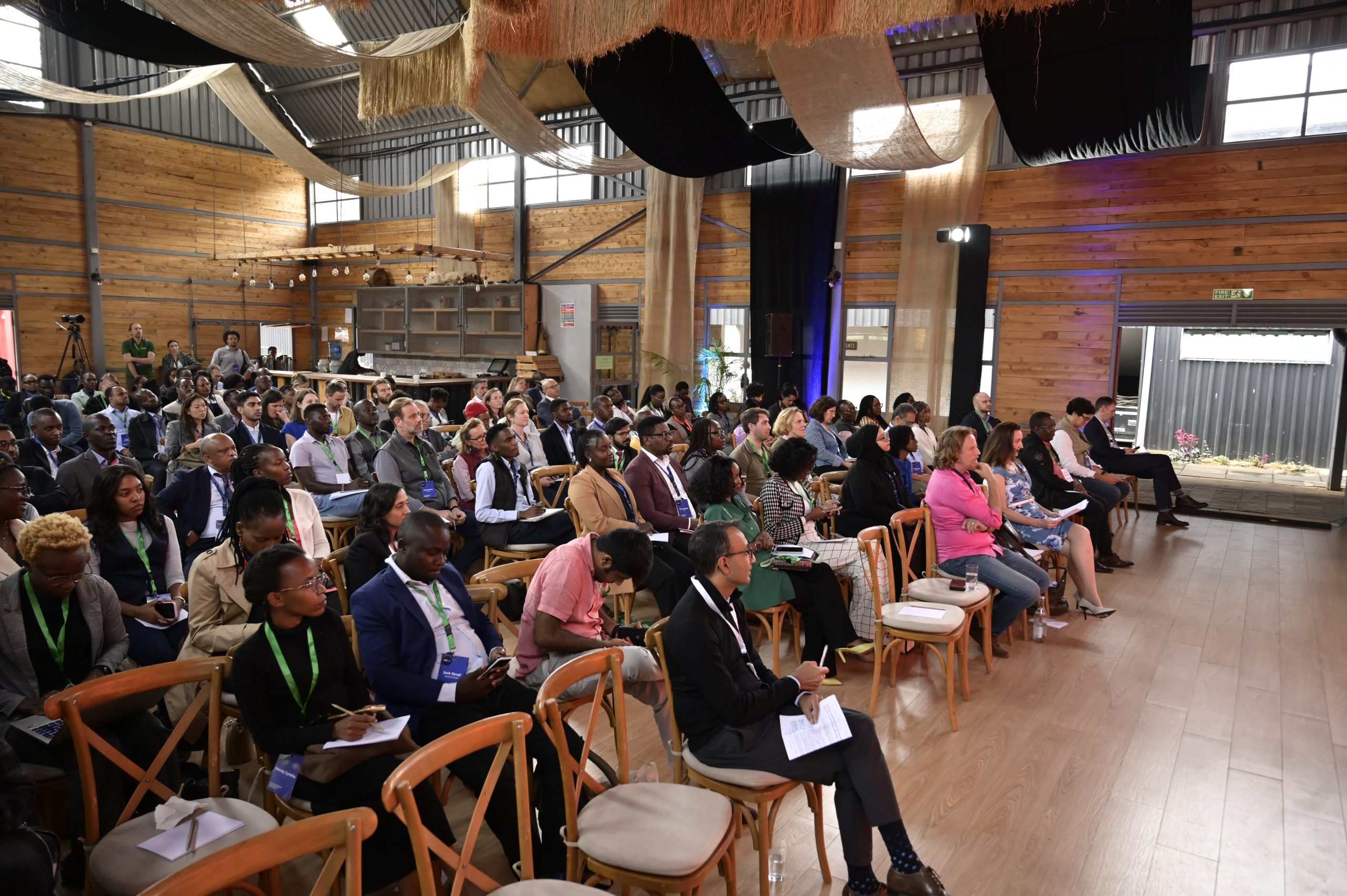
Nairobi, February 24, 2026 — The Pan-African Green Business Building (GBB) Forum has renewed focus on green industrial growth after bringing together more than 150 investors, startup founders and industry leaders in Nairobi.
The UK-funded forum, held under the Manufacturing Africa programme, sought to unlock climate-smart investments while accelerating job creation across the continent. Throughout the day, entrepreneurs pitched scalable green solutions as investors explored bankable opportunities in emerging sectors.
At its core, the forum focused on one key objective linking capital to green manufacturing.
Daniel Wilcox, Economic Counsellor and Head of Economic Development and Climate Change at the British High Commission in Nairobi, said startups often struggle not because of weak ideas, but because of limited access to the right networks.
“When you’re a founder and you’ve got an idea that could revolutionize a sector, you need to be looked after,” Wilcox said. “You need support, whether it’s running the business or accessing the right kind of financing.”
He added that many young entrepreneurs lack exposure to investors. “Some founders don’t even know which investors to speak to or what language to use when speaking to an investor,” he noted.
For that reason, the programme intentionally brings both sides together. “We bring the startups and we bring the investors. We support the startups to pitch, and ultimately get the investor to invest in them,” he said.
Significantly, Nairobi was chosen because of its vibrant SME ecosystem and strong renewable energy base. Kenya continues to lead Africa in clean energy production, generating electricity from geothermal, hydro, wind and solar sources. Consequently, the country offers fertile ground for green industrial expansion.
According to Wilcox, Kenya stands at a decisive economic moment. “Roughly 800,000 young Kenyans enter the job market every year. Those jobs need to be created,” he said.
At the same time, manufacturing’s share of the economy remains below the 20 percent target. As a result, a clear industrial gap persists.
“There’s a gap that requires to be filled, and green industrialization is the way to do it,” he said. He further emphasized that Kenya’s renewable energy advantage gives it a competitive edge. “Kenya is uniquely positioned with its green energy to drive industrialization,” he said. “There’s an educated workforce looking for work, and this is the real opportunity.”
Meanwhile, more than 30 impact investors engaged directly with startups during “Pitch Den” sessions. Founders presented innovations in electric mobility, recycling, solar manufacturing and organic fertilizers sectors expected to anchor Africa’s green transition.
Research by the Manufacturing Africa programme indicates that unlocking green investments could generate between $2 billion and $4 billion annually by 2030. In addition, the expansion could create at least 200,000 direct and indirect jobs across participating African countries.
Diana Dalton, Development Director at the British High Commission Nairobi, said the forum reflects deepening economic ties between Kenya and the UK.
“Today’s Forum is a great, green example of the innovation at the heart of the UK–Kenya Strategic Partnership,” she said. “By connecting green manufacturing entrepreneurs with the investment they need to scale, we’re helping turn bold ideas into real, climate-positive businesses that will create jobs.”
She added that the initiative demonstrates “our modern economic partnership in action unlocking Kenyan innovation to drive sustainable growth.”
Notably, the electric mobility sector stood out during discussions. Wilcox described it as “a microcosm of what industrialization could be for the country.”
“There are about 25 EV startups. It’s a real exciting environment,” he said, pointing to the growing number of electric motorcycles operating in Nairobi. “You can see more and more of them.”
Importantly, he noted that renewable energy demand is increasingly being driven by e-mobility. “One of the biggest demands on renewable energy in Kenya last year came from e-mobility,” he said.
Beyond environmental benefits, he highlighted wider economic gains. “If you don’t need to import fuel anymore, there are foreign exchange benefits and energy security benefits,” he explained.
However, Wilcox cautioned that innovation must be matched by policy and infrastructure support. “These sectors are young. They need to be nurtured,” he said.
While acknowledging progress such as the e-mobility framework, he stressed the need for supportive tax regimes, regulatory clarity and reduced trade barriers within the East African Community.
“You’re not going to get much tax from a sector that’s not developing. You’ll get more tax if the sector develops,” he said.
He also pointed to infrastructure gaps in ports, roads and energy systems that require attention. “The infrastructure needs to be in place. There are still gaps,” he added.
Equally, workforce transition remains critical. With about 60 percent of Kenyans employed in agriculture, gradual reskilling will support manufacturing growth.
“It’s not about better skills, it’s about different skills,” Wilcox said. Nevertheless, he expressed confidence in Kenya’s youth. “There’s an educated workforce keen to get into work. I don’t see that as a barrier. But it’s something you can’t take your eye off.”
Thomas Pascoe, Team Leader of the Manufacturing Africa programme, reinforced the importance of early-stage backing.
“We are thrilled to support the next generation of African business talent on their journey to growth and success,” he said.
He added that sustained support will yield long-term dividends. “Supporting these entrepreneurs at this critical early stage will not only drive job creation and tax revenue but also solidify Africa’s leadership in green industrial innovation for years to come,” Pascoe said.
The forum builds on the success of the UK-funded Green Business Building Accelerator, which has supported more than 50 startups across Kenya, Ethiopia, Nigeria and Tanzania through mentorship and investor access.