African civil society leaders giving a stark warning ahead of critical negotiations in Geneva
By Peace Muthoka
Nairobi, April 24, 2026 — African civil society leaders have issued a stark warning ahead of critical negotiations in Geneva, urging governments not to accept a weak global pandemic deal that fails to guarantee fair access to vaccines and treatments.
Speaking in Nairobi, the advocates said Africa must reject any diluted Pathogen Access and Benefit-Sharing (PABS) Annex under the World Health Organization Pandemic Agreement, warning that a weak outcome would entrench inequalities exposed during COVID-19 for decades.
The call comes just days before WHO Member States resume negotiations from April 27 to May 1, in what is expected to be the final push before the 79th World Health Assembly.
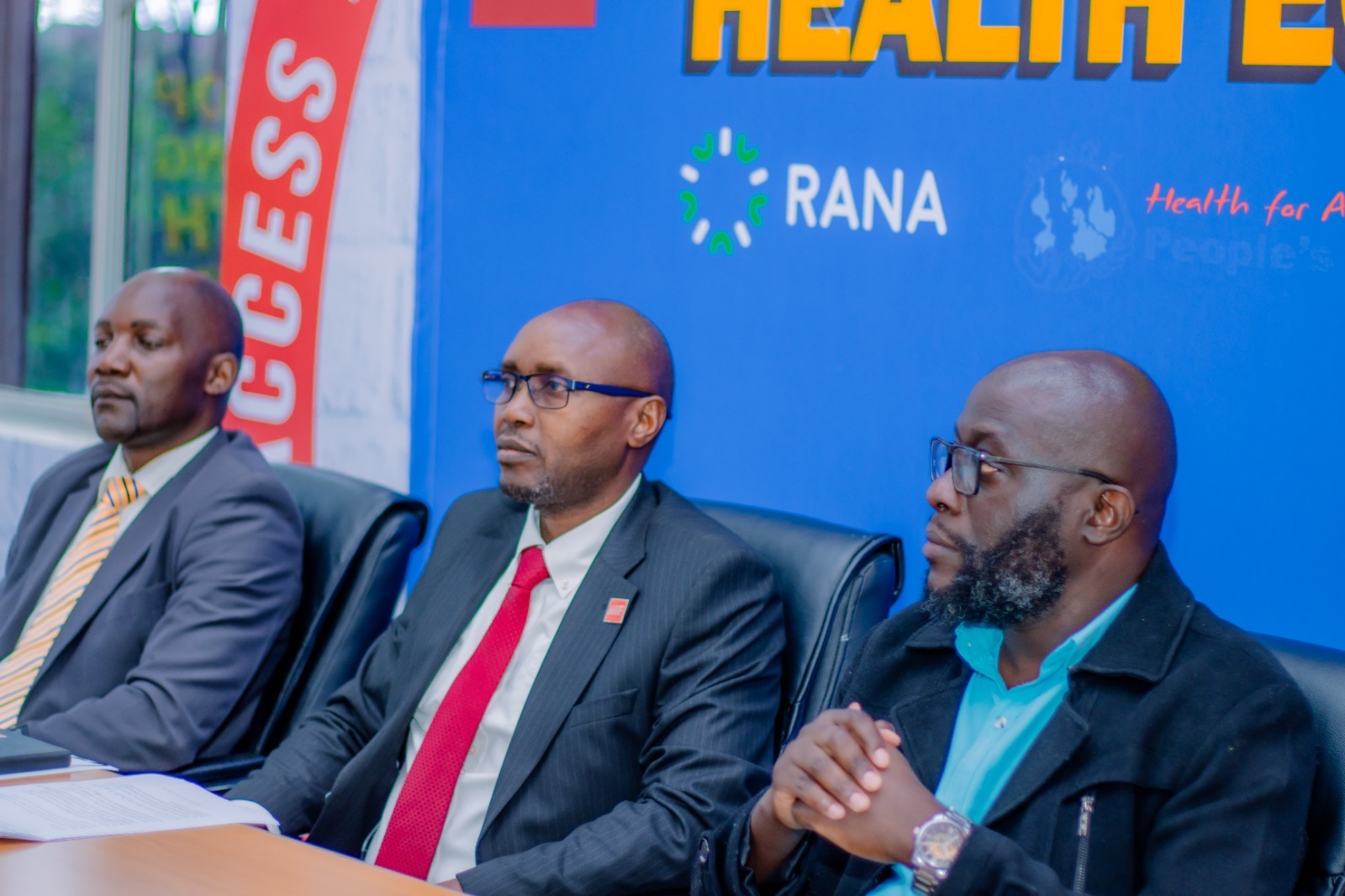
Leaders including Aggrey Aluso of the Resilience Action Network Africa, Dr Samuel Kinyanjui of the AIDS Healthcare Foundation Kenya ( AHF) , Dan Owala of the People’s Health Movement Kenya and Willis Omondi of the Mind To Heart Community-Based Organisation urged African governments to take a firm stance, saying the decisions made in Geneva will determine whether future pandemics are handled equitably or continue to favour wealthy nations.
At the centre of the debate is the PABS Annex, a key pillar of the Pandemic Agreement adopted in May 2025, which cannot be signed until the Annex is finalised. The framework will define how pathogen samples and genetic data are shared globally and how resulting benefits including vaccines, diagnostics and therapeutics are returned to countries that provide them.
Advocates say the current divisions echo the COVID-19 experience, when Africa contributed crucial genomic data on variants such as Beta and Omicron but received less than three per cent of global vaccine supplies despite accounting for 17 per cent of the world’s population.
Aluso said Africa must approach the talks with confidence, noting that many diseases with pandemic potential originate on the continent. “This is not a negotiation about charity. It is about one of the most strategic resources in 21st-century public health,” he said, pointing out that countries in Europe and the United States built vaccine stockpiles using data sourced from Africa.
He added that the continent carries 25 per cent of the global disease burden but produces less than one per cent of its vaccines, a gap he described as a powerful negotiating position rather than a weakness.
Dr Kinyanjui stressed that any agreement without enforceable provisions would fail developing countries. “When developing countries share their pathogens, they deserve binding, enforceable benefit-sharing in return, not hollow promises,” he said.
“The Pandemic Agreement cannot be ratified without the PABS Annex, and the Annex must not be approved without binding equity provisions. Delay is denial.” His remarks follow the collapse of the last round of talks in Geneva on March 28, when African countries rejected a draft proposal for failing to address core equity concerns.
The negotiations remain deeply divided, with nearly 100 low- and middle-income countries pushing for mandatory benefit-sharing, while wealthier nations, particularly within the European Union, favour voluntary commitments. Data from the World Health Organization Regional Office for Africa shows that zoonotic disease outbreaks on the continent have risen by 63 per cent over the past decade, highlighting Africa’s central role in global health security. Yet the continent still produces only about one per cent of the vaccines it uses, with plans to increase this to 60 per cent by 2040 under African Union targets.
Owala warned that the world risks repeating past mistakes if the agreement lacks accountability. “The last pandemic was not a failure of science — it was a failure of solidarity,” he said. “If the PABS Annex is stripped of binding contracts and traceable obligations, we will rebuild the same system that failed our people. Solidarity written in pencil is not solidarity at all.” He emphasised that voluntary commitments without enforcement would not guarantee access during future health emergencies.
Concerns have also been raised over a proposed “hybrid” system that would allow an open access route without registration or benefit-sharing alongside a regulated system with full obligations.
They warned that such an approach would allow companies and researchers to bypass responsibility, effectively weakening the entire framework. They insisted that all users must be registered and bound by standardised contracts negotiated by Member States, with clear obligations including vaccine allocations, technology transfer, financial contributions and public access to non-commercial outputs.
Omondi said the outcome of the talks will have direct consequences for ordinary citizens. “At the community level, what these negotiations decide is whether the next outbreak finds us prepared or abandoned,” he said. “Young Kenyans do not read draft texts, but they live the consequences. Behind every paragraph is a community, and leaders must choose accountability over convenience.”
Kenya’s own progress underscores what is at stake. The country has achieved WHO Maturity Level 3 for medicines regulation and is working to scale up local production, with a target of producing half of its essential medicines by 2030.
Currently, local manufacturing covers only about 30 per cent of demand, leaving over 70 per cent imported. Dr Kinyanjui said whether Kenya can close this gap will depend on the outcome of the Geneva negotiations.
Pressure is also mounting on European countries, with advocates calling on the European Commission, Germany, France, Switzerland and Norway to support binding equity measures. They say a shift from countries such as Spain, Belgium or Luxembourg could help break the deadlock before the May 1 deadline.
Aluso pointed to past global health efforts, including the ACT-Accelerator, which struggled with funding gaps despite major pledges, as a warning against weak commitments. “Pledges do not pay for vaccines. Promises do not reach clinics,” he said. “If what emerges reinstates the same language that failed during COVID, then we should wait. A bad agreement is worse than no agreement because it legitimises the status quo for a generation.”
With negotiations set to resume and time running out, African advocates say the outcome in Geneva will shape the future of global health equity. As they warned, the clock is ticking.