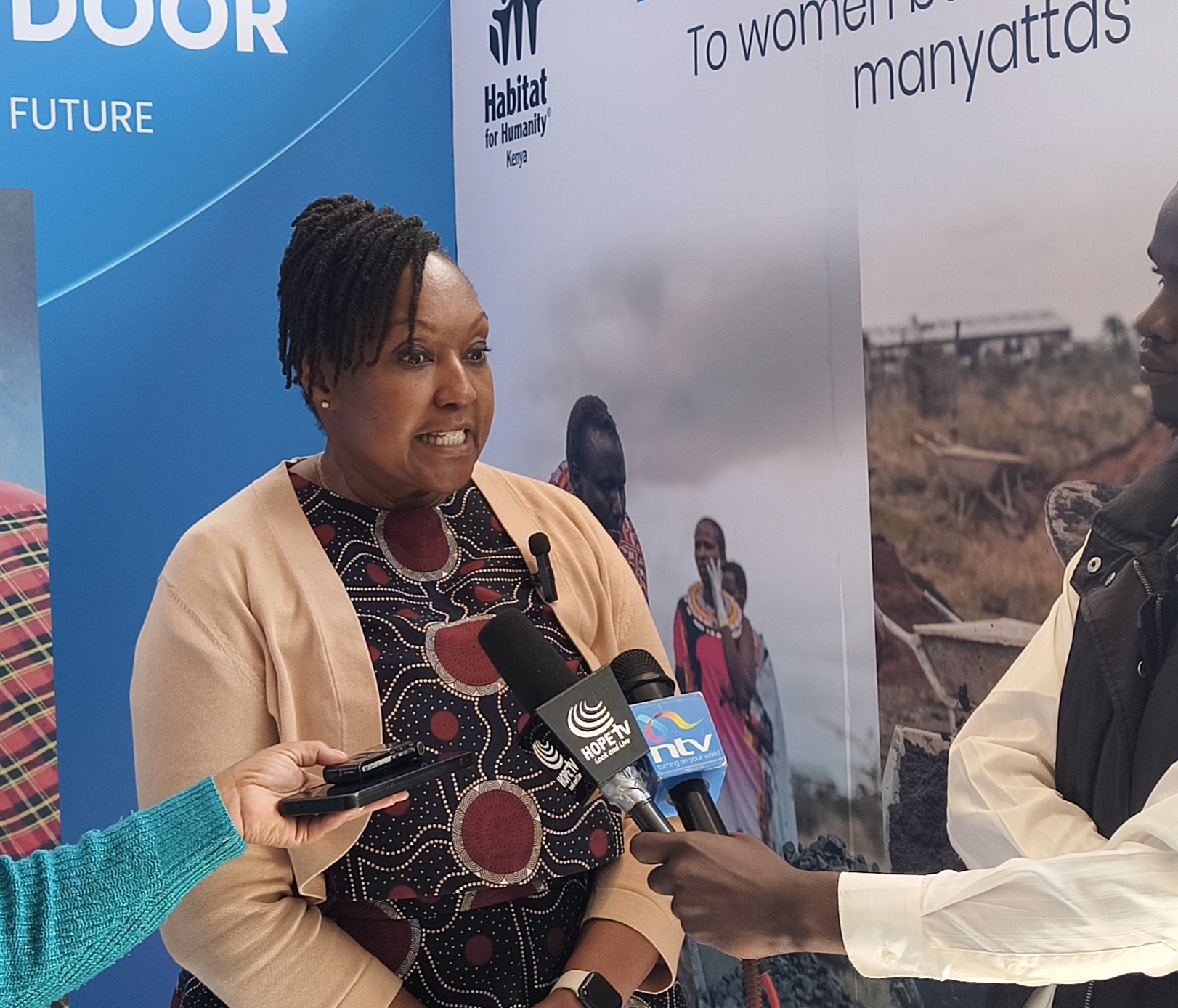
Area Vice President for Africa Abi Riak Speaking during the launch “Let’s Open the Door” campaign in Nairobi.
By Peace Muthoka
NAIROBI, July 16, 2026 — Habitat for Humanity has launched its global “Let’s Open the Door” campaign in Kenya, with Area Vice President for Africa Abi Riak calling for housing to be recognised not merely as shelter but as a catalyst for better health, economic opportunity, climate resilience and human dignity.
Speaking as the guest of honour during the launch in Nairobi, Riak said the campaign marks a new chapter in Habitat for Humanity’s mission as the organisation celebrates 50 years of global impact. She noted that while the organisation has reached more than 65 million people worldwide, the housing crisis remains one of the world’s most urgent yet overlooked development challenges.
“In Sub-Saharan Africa, one in three people do not wake up in a safe home. Across the region, 53 percent of the urban population lives in informal settlements, while Africa faces a housing deficit of 56 million units,” Riak said.
She added that Kenya alone requires about 250,000 new housing units annually, a gap she believes can only be closed through stronger partnerships among governments, financial institutions, the private sector, development agencies and local communities.
“Housing is more than shelter. It influences health outcomes, education, economic opportunities, resilience to climate shocks and dignity. When we open the door to housing, we open the door to development and opportunities for communities to thrive,” she said.
Riak emphasised that the Let’s Open the Door campaign is more than an awareness drive, describing it as a global movement that seeks to place housing at the centre of development planning.
She also highlighted Habitat for Humanity’s collaboration with the Kenya Medical Research Institute (KEMRI) and other partners to develop healthier housing solutions. According to pilot studies, the innovations have reduced malaria-causing mosquitoes inside homes by as much as 77 percent, lowering disease risks while improving living conditions.
She noted that Habitat for Humanity has worked in Kenya for more than four decades alongside governments and communities to expand access to affordable housing, housing finance and market-based solutions that enable families to improve their homes incrementally.
As part of the campaign, Habitat for Humanity unveiled two flagship initiatives designed to tackle interconnected social, health and environmental challenges.
The first initiative, Opening the Door to Women Building Resilient Manyattas, seeks to empower Maasai women by improving traditional manyattas using climate-resilient construction techniques while preserving cultural heritage. The programme also aims to enhance ventilation, lighting, access to clean energy and healthier living conditions.
The second initiative, Opening the Door to Jigger-Free Homes, targets the improvement of 10,000 household floors in jigger-endemic communities over the next five years. Habitat estimates the programme will directly benefit about 50,000 people by replacing unsafe earthen floors with healthier and more durable alternatives, helping reduce disease, improve school attendance and restore dignity to vulnerable families.
Habitat for Humanity Kenya National Director Eileen Mokaya said the campaign reflects the organisation’s belief that decent housing goes beyond constructing houses to creating safe, healthy and dignified living environments.
She noted that Habitat has worked in Kenya for 45 years and has implemented housing programmes in more than 18 counties, while currently operating in seven counties in partnership with county governments and other stakeholders.
“A decent home must have access to essential services such as water, sanitation, lighting and clean energy. These are the foundations of healthy communities and equal opportunities for children and families,” Mokaya said.
She explained that the resilient manyattas initiative seeks to modernise traditional Maasai homes without compromising their cultural identity by improving ventilation, lighting and energy efficiency. At the same time, the jigger-free homes programme addresses a major public health challenge by tackling one of the root causes of recurring infestations—unsafe earthen floors.
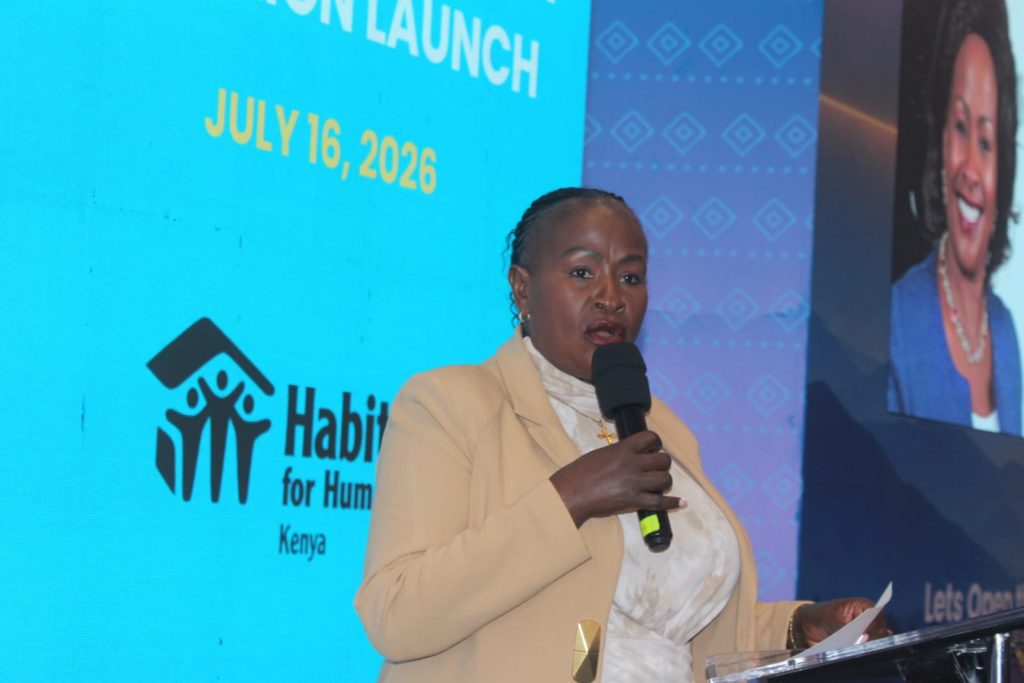
Machakos Governor Wavinya Ndeti praised Habitat for Humanity for transforming lives through its long-standing partnership with the county government.
She said the collaboration has delivered decent housing, improved sanitation, expanded access to clean water and supported digital learning in vulnerable communities across Masinga, Matungulu and Mavoko sub-counties.
According to the governor, the partnership has drilled boreholes, rehabilitated water infrastructure and constructed about 16 kilometres of water reticulation pipelines, enabling women and young people to engage in income-generating activities.
Ndeti also noted that Habitat for Humanity, working with Computers for Schools Kenya, had donated 120 computers to six public schools in the county, strengthening digital learning opportunities.
“The transformation we have witnessed is tangible and real. Families who once lived in despair now live in decent and secure homes, while communities that struggled with water shortages are now thriving,” she said.
She urged development partners and the private sector to scale up housing investments so that more families can benefit from similar programmes across Machakos and the rest of the country.
The governor further pledged the county government’s support for the development of a county housing policy being prepared in partnership with Habitat for Humanity, saying it will provide a strong framework for expanding affordable housing initiatives.
“We have the political will, the community structures and the desire to accelerate this work. When we open the door to a decent home, we also open doors to better health, education, economic empowerment and a brighter future for Kenya,” Ndeti said.
The launch formed part of Habitat for Humanity’s global Let’s Open the Door campaign, which is taking place in more than 60 countries as the organisation marks five decades of improving access to safe and affordable housing worldwide.