Machakos Governor Calls for Expanded Housing Partnerships as Habitat for Humanity Launches Global ‘Let’s Open the Door’ Campaign
By Peace Muthoka
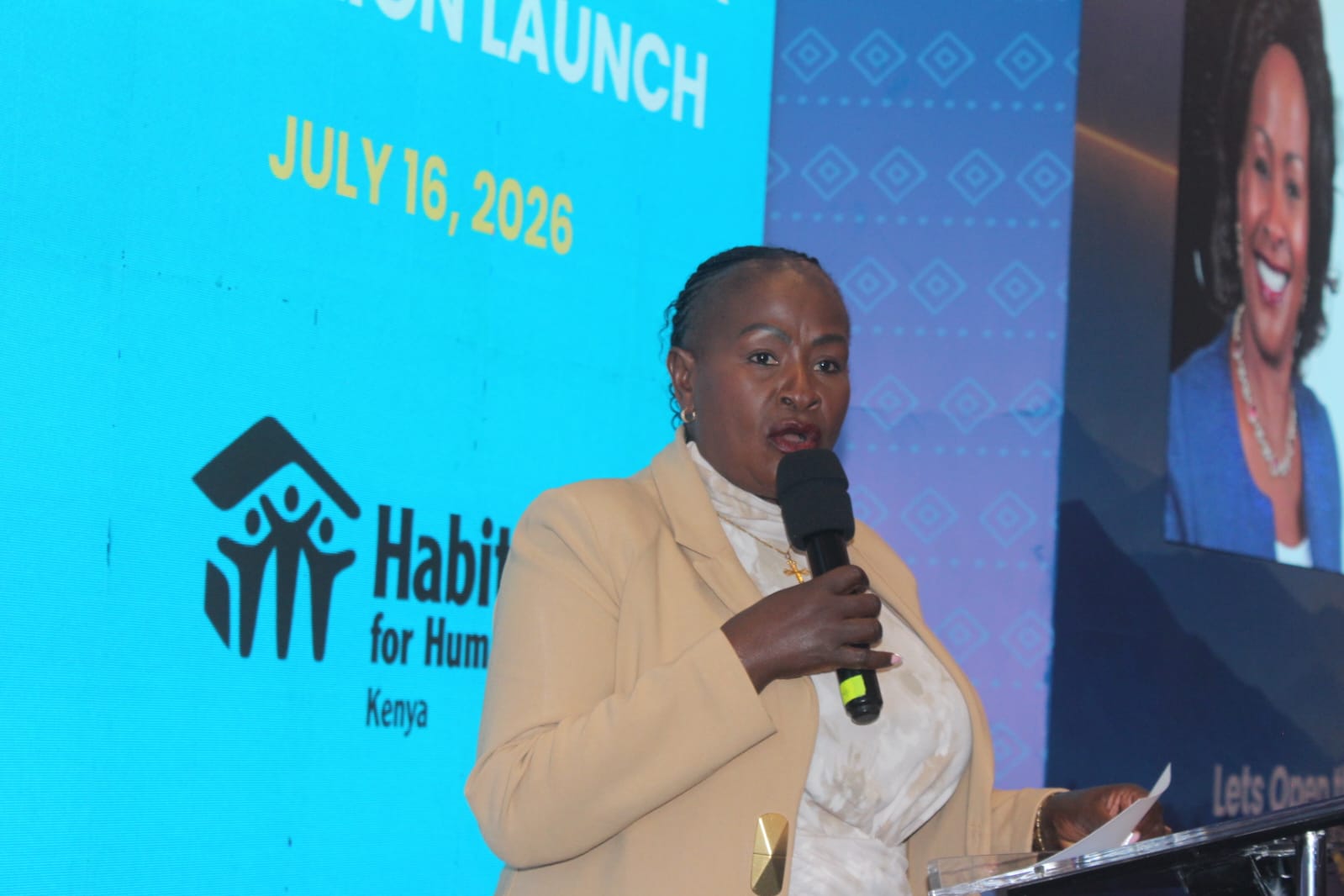
NAIROBI, July 16, 2026 — Machakos Governor Wavinya Ndeti has challenged development partners, the private sector and government agencies to scale up investments in decent housing, saying access to safe homes is central to improving health, education and economic opportunities for vulnerable families.
Speaking during the Kenyan launch of Habitat for Humanity’s global “Let’s Open the Door” campaign, Governor Ndeti said the initiative was more than a housing programme, describing it as a movement that seeks to restore dignity and transform lives.
“We are launching a movement,” she said. “The ‘Let’s Open the Door’ campaign is a bold and beautiful declaration that a home is more than a floor, walls and a roof. It is the very foundation of health, resilience and human dignity.”
The campaign, which is being rolled out in more than 60 countries to mark Habitat for Humanity’s 50th anniversary, aims to draw attention to the global housing crisis while encouraging governments, development partners and communities to invest in affordable and resilient housing solutions.
According to Habitat for Humanity, one in three people worldwide lack access to safe and affordable housing. In Sub-Saharan Africa, more than half of the urban population lives in informal settlements, while the region faces a housing deficit estimated at 56 million units.
Habitat for Humanity Area Vice President for Africa, Abi Riak, said housing should no longer be viewed simply as shelter but as a critical driver of healthier communities, stronger economies and climate resilience.
“Housing matters because a home is the foundation upon which people build their lives, communities build resilience and countries build prosperity,” Riak said. “Through ‘Let’s Open the Door’, we are calling for greater collaboration, innovation and investment to help scale solutions that can reach millions of families across Africa.”
Drawing from Machakos County’s partnership with Habitat for Humanity Kenya, Governor Ndeti said the organisation had already demonstrated the transformative impact of investing in decent housing and community infrastructure.
She pointed to projects implemented in Matuu, Masinga and Mavoko sub-counties, where vulnerable families have received improved housing, sanitation facilities and access to clean water.
“Our partnership is not just written on paper,” she said. “It is written on the smiling faces of our people. Families who once lived in despair now live in decent and secure homes. You didn’t just build structures; you restored self-worth.”
The governor recalled hearing testimonies from beneficiaries, including a mother who said she was finally able to sleep peacefully in a safe home after years of hardship.
Beyond housing, Ndeti praised Habitat for Humanity’s contribution to improving water access in Masinga through the drilling of boreholes, rehabilitation of water infrastructure and construction of approximately 16 kilometres of water distribution pipelines and water kiosks.
She said the interventions had changed lives by supporting farming, creating business opportunities and enabling women and young people to engage in income-generating activities.
“Communities are no longer just surviving; they are thriving,” she said. “This is true sustainable community transformation.”
The governor also highlighted efforts to bridge the digital divide through a partnership between Habitat for Humanity Kenya and Computers for Schools Kenya, which donated 120 computers to six public schools in Machakos, with each institution receiving 20 computers.
She said the initiative complements the county government’s vision of expanding digital learning opportunities for young people.
During the event, Habitat for Humanity Kenya unveiled two flagship programmes under the campaign. The first, Opening the Door to Women Building Resilient Manyattas, seeks to empower Maasai women by improving traditional homes using climate-resilient building techniques while preserving cultural heritage.
The second initiative, Opening the Door to Jigger-Free Homes, aims to improve the floors of 10,000 households over the next five years in communities affected by jigger infestations. The programme is expected to reduce disease, improve hygiene and create healthier living environments for thousands of families.
While welcoming the initiatives, Ndeti urged partners not to stop at the current achievements.
“The transformation we have witnessed is proof that this model works,” she said. “Let us enhance this programme, expand our reach and scale up our collaboration so that thousands more families can open their doors to dignity and safety.”
She also pledged the county government’s support for the development of a county housing policy currently being prepared in collaboration with Habitat for Humanity Kenya and the Department of Housing.
According to the governor, the policy will provide a framework for expanding sustainable housing programmes across the county.
“Machakos County stands ready,” she said. “We have the political will, we have the community structures and we have the desire to accelerate this work. Let us pool our financial, technical and leadership resources.”
Ndeti concluded by urging stakeholders to view housing as an investment that unlocks broader development outcomes.
“When we open the door to a decent home, we open doors to education, good health, economic empowerment and a brighter Kenya,” she said, thanking Habitat for Humanity for its five decades of global impact and its continued partnership with the people of Machakos.