
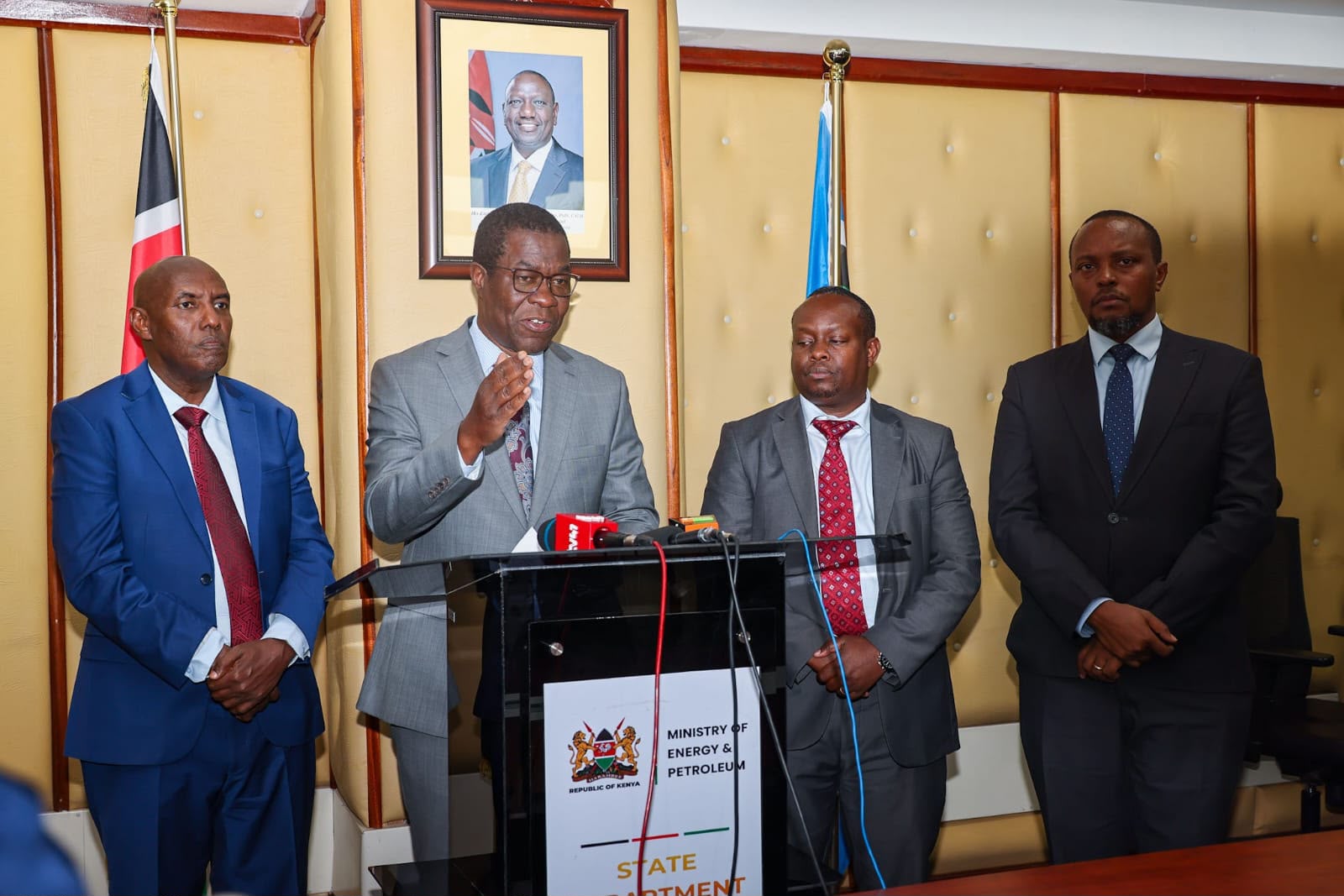
Ministry of Energy Officials Intensifies Crackdown on Illegal LPG Trade
By Peace Muthoka
The Ministry of Energy and Petroleum has stepped up efforts to stamp out illegal activities in the liquefied petroleum gas (LPG) sector, warning that illicit refilling and trading of gas cylinders puts consumers at risk.
The ministry says the crackdown is aimed at making the LPG market safer while ensuring that businesses comply with licensing and safety requirements.
The move comes as the government pushes to increase the use of LPG as a cleaner alternative to biomass fuels such as firewood and charcoal. In October 2023, the Cabinet approved the LPG National Growth Strategy, which seeks to accelerate the transition to cleaner cooking fuels.
One of the strategy’s key areas is strengthening laws and regulations to curb illegal cylinder refilling and illicit trade.
To support this effort, the Petroleum (Liquefied Petroleum Gas) (No. 2) Regulations, 2025 were gazetted in November last year. The regulations require all LPG businesses to obtain the necessary licences and comply with the conditions attached to those licences.
They also require LPG cylinders to be clearly branded, with only authorised brand owners allowed to refill and trade in cylinders bearing their brands.
Meanwhile, the Energy and Petroleum Regulatory Authority (EPRA) has been working with the National Police Service and the Directorate of Criminal Investigations to enforce the regulations and deal with illegal operators.
According to the ministry, when illegally refilled cylinders are seized, the authorities follow due process. An inventory is taken in the presence of the regulator, police and the affected operator before the operator is given an opportunity to respond to the allegations.
The government is also planning to introduce a central LPG cylinder tracking system to improve accountability in the sector. The system will track the purchase and sale of LPG cylinders, while serialization will allow individual cylinders to be traced through the supply chain.
However, the ministry clarified that the procurement process for the tracking system is still underway and has not yet been completed.
In addition, the government has brought LPG into the legal framework governing the common petroleum import system. The move follows a Cabinet recommendation made in December 2024 and subsequent amendments to the Petroleum (Importation) Regulations published in March 2025.
The common import system has been used for petroleum products including Super Petrol, Diesel and Jet A-1/Kerosene for more than two decades, with the government saying it has helped maintain consistency in prices and product quality.
As enforcement continues, the ministry has called on politicians to refrain from attacking public officers and law enforcement agencies carrying out their duties.
Hon. J. Opiyo said the government would not give in to pressure from politicians or cartels seeking to benefit from illegal LPG trade.
He said the crackdown would be intensified until all players in the sector comply with the law, adding that protecting consumers must remain at the centre of efforts to reform the LPG market.