
World Vision Unveils Bold 2026–2030 Strategy to Reach 13.3 Million Kenyan Children
By Peace Muthoka
Nairobi, February 9, 2026 – World Vision Kenya today launched its 2026–2030 National Strategy and WASH Business Plan, setting out an ambitious five-year roadmap aimed at transforming the lives of 13.3 million children across 33 counties.
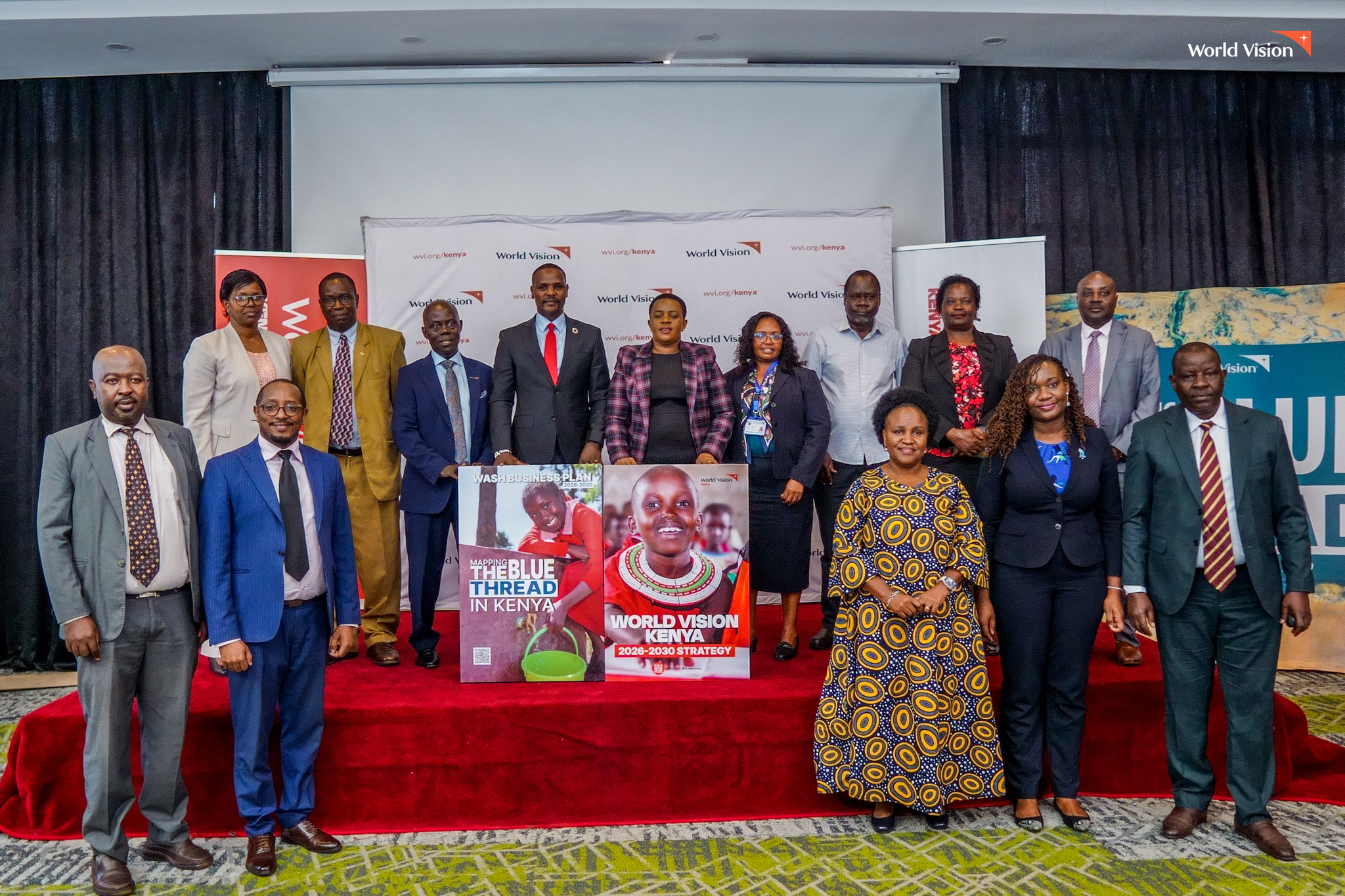
The strategy was unveiled at a high-level stakeholder forum in Nairobi that brought together government officials, development partners, faith leaders and community representatives. It reaffirms World Vision Kenya’s long-term commitment to protecting vulnerable children while strengthening community resilience, expanding access to essential services and responding to the growing impacts of climate change.
At the heart of the new strategy is a shift from short-term interventions to long-lasting systems that protect children and enable communities to thrive.
“With an ambitious goal to reach 13.3 million children across 33 counties, prioritising those living in extreme poverty and children with disabilities, this strategy is about shifting from short-term interventions to lasting systems that protect children and strengthen communities,” said World Vision Kenya Board Chairperson David Githanga.
The strategy targets children facing the greatest risks, including those living in extreme poverty, children with disabilities and those affected by climate shocks, violence and social exclusion. Implementation will be delivered through 43 Area Programmes nationwide, working closely with county governments and local partners to support sustainable, community-led solutions. Gender equity remains central, with 54 per cent of those reached expected to be female.
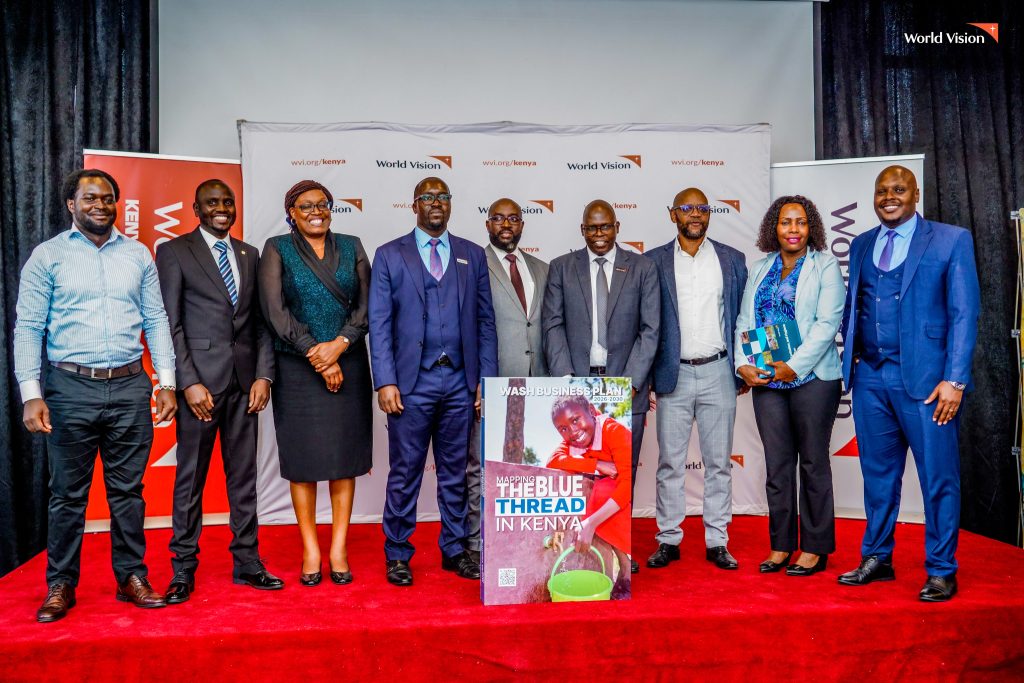
Alongside the national strategy, World Vision Kenya launched its 2026–2030 WASH Business Plan dubbed Mapping the Blue Thread. The plan outlines how the organisation will deliver adaptive water, sanitation and hygiene solutions to 2.27 million children through direct WASH services by 2030, while expanding access to safe water for more than 1.2 million people in 18 counties.
The WASH plan places strong emphasis on innovation, partnerships and systems strengthening. World Vision Kenya will move beyond traditional infrastructure delivery to develop Safe, Accessible, Functional, Equitable and Resilient water systems, known as SAFER systems, targeting over 90 per cent functionality through professionalised maintenance and digital monitoring.
In arid and semi-arid counties, solar-powered water systems and water harvesting technologies will be integrated to ensure reliability even during droughts and climate shocks. To address sanitation gaps while stimulating local economies, the organisation will also establish more than 15 WASH Business Centers across the country. These community-based one-stop shops will provide sanitation products such as latrine slabs, soap and water tanks, alongside technical services including construction, creating local jobs while improving access to sustainable sanitation solutions.
World Vision Kenya National Director Gilbert Kamanga said the new strategy builds on strong foundations laid over the past five years.
“These results show what is possible when communities, leaders and partners work together to put children first. The new strategy builds on this foundation, responding to emerging risks while scaling approaches that have proven to work,” Kamanga said.
Between 2021 and 2025, World Vision Kenya invested 432 million dollars and reached more than 4.5 million people across 37 counties, including 2.6 million children directly. During that period, 1.27 million children were engaged in initiatives to end violence against children, while more than 202,000 parents and caregivers were trained in positive parenting.
Nearly one million children benefited from spiritual nurture programmes. Reported cases of violence against children dropped from 42 per cent to 28 per cent, while the proportion of children who know where to report abuse rose from 43.8 per cent to 68.8 per cent. Faith leaders taking action for child well-being increased from 67 per cent to 92.6 per cent. Through advocacy and policy engagement, World Vision Kenya also reached 9.4 million children, contributing to stronger child protection systems nationwide.
The 2026–2030 strategy aligns with Kenya Vision 2030, County Integrated Development Plans and the Sustainable Development Goals, while responding to the realities of climate change, economic pressures, population growth and widening inequality.
It is anchored on three integrated development priorities: resilience building and climate action, water, sanitation, hygiene and health, and child protection, participation and access to education.
Under resilience building, World Vision Kenya will strengthen household and community resilience through climate-smart agriculture, economic empowerment, natural resource restoration and disaster risk management, with particular focus on arid and semi-arid regions.
In child protection and education, the organisation will strengthen systems that prevent violence against children, improve access to quality education and promote meaningful participation of children and young people in decisions that affect their lives.
Over the next five years, World Vision Kenya will prioritise reaching 3.04 million children living in extreme poverty and more than 343,000 children with disabilities, as well as children living in fragile contexts such as urban informal settlements and climate-affected regions.
Government leaders present at the launch welcomed the strategy and reaffirmed their commitment to partnership.
Principal Secretary for the State Department for Parliamentary Affairs Aurelia Rono said the Government values World Vision’s sustained presence in Kenya and its alignment with national priorities under Vision 2030 and the Bottom-Up Economic Transformation Agenda.
“I emphasised the importance of state and non-state partnerships in bridging policy and practice, strengthening governance and delivering real impact in areas such as WASH, child protection, health, education, climate action and disaster risk management,” Rono said, adding that the Government looks forward to deepening collaboration through a forthcoming memorandum of understanding.
Speaking at the launch, Principal Secretary for Environment and Climate Change Dr. Eng. Festus Ng’eno said the strategy comes at a critical moment for Kenya’s climate and sustainable development agenda.
“The success of these policies and partnerships must be measured by their impact on people, especially children who are disproportionately affected by climate change, environmental degradation and socioeconomic shocks,” Ng’eno said. He noted that the strategy’s strong focus on partnerships is timely, particularly in a shrinking donor landscape.
“With the shrinking donor landscape, World Vision Kenya will need to work very closely with national and county governments, bilateral and multilateral agencies and the private sector to create winning programmes whose impact is quickly felt,” he said, citing the Salgaa Area Programme as a strong example of effective collaboration.
Ng’eno said the State Department for Environment and Climate Change remains committed to creating an enabling environment for partners through policy alignment, technical collaboration, joint advocacy for climate finance and facilitating county-level partnerships, especially in arid and semi-arid regions.
Despite Kenya’s steady economic growth, World Vision Kenya noted that 47 per cent of children still experience multidimensional poverty. About 1.1 million children remain malnourished, 2.8 million are out of school and recurrent droughts and floods continue to displace around 300,000 children each year.
Kamanga said these interconnected challenges demand integrated solutions that link child protection, education, climate resilience, health and WASH.
“No single organisation can transform children’s lives alone. This strategy is an invitation to government, partners, faith leaders and communities to work together to build a Kenya where every child is safe, educated, healthy and able to thrive,” he said.
“Our ambition is not just to deliver services, but to strengthen systems and empower communities so that progress is sustainable. When a child turns on a tap in 2030, the water should be there, it should be safe and it should last.”