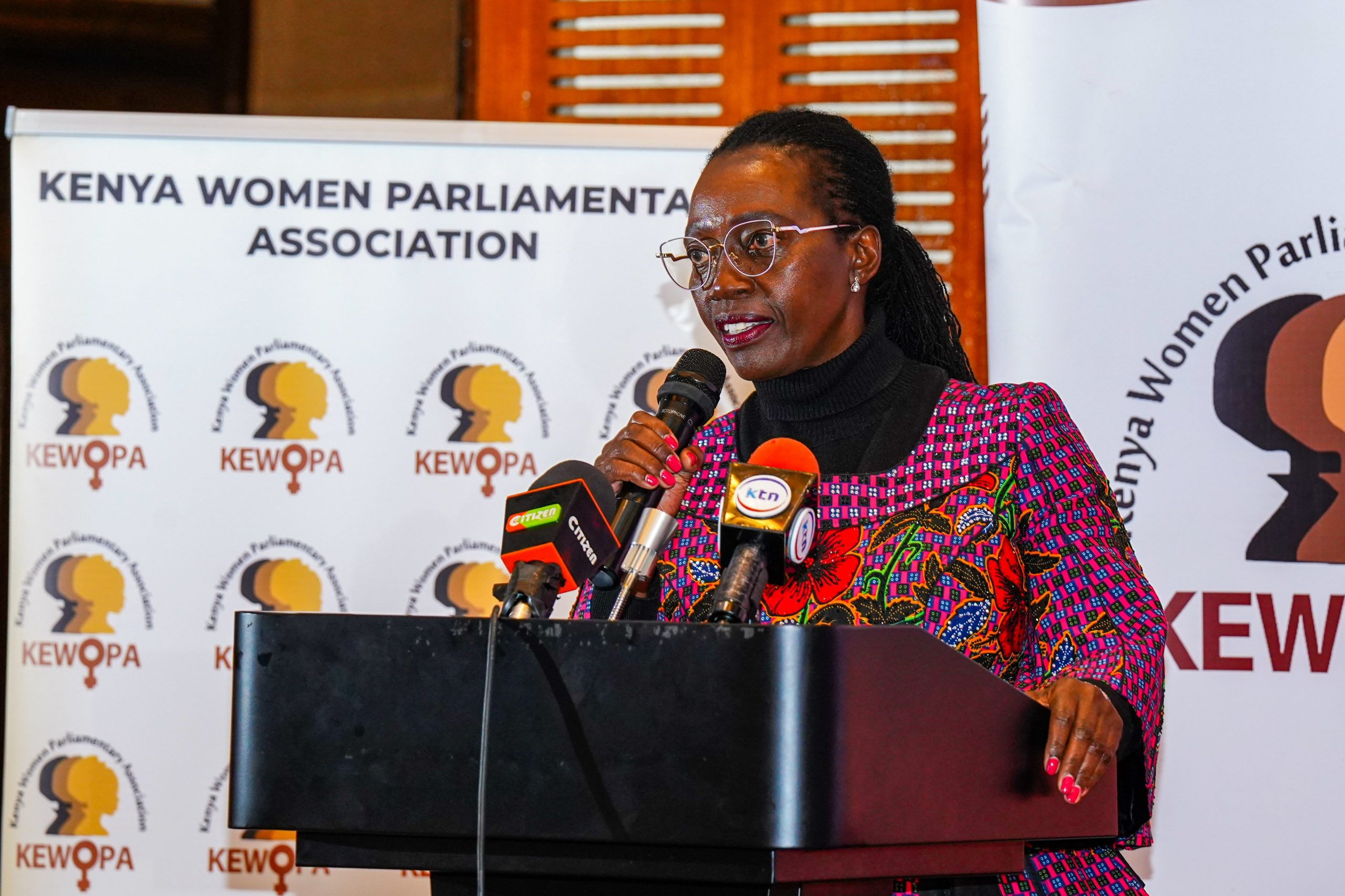
Former Justice Minister Martha Karua speaking during a women’s political leadership convention convened by the Kenya Women Parliamentarians Association (KEWOPA) on Monday, August 17, 2026.
By Peace Muthoka
NAIROBI, Kenya — August 17, 2026 — Former Justice Minister Martha Karua has challenged women aspiring for political office to believe in themselves, build strong networks and boldly claim their space in leadership, saying Kenya cannot achieve an inclusive democracy if women continue to be pushed to the margins of political decision-making.
Karua spoke on Monday, August 17, 2026, during a women’s political leadership convention convened by the Kenya Women Parliamentarians Association (KEWOPA) as stakeholders began a broader conversation on the barriers facing women and young people seeking political leadership ahead of the 2027 General Election.
The convention brought together women leaders, aspiring politicians, civil society representatives, development partners and other stakeholders to examine the challenges limiting women’s participation in electoral politics, including political party structures, nominations, campaign financing, violence, online harassment and gender stereotypes.
Karua, who was the chief guest, urged women to recognise that leadership begins long before one seeks an elective position.
She encouraged women to document their contributions to their communities, saying activities that may appear ordinary—from leading women’s groups and church programmes to participating in community development—can demonstrate leadership experience and should not be overlooked.
“Women, we are shy. We never sing our own praises,” Karua said, urging women to record and confidently communicate their achievements.
She said women should not allow self-doubt or criticism from others to prevent them from pursuing their ambitions.
“Do not ever let anybody define you,” Karua said, emphasising that women must develop strong self-belief and confidence if they are to succeed in the often difficult political environment.
According to Karua, making the decision to step forward is already a significant part of the battle.
“When you believe in yourself and you step up, 50% of the work is done. The rest is topping up,” she said.
Karua also emphasised the importance of solidarity and networks, urging women to turn the networks they have built through community groups, religious organisations, investment groups and political associations into platforms for collective action.
She challenged women to support one another regardless of their political party affiliations, particularly when fellow women face gender-based abuse online.
“What if all of us dealt with it? That any time you see a gender-based insult against any other woman online, what if we swarmed like bees and told them to stop it?” she asked.
She said women should not remain silent when another woman is attacked because of her gender, arguing that collective action can help discourage online harassment and create a more supportive environment for women in public life.
Karua further criticised the tendency to judge women leaders through a gendered lens, calling for political leaders to be assessed on their performance, qualifications and actions rather than stereotypes.
She urged women seeking elective positions to focus on communicating their own qualifications and vision instead of spending valuable campaign time attacking opponents.
“Talk about your qualifications,” Karua advised, warning that repeatedly discussing an opponent’s weaknesses could give the rival unnecessary publicity while denying the candidate an opportunity to sell her own agenda.
KEWOPA calls for action on barriers facing women
KEWOPA Chairperson Leah Sankaire said the August 17 convention marked both the culmination of conversations held across six counties and the beginning of a broader national discussion on the future of Kenya’s electoral democracy ahead of the 2027 elections.
Sankaire said women and young people continue to face barriers that should have no place in a democratic society.
She cited discrimination within political parties, unequal access to campaign financing, difficult nomination processes, violence and intimidation, online harassment and harmful stereotypes as some of the obstacles discouraging women from seeking office.
She warned that political violence poses a direct threat to women who choose to participate in elections.
“No woman should have to choose between her safety and her political aspirations,” Sankaire said.
She said every woman forced to withdraw from politics represents more than an individual loss, arguing that the country also loses a voice that could have contributed to public institutions and decision-making.
Young people, she added, face a different set of challenges, including limited access to political networks and resources, exclusion from decision-making spaces and being treated primarily as voters and campaign crowds rather than leaders in their own right.
Sankaire said Kenya must move beyond simply increasing the number of women and young people in leadership and instead create a political culture in which their participation becomes normal.
“The goal is not to make women and young people leadership exceptional, it is to make it normal,” she said.
She said the convention was deliberately bringing together electoral institutions, civil society, women and young people to have candid discussions on political party structures, nominations, campaign financing, electoral violence, technology-facilitated gender-based violence and candidate safety.
The organisers also placed mental health and well-being on the agenda, recognising the pressures associated with political leadership, including burnout, stress, political trauma, social media fatigue and public criticism.
Sankaire said the discussions should ultimately lead to concrete commitments rather than end with speeches, photographs and social media posts.
She challenged electoral institutions, political parties, Parliament, civil society and individual participants to identify what they would do differently to create a safer and more inclusive political environment.
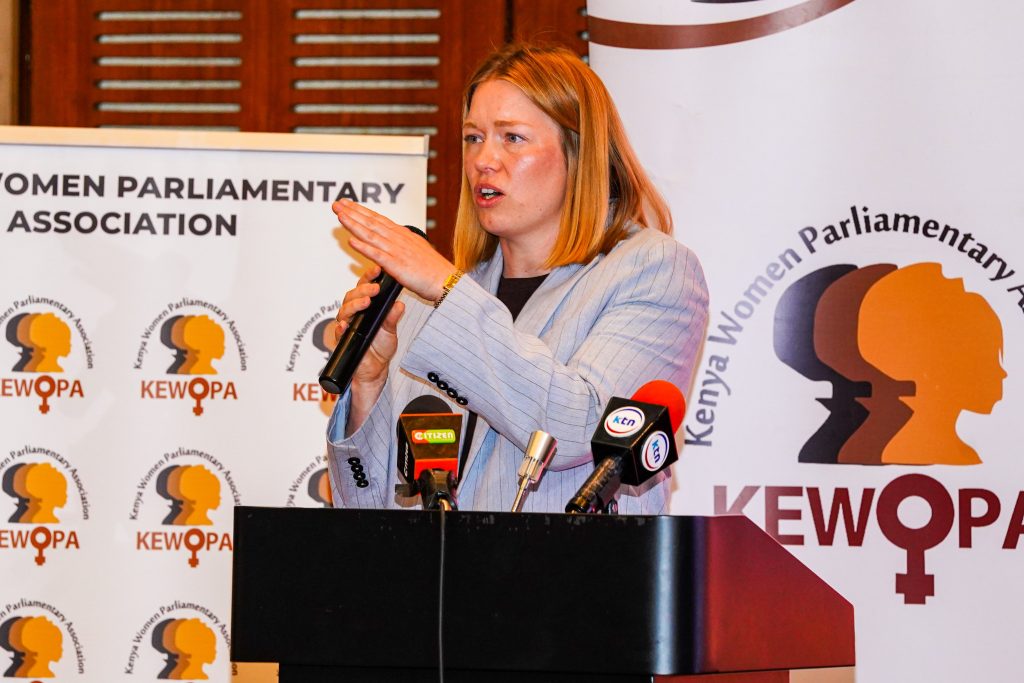
Denmark urges institutions to create space for women and youth
Danish Embassy Team Leader for Governance and Health Ida Paetau Sørensen said the conversation about political representation should go beyond statistics and focus on whether women and young people have meaningful influence once they enter leadership.
Sørensen said every statistic represents a person and a story, noting that women who seek political office often do so knowing they could face harassment and intimidation because of their gender.
She also challenged the notion that women are not natural leaders, arguing that leadership skills are developed in everyday life through negotiation, communication, conflict resolution, empathy and responsibility.
Sørensen said girls and women demonstrate these qualities in families, communities, businesses and civil society long before they enter formal politics.
“Representation matters, it does, but influence matters even more,” she said, calling on people already in positions of influence to use their networks and opportunities to bring others into leadership.
She urged political parties and institutions to establish pathways for women and young people throughout the political cycle instead of engaging them only when elections approach.
Such support, she said, should include mentorship, access to networks and opportunities to develop leadership skills.
Sørensen also called for women and young people to have a voice in major policy areas, including the economy, security, peace and foreign policy, rather than being confined to discussions on youth, families and social affairs.
She said Kenya’s youth demonstrated strong interest in transparency and accountability during the 2024 Gen Z protests, and that this civic energy could be channelled into proactive participation through civil society, entrepreneurship, political parties and electoral institutions.
From conversation to commitments
The speakers agreed that increasing the number of women and young people in leadership requires more than constitutional provisions or election-time campaigns.
It requires political parties to provide fair opportunities, institutions to remove structural barriers, leaders to mentor those coming behind them and women and young people themselves to step forward and claim their place in decision-making.
Sørensen said Denmark’s own experience demonstrates that progress on women’s political participation requires sustained political will and institutions capable of creating opportunities for others.
“Progress does not happen simply because we agree that equality is a good idea. It requires political will,” she said.
Karua, meanwhile, reminded aspiring women leaders that they do not need extraordinary backgrounds to become extraordinary leaders.
Drawing from her own experience, she said leadership is often built through service and a willingness to take responsibility.
She urged women not to wait for someone to hand them a position, but to step forward, serve their communities and demonstrate the qualities they believe define them.
“Space is never given. You grab your space,” Karua said.
As Kenya prepares for the August 2027 General Election, the convention has placed women’s political participation, safety, inclusion, youth leadership and meaningful representation at the centre of the national conversation.