
East Africa’s Healthcare Sector Seeks Smarter Procurement and Sustainable Innovation at WHX
By Peace Muthoka
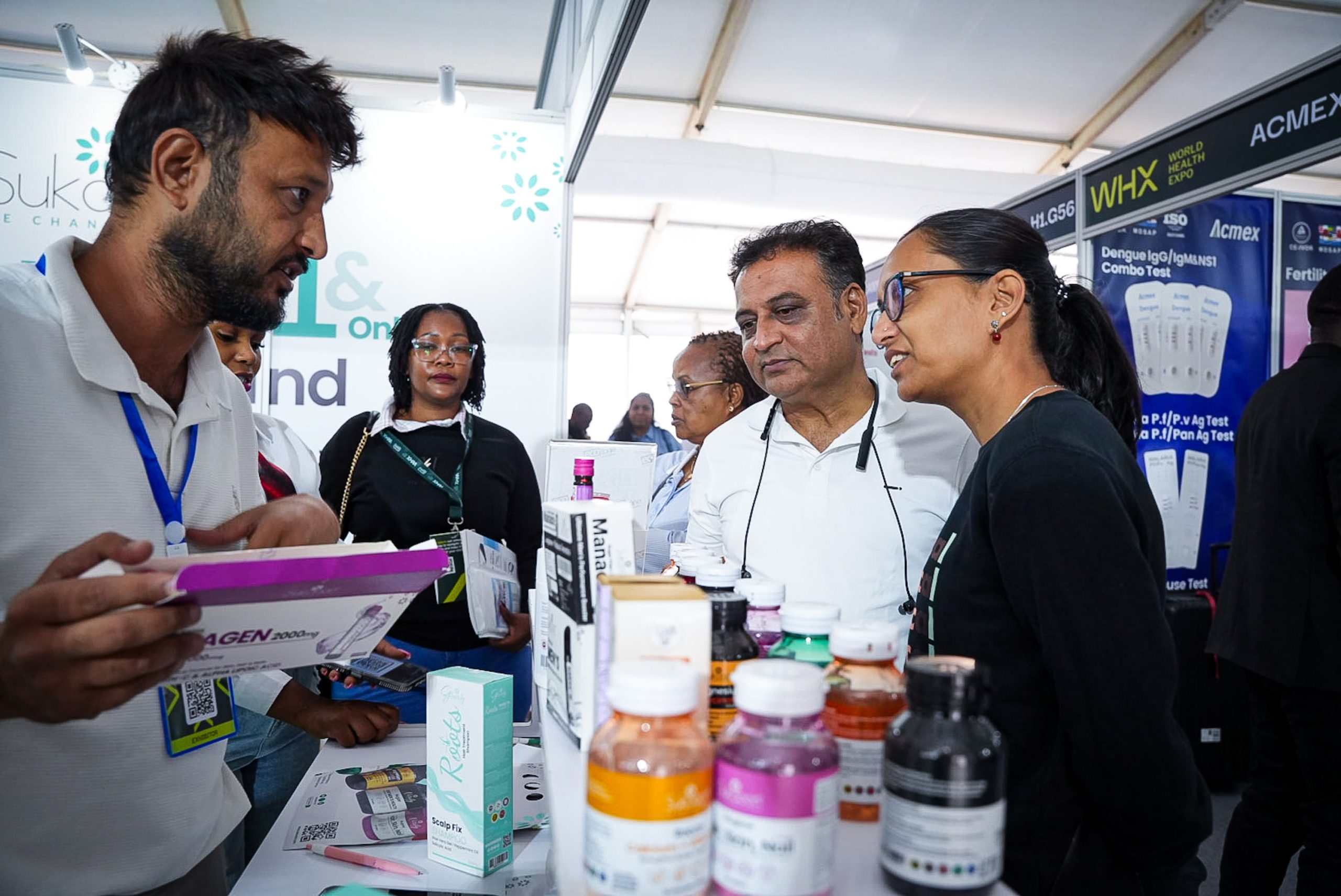
Nairobi, September 24,2026 – The 10th edition of World Health Expo (WHX) Nairobi has attracted more than 8,500 professional visits and over 250 exhibitors from 30 countries, strengthening its position as a key platform for healthcare investment, innovation and partnerships in East Africa.
The three-day exhibition, held at the Kenyatta International Convention Centre (KICC) from September 16 to 18, brought together healthcare professionals, manufacturers, distributors, buyers and policymakers to explore opportunities in medical technology, pharmaceuticals, digital health and healthcare infrastructure.
The event, held under the patronage of Kenya’s Ministry of Health and with support from the Kenya Healthcare Federation, also provided a platform for industry leaders to discuss the need for stronger local manufacturing, smarter procurement and scalable digital health solutions across the region.
Opening the exhibition, Dr Joe Lenai, Director for Primary Healthcare, Preventive and Promotive Health at the Ministry of Health, challenged manufacturers and medical equipment suppliers to provide long-term support beyond the sale of equipment.
“Africa must no longer be an equipment graveyard. For too long, expensive medical equipment has gone out of use due to unavailable spare parts, inadequate maintenance and insufficient technical skills,” Dr Lenai said.
He urged manufacturers, aggregators and vendors to offer comprehensive service-level agreements covering maintenance, spare parts and the development of local technical capacity.
“We must change this approach. I therefore call upon all manufacturers, aggregators and vendors at WHX to provide more than hardware,” he added.
Dr Lenai said reliable after-sales support would help African countries protect their investments in medical equipment while strengthening the sustainability of their healthcare systems.
He also highlighted legislative reforms that Kenya is implementing to improve the healthcare sector, including the Primary Care Act, the Social Health Insurance Act, the Digital Health Act and the Facility Improvement Financing Act.
According to Dr Lenai, the reforms are intended to support a more sustainable and people-centred healthcare system while creating opportunities for local manufacturing, investment, innovation and partnerships.
The exhibition was officially opened by Dr Lenai, Indonesian Ambassador to Kenya Witjaksono Adji and Tom Coleman, Portfolio Director for Healthcare at inD, the organiser of WHX. Other dignitaries included Mary Muriuki, Principal Secretary in the State Department for Public Health and Professional Standards; Dr Mazyanga Lucy Liwewe Mazaba, Regional Director for the Eastern Africa Regional Coordinating Centre of the Africa CDC; and Alex Oketch, General Manager for East Africa at GE.
Speaking about the exhibition’s regional significance, Coleman said WHX had brought together international companies and healthcare stakeholders to create opportunities for investment, knowledge exchange and cross-border partnerships.
“World Health Expo in Nairobi is the largest exhibition in the East African region for medical devices, laboratory equipment, pharmaceuticals and nutraceutical products,” Coleman said.
He added that the event had generated considerable interest in digital health and the role of technology in improving healthcare infrastructure, access to medicines and patient services in urban and underserved rural communities.
The exhibition featured medical equipment and devices, diagnostics and imaging, hospital consumables, hospital information technology, orthopaedics, telemedicine and disease surveillance solutions.
Meanwhile, Kenya Healthcare Federation Chief Executive Officer Dr Anne Musuva said East Africa had the capacity to move beyond fragmented digital health projects towards solutions that could attract investment and operate at scale.
“WHX shows that East Africa’s healthcare sector is ready to move from fragmented pilots to investable, interoperable solutions that can operate securely at scale and benefit underserved populations,” Dr Musuva said.
She identified Kenya’s private sector, digital health infrastructure, technical expertise and public health institutions as important elements in the country’s efforts to strengthen its position as a regional digital health leader.
The exhibition also promoted bilateral cooperation, with Indonesian Ambassador Witjaksono Adji highlighting opportunities for Kenya and Indonesia to expand healthcare partnerships.
“Events such as WHX provide an opportunity to strengthen partnerships, exchange expertise and explore possibilities for greater investment and cooperation between our two countries,” Adji said.
Official delegations from Ethiopia, Tanzania, Uganda, Rwanda and other East African markets attended the event, creating opportunities for discussions on regional procurement and healthcare supply chains.
FedEx, the official WHX Platinum Partner and Networking Lounge Partner, supported engagements between exhibitors and buyers. Leon Bruwer, Managing Director for Sales in Sub-Saharan Africa at FedEx, said efficient supply chains would be essential to Kenya’s ambition to expand local production of medicines and medical devices.
“As a Platinum Partner, FedEx is proud to connect manufacturers to suppliers and markets, helping them improve speed to market and compete regionally and internationally,” Bruwer said.
The WHX portfolio includes healthcare exhibitions in Nairobi, Lagos and Johannesburg, providing a platform for global brands to connect with distributors and healthcare stakeholders across Africa.
The next edition of WHX Nairobi is scheduled for September 15 to 17, 2027, at the Kenyatta International Convention Centre in Nairobi.