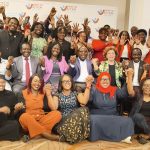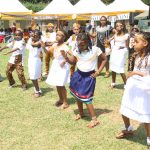
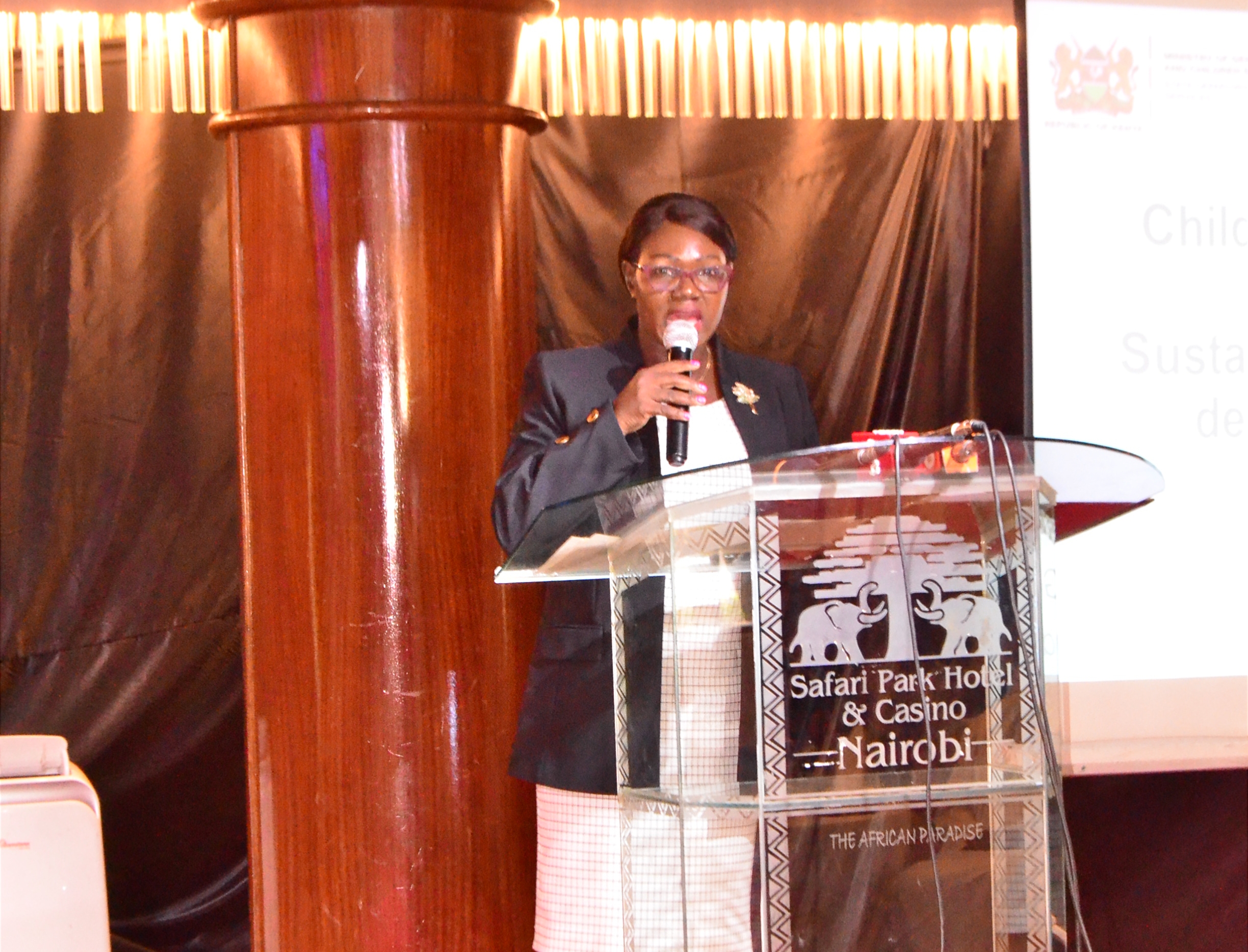
Principal Secretary for Children Services Carren Ageng’o speaking during the launch of the ChildSAFE Kenya Project, at Safari Park Hotel in Nairobi.
By Peace Muthoka
NAIROBI, Kenya, November 10, 2026 — Catholic Relief Services (CRS) has officially launched the ChildSAFE Kenya Project, a multi-country initiative supported by the United States Department of State’s Bureau of Global Health Security and Diplomacy, to strengthen child protection systems and promote safer environments for children.
Launched on Tuesday at Safari Park Hotel in Nairobi, the project will target six counties: Kisumu, Kakamega, Nairobi, Kajiado, Mombasa and Kilifi. It brings together government agencies, faith-based organisations, civil society groups and communities to address violence against children, neglect, abuse, exploitation and unnecessary family separation.
The initiative seeks to strengthen institutions responsible for child protection while supporting families and caregivers to provide safe and nurturing environments where children can grow and realise their potential.
Principal Secretary for Children Services Carren Ageng’o said the project would strengthen child protection structures at national and county levels while improving access to early childhood development and care services.
Speaking during the launch, Ageng’o identified three priority areas: strengthening child protection systems and referral pathways, promoting integrated early childhood development and nurturing care, and preventing unnecessary family separation through family strengthening and alternative family-based care.
She said the programme would work with children, families, caregivers, social service workers and community structures, with particular attention to vulnerable and at-risk children. It will also strengthen psychosocial support and improve community-based prevention and response to child protection concerns.
The project will enhance the use of existing government platforms, including the Child Protection Information Management System (CPIMS), VuruguMapper and Child Helpline 116, to improve reporting, referrals and case management. Ageng’o said reliable information would help government agencies make evidence-based decisions while protecting children’s privacy and dignity under the Data Protection Act, 2019.
“Above all, we must prioritize sustainability to ensure that the capacities, systems and gains achieved through the Project are maintained beyond its implementation period,” she said.
On care reform, the PS called for the safe reintegration of children in residential care facilities into families and communities whenever it serves their best interests. She said the process must follow the Children Act, 2022, the National Care Policy, 2025, and the National Care Reform Strategy 2022–2032.
CRS Country Manager Margaret Kahiga described the launch as an important step towards ensuring children grow up safe, protected and able to realise their full potential. She thanked the government for its leadership and the United States Government for supporting the initiative.
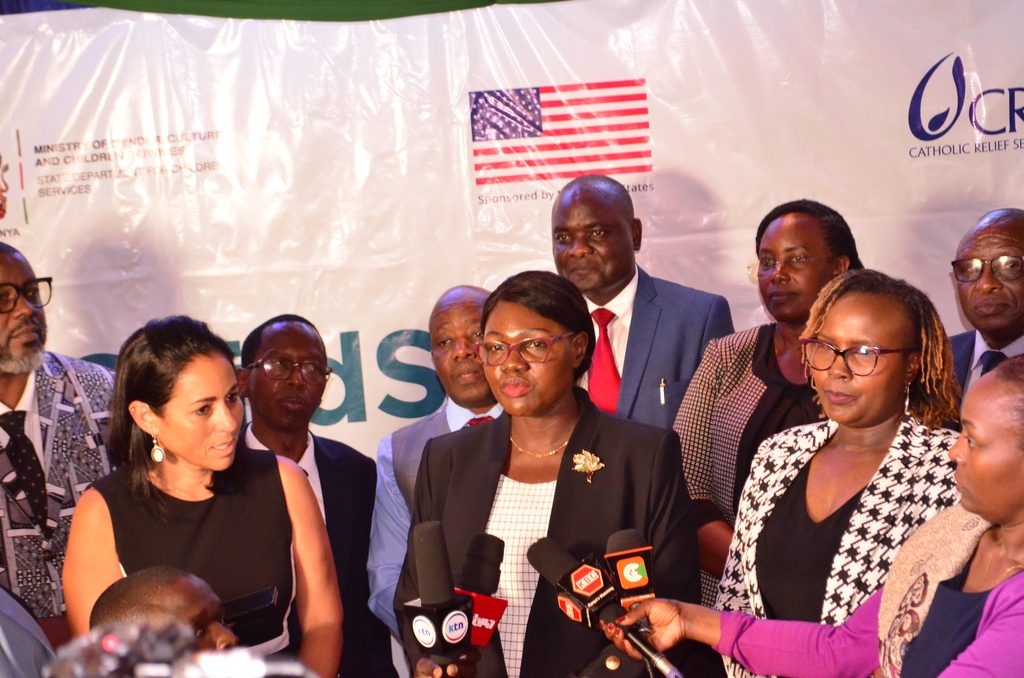
Kahiga said ChildSAFE was part of a wider multi-country programme being implemented in nine countries, with Kenya among the participating nations. She noted that the project would adopt a government-led approach while working with faith-based organisations and civil society groups.
“Protecting children is not the responsibility of one institution alone. It requires the collective efforts of government, communities, families, faith leaders, development partners, and children themselves,” she said.
Kahiga acknowledged that despite progress in strengthening child protection systems, many children still face risks associated with poverty, violence, neglect, abuse, harmful practices and family separation. She emphasised the role of churches, mosques and other faith-based institutions in supporting families, promoting children’s rights and helping communities identify protection concerns.
She further called for children and young people to participate in decisions affecting their lives, noting that their experiences and aspirations should guide the initiative. She said success should be measured by whether children become safer, families receive the support they need and communities become better equipped to protect vulnerable children.
The project will document lessons and evidence from the six counties to guide future child protection programmes and strengthen care systems nationally. Ageng’o reaffirmed the government’s commitment to working with CRS and other partners to strengthen existing institutions and ensure the project’s achievements continue beyond its implementation period.
“Together, let us build stronger systems, stronger families and safer communities for every child,” Ageng’o said.