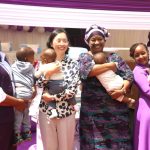
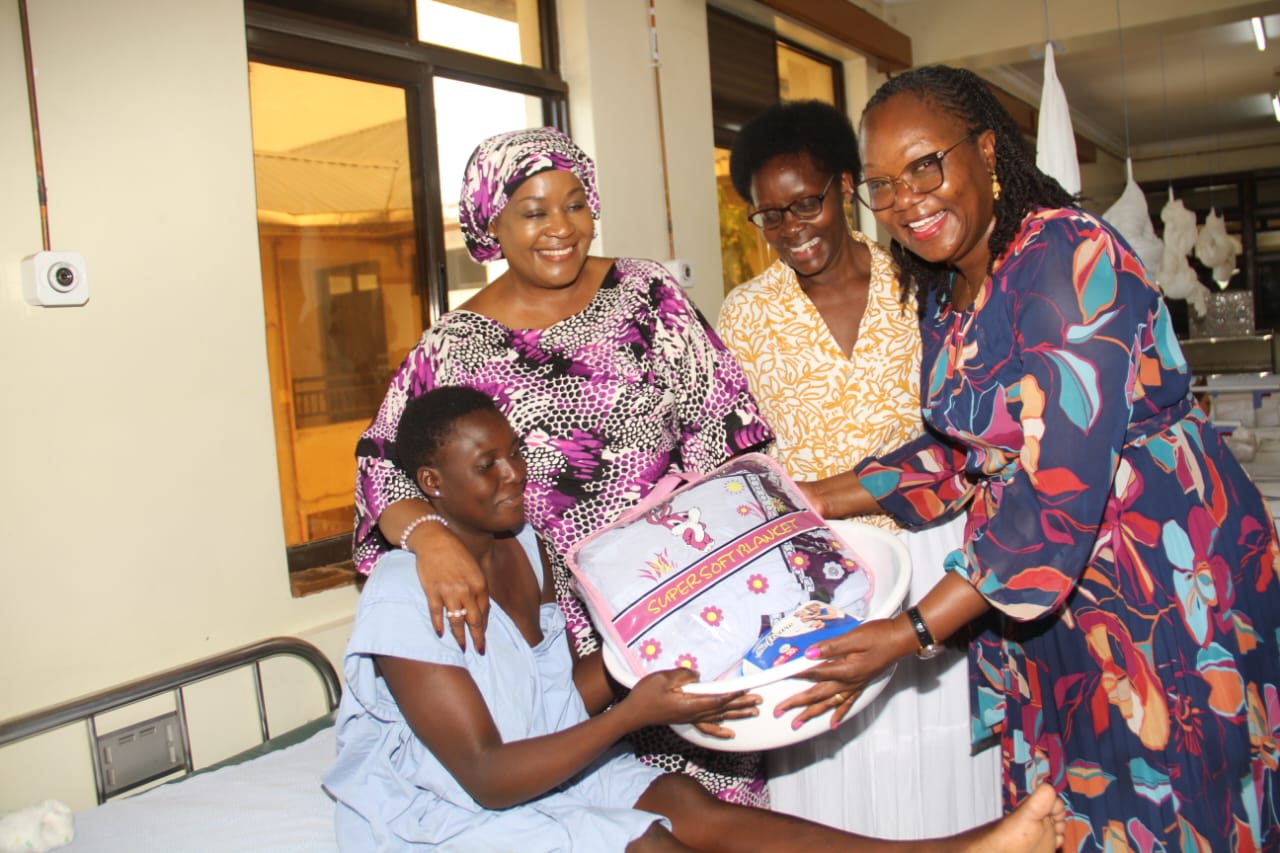
Tessie Musalia, Chair of Ushiriki Wema Foundation, and County First Ladies Dorothy Nyong’o and Agnes Ochilo of Migori County present a postnatal gift bag to Mary Achieng and her newborn baby, Rosaline, at Lumumba Sub-County Hospital in Kisumu on September 29, 2026.
By Peace Muthoka
Kisumu, September 29, 2026 – The Ushiriki Wema Foundation has donated neonatal equipment to health facilities in five Nyanza counties in a renewed effort to improve care for premature babies and give more newborns a chance to survive.
The donation was made on Tuesday at Lumumba Sub-County Hospital in Kisumu during the launch of the ninth phase of the Okoa Malaika programme, which seeks to address gaps in newborn care by equipping hospitals with essential medical equipment.
Speaking at the handover ceremony, foundation chairperson Tessie Musalia Mudavadi said the equipment would help healthcare workers provide lifesaving care to babies born before their time, particularly in facilities struggling with shortages of incubators.
“Behind every preterm baby fighting for life is a mother and a family waiting, praying and hoping that their child will survive,” she said.
Mudavadi noted that while many healthcare workers had the knowledge, skills and commitment to save newborns, a lack of essential equipment often limited their ability to provide the care needed. She said the incubators represented more than medical supplies, offering protection and a vital chance of survival to vulnerable babies.
The latest phase of Okoa Malaika comes as Kenya steps up efforts to reduce preventable maternal and newborn deaths through the Every Woman, Every Newborn, Everywhere (EWENE) Acceleration Plan 2026–2028, which President William Ruto launched on May 28, 2026.
The plan sets out a national framework for improving access to quality maternal and newborn healthcare through its 90-90-80-80 targets. These include ensuring that 90 per cent of women attend at least four antenatal care visits, 90 per cent have skilled deliveries, 80 per cent receive postnatal care within two days of delivery, and 80 per cent can access emergency obstetric and newborn care within two hours.
According to Mudavadi, the targets underline the need to ensure that every woman and newborn receives quality care, regardless of their location.
She said Ushiriki Wema Foundation had worked alongside the Ministry of Health and other partners to support the development of the national plan and mobilise leadership around maternal and newborn health. The foundation is now helping counties translate the national commitments into practical interventions that respond to local needs.
Through Okoa Malaika, Mudavadi said, the foundation was supporting this effort by strengthening the capacity of health facilities to provide essential newborn care.
“This is where the impact of high-level advocacy must ultimately be felt: in a trained healthcare worker, a properly equipped facility and a newborn receiving timely, quality care, regardless of where that child is born,” she said.
However, she cautioned that providing equipment was only part of the solution. Mudavadi urged the beneficiary counties and health facilities to ensure that the incubators were properly installed and maintained so they could remain functional and serve newborns for years to come.
She further called on government agencies, civil society organisations, development partners and communities to work together, saying no single institution could address maternal and newborn health challenges on its own.
Okoa Malaika Brand Ambassador Njoki Mambo echoed the call for collective action, saying the programme was built on the belief that every baby deserves the best possible start in life, including those born prematurely.
Mambo said the donation would give healthcare workers additional support at a time when quick and effective intervention can make a critical difference to a newborn’s survival.
“Providing equipment to our hospitals gives those healthcare workers more support when every moment matters,” she said.
She thanked Mudavadi for her leadership and acknowledged the spouses of governors who attended the ceremony and received the equipment on behalf of their respective counties. She said their presence reflected a shared commitment to improving the health of mothers and children.
Mambo also recognised the doctors, nurses and other healthcare workers at Lumumba Sub-County Hospital and across the beneficiary counties, noting that their skills, compassion and dedication were essential in turning the donated equipment into meaningful care.
Addressing mothers and families, she urged them to remain hopeful and assured them that the programme was committed to supporting newborns and those caring for them.
Okoa Malaika is an infant pre-term mitigation programme run by Ushiriki Wema Foundation, a non-profit organisation led by Mudavadi under the Office of the Spouse of the Prime Cabinet Secretary. Through the distribution of neonatal equipment to hospitals across Kenya, the programme seeks to strengthen care for mothers and babies, particularly those born prematurely.
As the ninth phase gets underway, the foundation says its focus remains on ensuring that national commitments to maternal and newborn health translate into better-equipped facilities, stronger healthcare services and improved chances of survival for babies born too soon.