
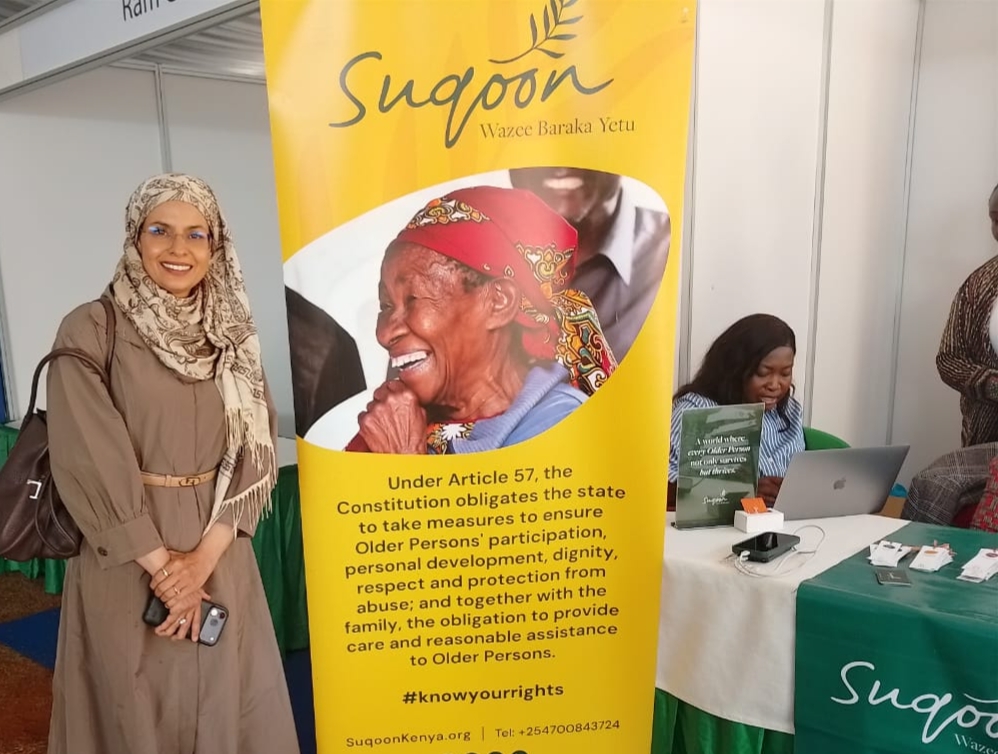
Suqoon Founder Shakira Khawaja during the International Day of Older Persons (IDOP) conference at the Kenya Institute of Special Education (KISE) in Nairobi.
By Peace Muthoka
NAIROBI, Thursday, October 1, 2026 — Kenya must strengthen social protection, healthcare and legal safeguards for older persons and persons with disabilities as the country prepares for a rapidly ageing population, with the number of people aged 60 and above projected to triple to about 12 million by 2050.
Suqoon Founder Shakira Khawaja made the call during the International Day of Older Persons (IDOP) conference at the Kenya Institute of Special Education (KISE) in Nairobi, urging the government, development partners and civil society to build lasting partnerships that translate commitments into better care and protection for vulnerable groups.
She said Kenya had made significant progress in helping people live longer, but warned that the achievement would mean little if older persons continued to face poverty, abuse, inadequate healthcare and limited support.
“Living longer is not the problem — it is one of the great public health achievements of our time. Through vaccination, better nutrition, clean water and better health care, we worked hard to help people live longer. And we succeeded,” she said.
According to the National Council for Population and Development, Kenya has approximately 3.6 million people aged 60 and above, a figure expected to rise to around 12 million by 2050. Most are projected to be women living in rural areas.
Yet, despite their contribution to families and communities, more than half of older Kenyans live in absolute poverty, making them the poorest age group in the country. Khawaja noted that this hardship often extends to entire households, particularly where older persons continue to provide for children and grandchildren.
She illustrated this reality through the story of a 73-year-old woman in Kakamega who begins her day before sunrise, fetching water, preparing breakfast for her two grandchildren, taking them to school and working on her farm.
When her Inua Jamii cash transfer arrives, her first purchases are not for herself. She buys school shoes, sugar for the children and airtime so her son, who works in Nairobi, can call home.
“Who is the beneficiary of that payment? On paper, she is. In reality, it is three generations,” Khawaja said.
The example, she argued, demonstrates why social protection for older persons should be viewed not merely as assistance to individuals but as an investment in families and future generations.
Older people continue to play a vital role in society by raising grandchildren, farming, running businesses and holding families and community groups together. However, much of this contribution remains unrecognised, even as many struggle with poverty and limited access to essential services.
Khawaja acknowledged the government’s efforts through the Inua Jamii programme, which provides a monthly cash transfer of Sh2,000 to eligible Kenyans aged 70 and above who do not receive a pension. The programme reaches more than 1.2 million Kenyans, alongside persons with severe disabilities.
However, she called for a review of the eligibility criteria, pointing out that the Constitution recognises people aged 60 and above as older persons, while the cash transfer programme begins at 70.
She described this difference as a missing decade in which many older people remain outside the programme’s reach, urging the government to establish a clear pathway for extending social protection to those aged 60 and above.
Beyond financial assistance, Khawaja called for stronger legal safeguards against the abuse and exploitation of older persons. She said Suqoon continues to encounter cases in which individuals collect older people’s pensions on their behalf, pressure them into signing title deeds or sell family land without their consent.
She said the proposed Older Persons Bill, 2024, offers an opportunity to address these gaps by establishing a stronger legal framework for protecting older people’s rights, care and standards of living.
Although the Bill completed public participation in 2024, it has yet to be introduced in Parliament. Khawaja urged the government to fast-track the process and ensure the legislation provides clear and consistent protection for older persons.
She also called for a unified definition of an older person across the Constitution, social protection programmes and healthcare systems to prevent inconsistencies in eligibility and access to services.
Another major challenge, she said, is the lack of reliable data on ageing. Without accurate information on how many older persons live in different parts of the country and the specific challenges they face, policymakers risk designing programmes that fail to address their needs.
Khawaja cautioned that the experiences of older people vary across communities, making it necessary for national programmes to be developed in consultation with county governments and local communities rather than relying on uniform solutions.
Healthcare financing also featured prominently in her address. Khawaja cited growth in elderly enrolment under the Social Health Authority, saying 3.28 million older persons had benefited since the authority began operating, with pre-existing conditions covered from the date of registration.
She proposed mandatory health insurance enrolment for older persons, with premiums for Inua Jamii beneficiaries paid by the national government, county governments or development partners. She further called for healthcare protection to begin at 60 rather than 70.
Khawaja said prevention should also become a priority, noting that a simple intervention such as installing a grab rail or improving lighting in an older person’s home could prevent falls, hospitalisation and the additional burden of care on family members.
Through Suqoon, in partnership with organisations including Safaricom and the Chandaria Foundation, homes are modified to enable older persons to age safely in familiar surroundings.
She described such interventions as investments in health, caregiving and social protection, arguing that supporting older people before a crisis occurs can help preserve their independence and reduce pressure on families.
The burden of care, she added, is often carried by relatives who lack formal training, financial assistance or access to community support services.
Khawaja highlighted the shortage of specialists in geriatric care, saying Kenya has fewer than 10 doctors trained in the field to serve an estimated 3.6 million older persons. She called for expanded specialist training and practical support for family caregivers, including stipends, leave days, training and community-based support centres.
She said the need for caregiver support is particularly evident in families caring for people with dementia, where relatives may be left to manage difficult situations without guidance or professional assistance.
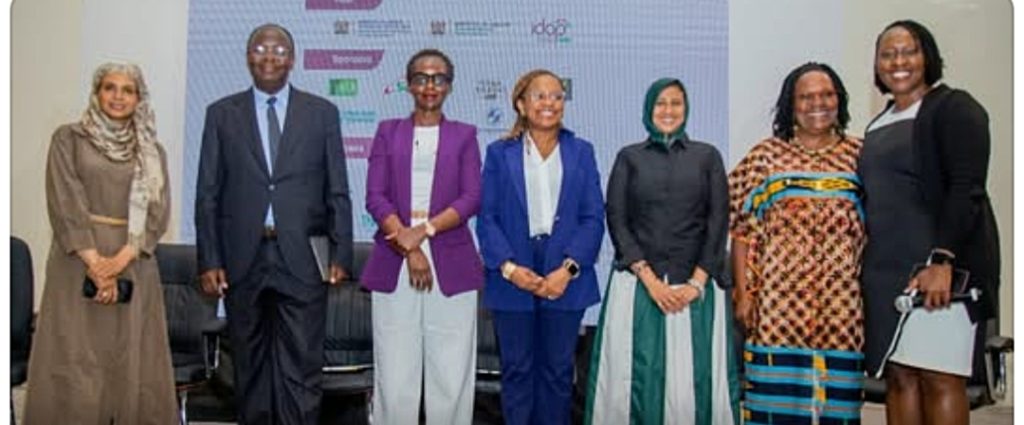
Khawaja calls for partnerships that last beyond pilot projects
Beyond policy and funding, Khawaja said Kenya must rethink how organisations, government agencies and development partners work together to support older persons.
Drawing on Suqoon’s experience, she observed that while partnerships in the ageing sector are not scarce, those that continue beyond pilot projects remain limited.
“Partnerships for older persons in Kenya are not scarce — what is scarce is partnerships that survive past the pilot,” she said.
She argued that meaningful partnerships should go beyond funding arrangements or reporting obligations. Instead, they should bring together organisations with different strengths, resources and responsibilities, while ensuring that all parties share accountability for results.
Khawaja said Older Persons Associations (OPAs) should be recognised as strategic partners rather than merely beneficiaries because of the trust and legitimacy they hold within their communities. Similarly, she said government ministries should be treated as partners in the work, given their mandate and authority to turn successful local initiatives into national policy.
She cited the longstanding work of HelpAge Kenya and KARIKA, which grew from community-level efforts to support older persons, as examples of initiatives that need stronger connections to build a coordinated system of care and protection.
However, she noted that funding relationships often stall because development partners hesitate to commit substantial resources to organisations whose capacity to manage large grants is considered limited.
Khawaja said this creates a cycle in which organisations are expected to demonstrate capacity before receiving significant funding, yet lack the resources needed to build that capacity.
She urged development partners to invest deliberately in strengthening governance, management systems and reporting structures as part of their partnerships, rather than making these requirements conditions that organisations must meet on their own.
At the same time, she said organisations receiving funding must uphold high standards of ethics and integrity and provide honest accounts of how resources are used.
“Trust is built in both directions, and it is that trust, more than any single grant, that allows capacity to grow,” she said.
Khawaja also emphasised the importance of networks in bringing stakeholders together, saying their value lies not simply in the connections people hold but in their ability to introduce organisations to one another and create opportunities for collaboration.
She cited the IDOP conference as an example, explaining that Suqoon had brought Ageing Concern Foundation and CPF Group Foundation together in March around the idea of convening all stakeholders working on ageing in Kenya.
That initial conversation led to the conference, which has brought together the Ministries of Health and Labour and Social Protection, older persons’ organisations, researchers, caregivers, county governments and development partners. It has also created an opportunity for the two ministries to coordinate on older persons’ issues through a joint initiative.
Khawaja urged organisations to approach potential partners with practical proposals, beginning with achievable actions rather than overwhelming them with large demands. She said this would allow partners to identify what they could contribute using existing resources and build towards broader commitments.
She further called for greater recognition of social capital, which she described as the networks, trust and relationships that enable communities to support one another.
From a granddaughter accompanying her grandmother to a clinic to a community health promoter who knows older residents by name, she said these relationships provide essential care that government and development partners cannot replace.
She urged stakeholders to recognise, support and incorporate such community networks into policies and programmes rather than treating them as informal efforts that happen without planning or investment.
“The opportunity in front of this panel is specific: move from partnerships that exist, to a partnership architecture that holds — with a clear mandate, shared accountability, and our Ministries and Older Persons Associations recognised, deliberately, as strategic partners rather than a regulator on one side and a beneficiary on the other,” she said.
Decades of advocacy
The conference also recognised the decades of work by organisations and individuals who have championed the rights and welfare of older persons in Kenya.
Khawaja acknowledged the contributions of HelpAge Kenya, KARIKA, MICOP, Ageing Concern Foundation, AgeWatch Africa, CPF Group Foundation and La Vie Foundation, among other organisations and advocates.
She paid tribute to Agnes Kariuki, who established the Kibera Day Care Centre for the Elderly in 1989 with 17 older persons. By the time of her death, the centre, through 31 associations, was reaching more than 3,200 older people. Kariuki also worked with HelpAge to pioneer the “Adopt a Granny” initiative and championed older persons’ rights through the Age Demands Action campaign.
Khawaja said the progress made in advancing the ageing agenda was built through decades of commitment by older persons themselves, community organisations, government agencies, caregivers and families.
“We are not here to replace what they built. We are here because of what they built, and it is our responsibility to carry it forward,” she said.
She urged stakeholders to ensure the commitments made during the conference translate into practical action, including the introduction of the Older Persons Bill, improved access to ageing research, reforms to Inua Jamii and stronger support for caregivers.
As Kenya marked the International Day of Older Persons, Khawaja called for a shift from fragmented projects to lasting partnerships that can support older people throughout their lives.
“An elder is not where the life cycle closes. She is where it turns,” she said, emphasising that investing in older persons benefits not only those receiving support but also their families, communities and the generations that follow.
She said the country’s achievement in helping people live longer must be matched by a commitment to ensuring those additional years are lived with health, security, participation and dignity.