
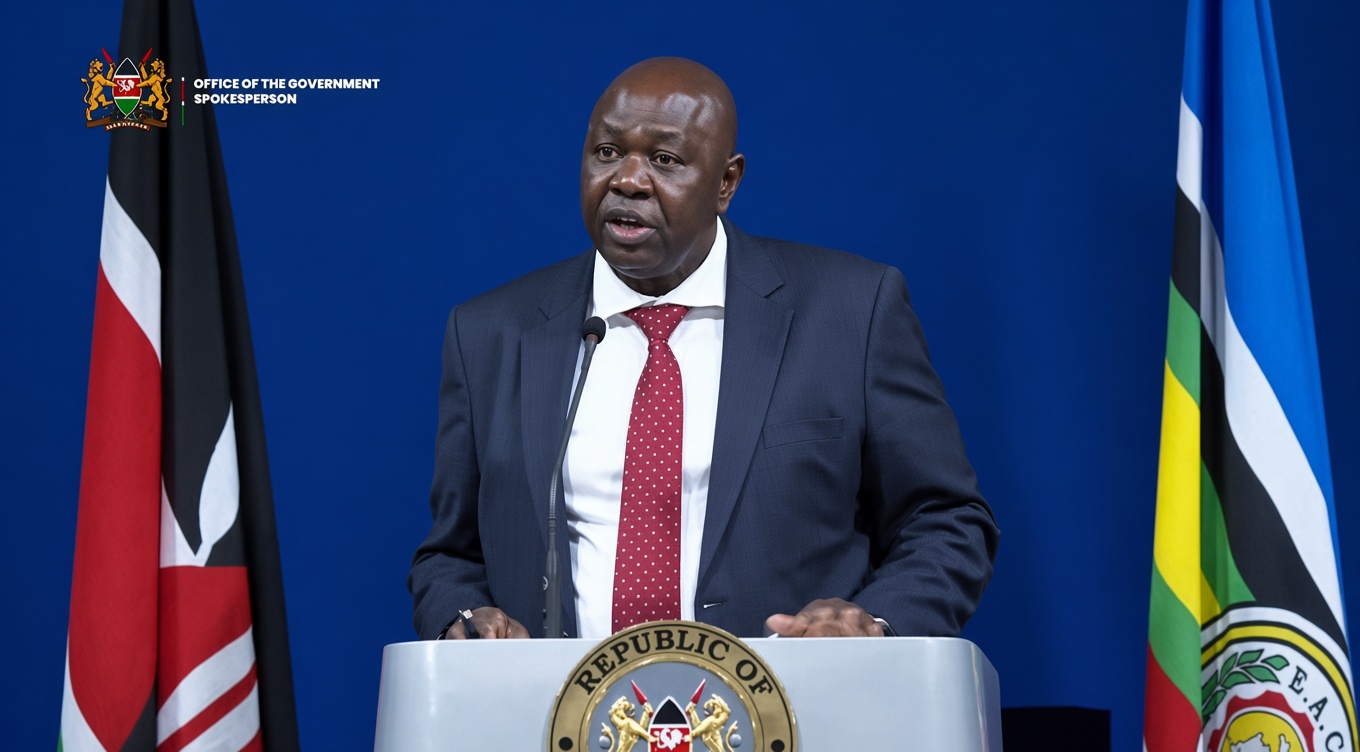
Government Spokesperson Charles Owino Speaking during a press briefing on Monday
By Peace Muthoka
Government announces registration window for Burundians and other East Africans amid ongoing debate over small-scale trade regulations
Nairobi, September 7, 2026 – The Government of Kenya has moved to calm public anxiety over recent directives on foreign workers, announcing a formal registration window for undocumented East African nationals while firmly pushing back against claims that the measures are xenophobic.
Speaking during a press briefing on Monday, Government Spokesperson Charles Owino addressed what he termed “mischaracterisations” of the September 2 directives issued by President William Samoerutu, insisting that the regulations are neither a blanket ban nor a hostile action against foreign nationals.
“The core intent of these measures is to protect vulnerable sectors of our domestic economy, safeguard local livelihoods, and maintain the integrity of our national identity systems,” Owino told journalists.
He explained that the directives, which target small-scale retail and informal trade, align with standard legislative practices across the region, including the proposed Local Content Bill 2025. “This is not unique to Kenya,” he added.
Acknowledging the Reality on the Ground
Owino acknowledged that due to historical circumstances, several East African nationals, particularly Burundians, are living and working in Kenya without proper documentation. He said this leaves them exposed to exploitation, health emergencies, and harassment by law enforcement.
“We recognise and deeply appreciate the rich contributions made by East African nationals, particularly our Burundian brothers and sisters, to Kenya’s trade, culture, and socioeconomic fabric,” Owino said.
“Kenya has a proud historic reputation as a safe haven and a land of hospitality, and we will not allow any nationalist reporting to dilute this legacy.”
Registration Window Opens
To address the situation constructively, the government is establishing a formal documentation window. All undocumented East African nationals, especially Burundians, have been called upon to present themselves to their respective high commissions or embassies for identity registration.
The Ministry of Foreign Affairs will engage directly with the Embassy of Burundi and other regional partners to manage the process cooperatively.
During the registration period, all individuals undergoing the process will be presumed legally present in Kenya.
“This window is designed to bring our brothers and sisters out of the shadows, ensuring that they can access health, banking, and legal protections without fear,” Owino stated.
Further administrative details, including timelines, will be coordinated and communicated through respective foreign missions following diplomatic consultations.
Strict Orders to Security Agencies
In a firm directive, the government declared zero tolerance for any form of harassment, intimidation, or xenophobia.
A strict order has been issued to all security agencies, local authorities, and the business community: no foreign national documented or currently undergoing registration is to be subjected to arbitrary harassment or discrimination.
Owino warned that any individuals seeking to exploit the directives to fuel xenophobic sentiments will face the full force of the law.
In partnership with civil society networks and humanitarian organisations, the government is strengthening monitoring of migrant safety in urban centres.
Rejecting Misreporting
The government took issue with recent media reports, including coverage by international outlets, which it said had misinterpreted the administrative measures as a blanket ban or hostile action.
“Kenya’s commitment to the East African Community Common Market Protocol remains absolute and unwavering,” Owino stressed. “We view our East African neighbours not as foreigners but as brothers and sisters of our shared Jumuiya. Our history, culture, and destiny are deeply intertwined.”
“We don’t want them to find themselves in fear,” he said, adding that proper documentation protects individuals from exploitation by rogue elements who might take advantage of their undocumented status.
On the issue of porous borders, Owino emphasised that the registration exercise is about regularising documentation to ensure individuals can live without fear and access essential services.