
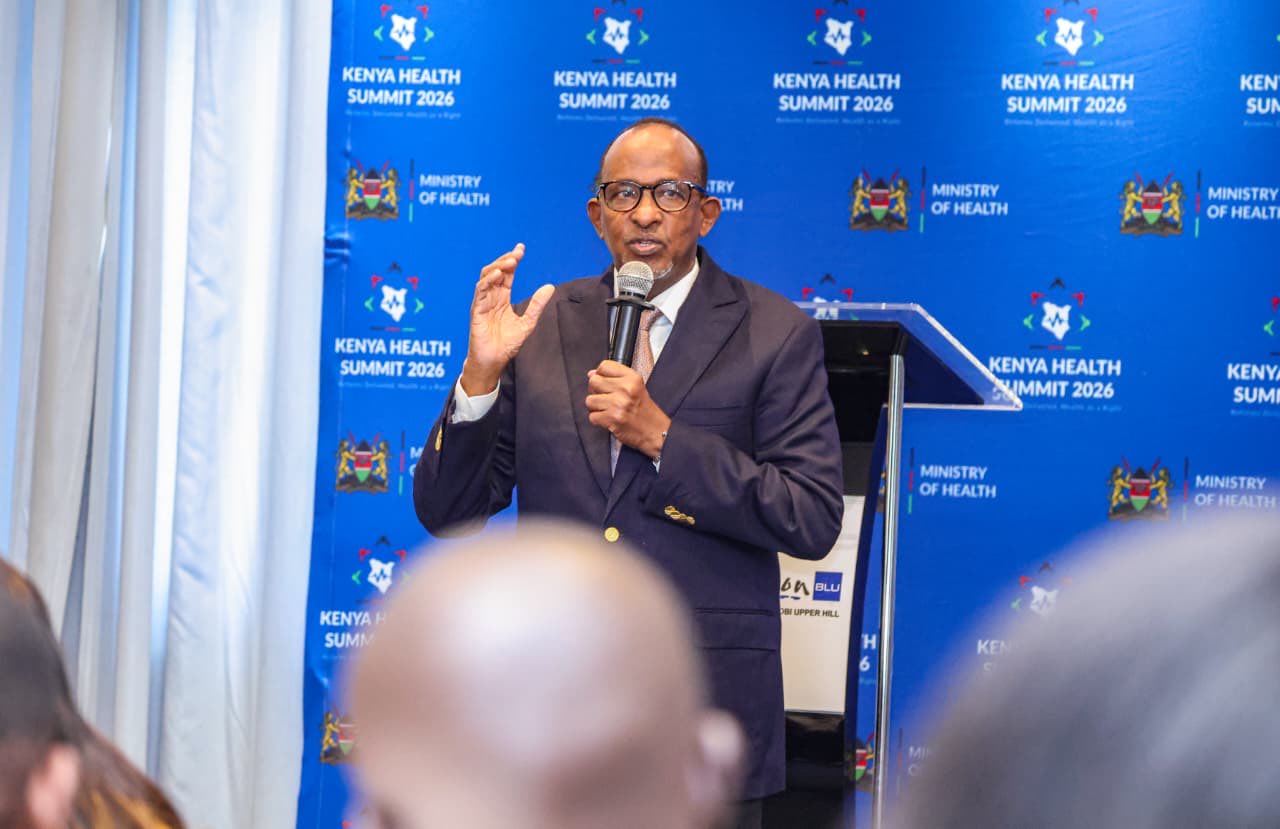
CS Duale Unveils Progress on Health Reforms Ahead of National Health Summit during a meeting with editors and journalists at Nairobi hotel.
By Peace Muthoka.
NAIROBI, Kenya — Kenya’s health sector is undergoing major reforms aimed at expanding access to healthcare, strengthening primary care and improving the country’s ability to respond to emergencies, Health Cabinet Secretary Aden Duale has said.
Duale said the progress will be at the centre of discussions during the Kenya Health Summit, scheduled for August 18 and 19 at the Kenyatta International Convention Centre (KICC), where national and county governments, development partners, health institutions and other stakeholders will assess the country’s healthcare transformation.
He said the summit will provide an opportunity to take stock of the government’s commitment to ensuring that quality healthcare becomes accessible to Kenyans across all counties.
“Healthcare will stop being a privilege for the few and become a guaranteed right of every citizen in every county,” Duale said, referring to the government’s 2022 healthcare pledge.
SHA coverage reaches 32.2 million
At the heart of the reforms is the transition from the National Health Insurance Fund (NHIF) to the Social Health Authority (SHA), which took effect on October 1, 2024.
Duale said 32.2 million Kenyans are now registered under SHA, a significant increase from the roughly eight million people covered by the former NHIF.
Since its establishment, he said, SHA has paid Sh164 billion in claims and processed nearly 7.9 million claims. The payments have supported 48,027 cancer treatments, more than 469,000 surgeries and 1.24 million safe deliveries.
The CS said the Primary Healthcare Fund is also helping to reduce financial barriers to basic medical services by allowing registered Kenyans to access care at Level 2 to Level 4 facilities without paying at the point of service.
Beyond hospitals, the government is strengthening healthcare delivery at the community level through an expanded network of Community Health Promoters.
According to Duale, more than 107,800 Community Health Promoters have been recruited and trained and are supported by 277 primary healthcare networks.
Through the electronic Community Health Information System, the promoters have so far reached about 2.7 million households, providing preventive and primary healthcare services closer to where people live.

Nearly Sh293 billion invested in healthcare
Duale said the reforms are backed by increased public investment, with the national government allocating Sh138.1 billion to the health sector in the current financial year.
The allocation represents an 8.7 per cent increase, while county governments have committed a further Sh154.6 billion, bringing total public investment in healthcare to nearly Sh293 billion.
The government is also seeking to strengthen domestic pharmaceutical manufacturing as part of efforts to improve the availability of medicines and reduce reliance on imports.
Kenya currently has 19 licensed pharmaceutical manufacturers, with another 13 in the pipeline. Duale said the country is able to sustain more than 94 per cent availability of medicines nationwide.
At the same time, Sh9.688 billion has been invested in modern medical equipment across 239 health facilities in 44 counties under the National Equipment Service Programme.
Duale pointed to King Fahad Hospital in Lamu as an example of how the investment is changing access to specialised healthcare in counties.
The facility now has a CT scan, MRI, modern theatre, paediatric wing, private wing and an oxygen system, he said, reducing the need for residents to travel to Mombasa or Nairobi for specialised treatment.
Kenya strengthens emergency preparedness
The government has also stepped up its preparedness for disease outbreaks and other health emergencies.
Duale said Kenya successfully detected and contained Mpox after the disease reached the country in 2024, recording a 97.9 per cent recovery rate among confirmed cases.
He also highlighted the launch of the country’s first National Ambulance Dispatch Centre and a toll-free 192 emergency line on August 5.
According to the CS, the service provides free emergency dispatch access to Kenyans regardless of where they live or whether they are registered with SHA.
The government has further strengthened disease surveillance by training more than 1,778 field epidemiologists through its field epidemiology and laboratory training programme.
Duale said the specialists will help the country detect and respond to future disease outbreaks more effectively.
Duale urges media to verify health reforms
While presenting the government’s achievements, Duale challenged journalists to go beyond reporting official statistics and independently assess how the reforms are affecting Kenyans.
He urged the media to visit health facilities, engage Community Health Promoters and speak directly to patients to establish whether the changes are translating into better healthcare outcomes.
“Numbers alone don’t tell the story,” Duale said, noting that behind the statistics are mothers delivering safely, children receiving vaccines, patients accessing treatment and healthcare workers providing services on the frontline.
He said the media has a critical role in helping Kenyans understand and assess the reforms.
“A reform that Kenyans don’t know about and don’t yet believe hasn’t truly succeeded,” he said.
The Ministry of Health is expected to provide journalists with a detailed briefing pack containing the data presented by the CS, as well as accreditation information for the Kenya Health Summit.
The two-day summit will bring together key players in the health sector to review progress, examine remaining gaps and explore ways of making healthcare more accessible and responsive to the needs of Kenyans.