CSOs and Religious Leaders Question Sh1.61bn Judges’ Car Grant, Call for Accountability
By Peace Muthoka
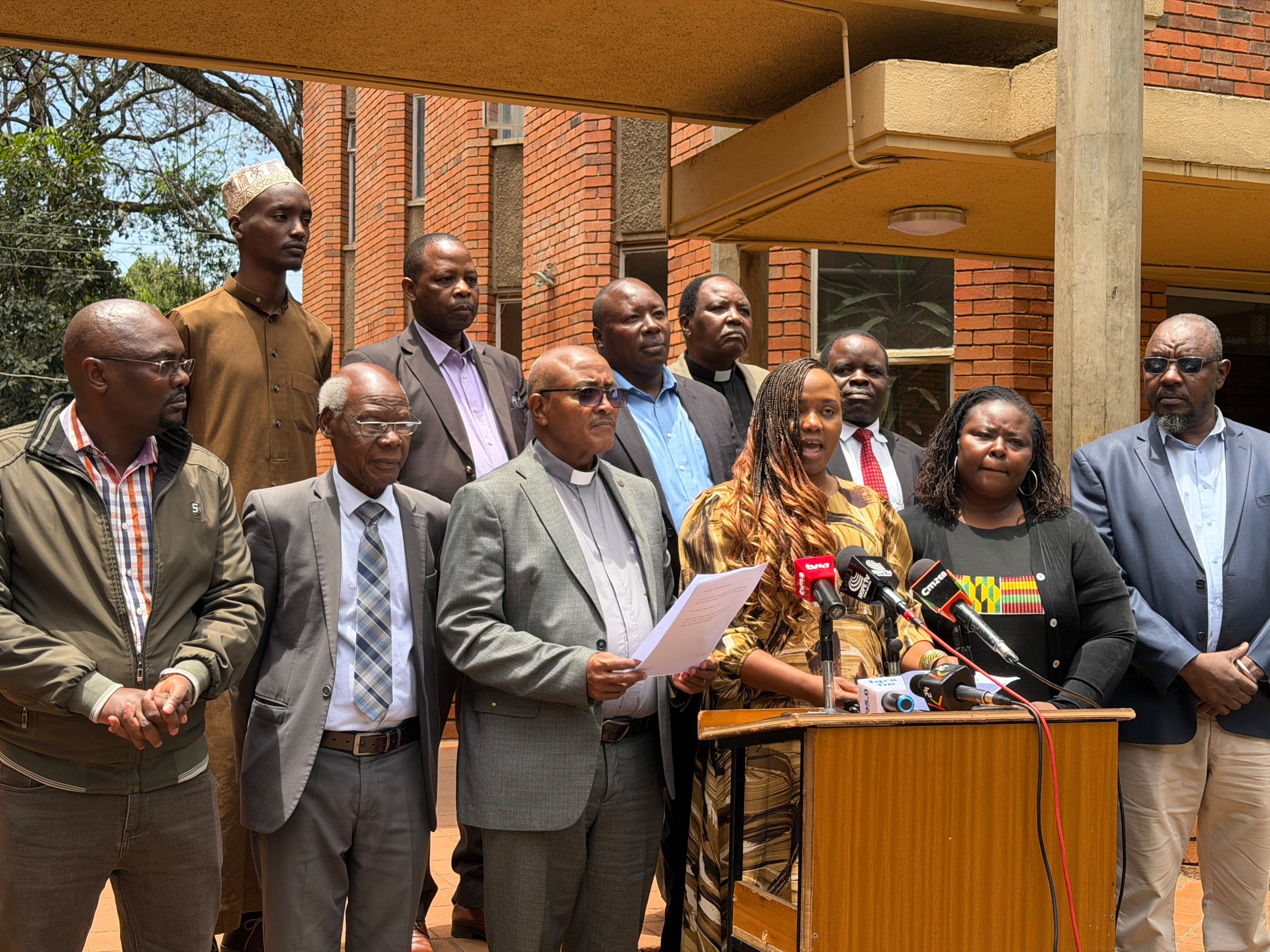
NAIROBI, Kenya — Religious leaders and civil society organisations have questioned a disputed car grant for judges, warning that the estimated Sh1.61 billion cost to taxpayers every four years after tax raises concerns about public spending, fairness and accountability as the Supreme Court prepares to determine the matter.
The groups say the dispute goes beyond judges’ remuneration to the broader question of whether public institutions are balancing their benefits with the financial pressures facing ordinary Kenyans, including the rising cost of living, school fees, healthcare and taxes.
In a joint statement issued on Tuesday, October 13, the organisations urged the Supreme Court to protect judicial independence while ensuring that public expenditure remains subject to constitutional scrutiny.
Their analysis estimates that a Sh10 million vehicle grant for each of the judicial positions covered by their available figures would cost approximately Sh2.3 billion before tax, or Sh1.61 billion after tax, every four years. They emphasised that these figures are estimates based on available information and assumptions, not confirmed expenditure or a court finding on the grant’s legality.
The organisations questioned whether a benefit of that magnitude was justified, particularly given what they described as judges’ access to official chauffeur-driven transport. They argued that the additional cost should be assessed against its purpose, proportionality and value to the public.
“Public money is a public trust, not an entitlement to be expanded without justification,” the statement said.
The groups warned that the estimated expenditure represents revenue that could otherwise support essential public services, including hospitals, medicines, school infrastructure, water provision and agricultural programmes.
However, they said their position was not that judges should be denied fair remuneration. Instead, they want the Supreme Court to clarify how constitutional protections for judicial benefits should be reconciled with the need for equitable, transparent and financially sustainable public spending.
“Judicial independence is indispensable, but it must never become judicial exceptionalism,” the organisations said.
The statement was signed by 16 organisations and institutions, including the Kenya Human Rights Commission, Transparency International Kenya, the Institute for Social Accountability, the Okoa Uchumi Campaign and the National Integrity Alliance.
At the centre of the dispute are two constitutional provisions governing judicial remuneration and public-sector pay. Article 160(4) protects judges against disadvantageous variation of their remuneration and benefits, while Article 230 establishes the Salaries and Remuneration Commission (SRC), which is mandated to set and regularly review the remuneration and benefits of State officers.
The organisations argued that neither provision should be considered in isolation. They called for an interpretation that protects judges from political interference and financial retaliation while maintaining accountability over the use of public funds.
The matter has already been considered by the courts. In Gachuiri v Attorney General and another; Kenya Judges Welfare Association and another [2024] KEHC 5836 (KLR), the High Court held that the taxable car allowance was a protected benefit under Article 160(4).
The Court of Appeal subsequently considered the dispute in Salaries and Remuneration Commission v Gachuiri and three others [2026] KECA 692 (KLR). The Supreme Court is now expected to provide authoritative guidance on the issues properly before it, including the legal status of the disputed benefit and the scope of constitutional protection against changes to judicial remuneration.
The organisations also invoked Articles 1, 10 and 73 of the Constitution, which establish the sovereignty of the people, require public institutions to uphold national values and provide that State authority must be exercised as a public trust.
They said these principles require all institutions to justify the use of public resources and warned against a situation in which powerful bodies rely on their status or historical entitlements to secure exceptions from effective scrutiny.
The groups further called for accountability in public retirement benefits, including those of judges, citing Article 201, which requires openness and accountability in public finance and the prudent and responsible use of public money.
They also raised the issue of public confidence in the pending proceedings, noting that the case concerns benefits accruing to members of the institution tasked with determining the dispute. Without alleging impropriety or prejudging the outcome, they said any actual or properly raised apparent conflicts of interest should be addressed in accordance with the law.
Beyond the car grant, the organisations urged public institutions to ensure that all expenditure has a lawful basis and that public benefits are subjected to appropriate transparency and accountability.
They called on religious institutions, civil society groups, professional associations, universities, workers’ organisations and the media to sustain informed and peaceful public engagement on public spending.
The signatories included the Joint Forum of Religious Organisations, the Seventh Day Adventist Church, Friends Church, the Presbyterian Church of East Africa, the National Council of Churches of Kenya Nairobi Region County Coordinating Committee, Muslim Professionals League Africa, Badili Africa, Youth Alive! Kenya, PAWA254 and Inuka Kenya Ni Sisi!
The organisations said their call was not intended to weaken the Judiciary, but to ensure that its independence is matched by integrity and public confidence in the rule of law.
They maintained that constitutional accountability must apply to every institution entrusted with public authority, particularly when decisions on public benefits have implications for how taxpayers’ money is allocated.
“Let the Constitution bind everyone equally. Let public money serve the public good,” the statement said.