Fuel Crisis Sparks Outrage as People’s Renaissance Movement Accuses Government of Neglect
By Peace Muthoka
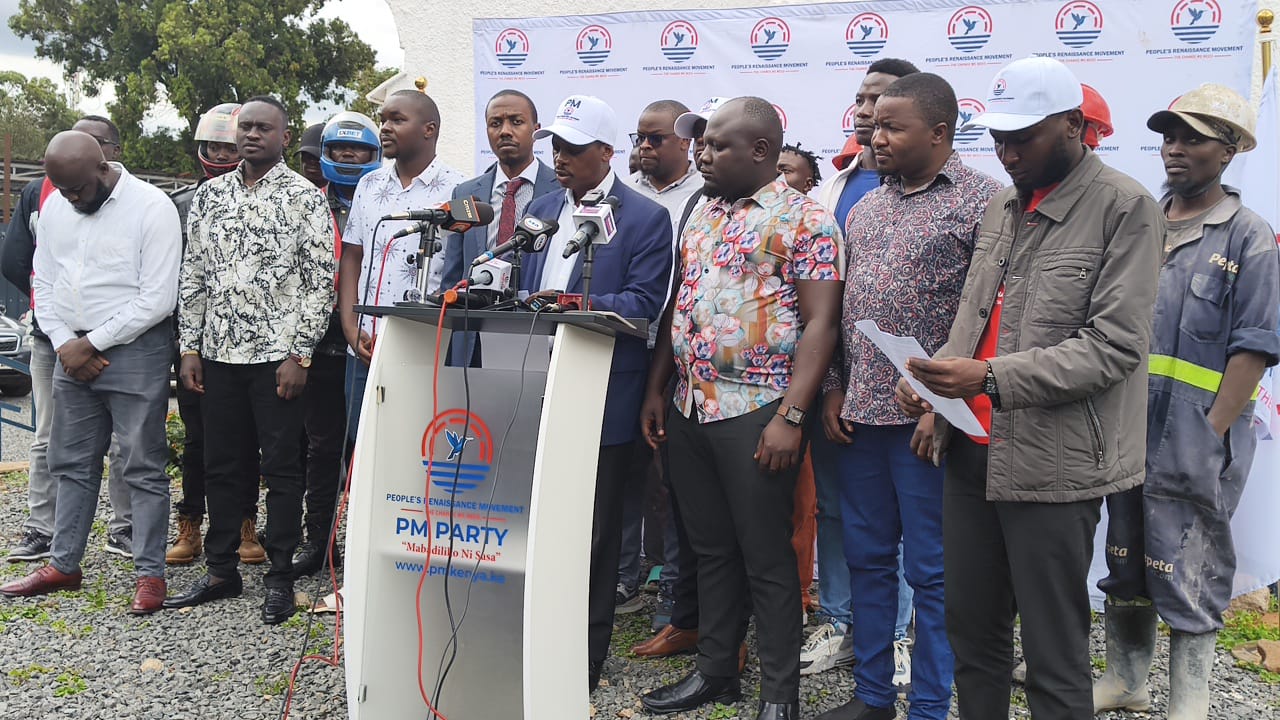
Nairobi, April 2026 — The People’s Renaissance Movement (PM) has sharply criticized the government over the ongoing surge in fuel prices, terming the situation a man-made crisis that continues to push millions of Kenyans deeper into economic distress.
In a strongly worded statement, the movement said the rising cost of fuel and persistent supply instability are not accidental but stem from policy failures, weak governance, and misplaced priorities. It argued that ordinary Kenyans are now bearing the full burden of a crisis they did not create, as the cost of living continues to rise across the country.
The movement noted that transport costs have increased by between 20 and 50 percent, placing immense pressure on households and businesses. It warned that small and informal enterprises, which account for more than 80 percent of employment in Kenya, are now at risk of collapse due to the sustained rise in operational costs.
Despite the growing economic strain, the movement accused the government of remaining indifferent.
It pointed to several systemic failures, including what it described as excessive taxation on fuel, with taxes accounting for between 40 and 50 percent of the pump price—among the highest in the region. The statement also cited the absence of a functional strategic fuel reserve to cushion the country against supply shocks, as well as a lack of transparency in fuel procurement, which it said has created room for inefficiencies and cartel influence.
Additionally, the movement blamed weak currency management for increasing the cost of fuel imports, further driving up pump prices.
“This is not governance—it is abandonment,” the statement read.
To address the crisis, the People’s Renaissance Movement proposed a series of immediate interventions it says could deliver relief within weeks.
Top among the proposals is the suspension of the 8 percent Value Added Tax (VAT) on fuel and a reduction of excise duty by at least half. According to the movement, this could lower petrol and diesel prices by between KSh 20 and 30 per litre, translating to a 15 to 20 percent reduction and easing pressure on both households and businesses.
The movement also called for the introduction of a targeted public transport subsidy, proposing the allocation of between KSh 15 billion and KSh 20 billion to cushion matatu and bus operators. It said the savings should be passed directly to commuters through regulated fare ceilings, potentially stabilizing transport costs by 15 to 25 percent.
Further, it urged the government to urgently establish a strategic fuel reserve capable of sustaining the country for 60 to 90 days. Such a reserve, it argued, would help prevent artificial shortages and shield consumers from panic-driven price spikes.
On accountability, the movement demanded full transparency in the fuel supply chain, including the publication of all fuel import contracts and pricing structures. It also called for an independent audit of the sector within 30 days to address alleged inefficiencies and cartel activity.
Beyond policy proposals, the movement framed the crisis as a political issue, claiming that the current situation persists because it benefits a select few at the expense of millions of Kenyans.
“A government that allows fuel—an essential commodity—to become unaffordable is a government that has lost its moral authority to lead,” the statement added.
The movement has now called on Kenyans to take action by demanding transparency and accountability from leaders, rejecting what it termed as economic oppression disguised as policy, and using their democratic power to push for change.
“Mabadiliko ni sasa. Economic liberation is non-negotiable,” the statement concluded.