
Kenyatta University Calls for Stronger Partnerships to Build Africa’s Resilience
By Peace Muthoka
Nairobi, Kenya — Universities, communities, governments and other stakeholders have been urged to strengthen partnerships and turn scientific research and indigenous knowledge into practical solutions to Africa’s growing climate challenges.
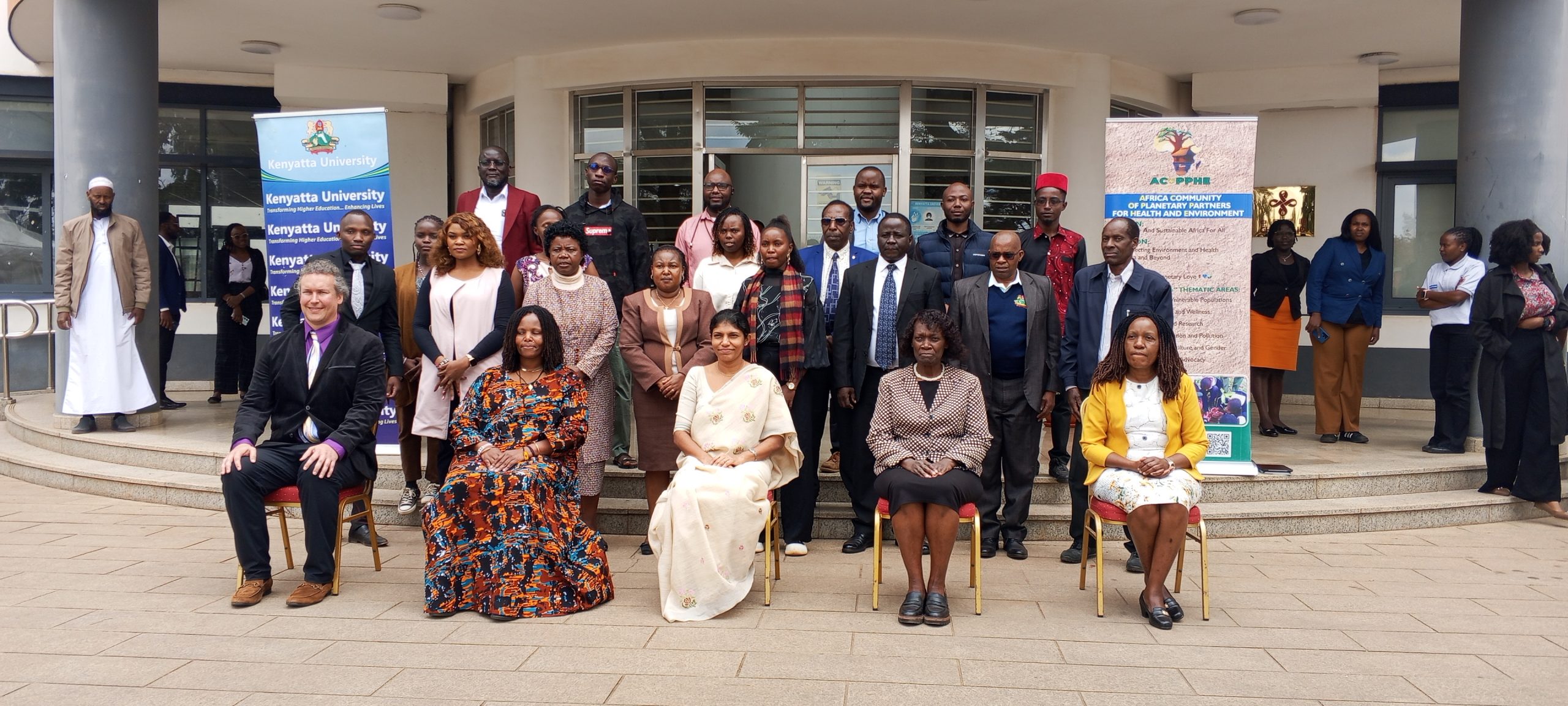
The call was made during the opening of the second annual Health and Environment in Africa Research, Translation and Solutions for Climate (Hearts for Climate) Conference, held as part of the African Universities and Communities Climate Week (AUCCW) 2026 at Kenyatta University.
Speaking during the conference, Kenyatta University Deputy Vice Chancellor for Research, Innovation and Outreach, Prof. Caroline Thoruwa, said the gathering was more than an academic event, describing it as a continental platform where science, communities and indigenous innovation come together to address climate change.
She said Africa’s response to climate change must recognise the important role played by local communities and indigenous knowledge systems in building resilience and promoting sustainable development.
“This gathering represents more than an academic convening. It is a continental platform where science meets society, where universities stand shoulder to shoulder with communities,” Prof. Thoruwa said.
She added that Kenyatta University remains committed to advancing the One Health, One Planet approach, which recognises the interconnectedness of human health, animal health and the environment.
Consequently, she said, climate solutions must be developed through collaboration across disciplines, institutions and generations rather than through isolated interventions.
Prof. Thoruwa noted that hosting AUCCW 2026 was both a privilege and a responsibility for the university, reflecting its commitment to strengthening links between universities and communities.
In particular, she said the university seeks to bridge the urban-rural divide through shared learning on food systems, health and livelihoods while promoting indigenous knowledge as an important pillar of climate action.
She also emphasised the need to give young people and marginalised communities a greater role in shaping sustainable solutions.
Prof. Thoruwa said the university would continue working with government, civil society, the private sector and communities to ensure that research and innovation have a meaningful impact beyond academic institutions.
“We will translate research into policy, innovation into practice, and dialogue into action,” she said.
Climate change no longer a distant threat
Officially opening the conference, Sri Lanka’s Acting High Commissioner to Kenya and Permanent Representative to UNEP and UN-Habitat in Nairobi, H.E. S. Ruvini S. De Silva, said Africa was experiencing the effects of climate change in ways that can no longer be ignored.
She pointed to drying rivers, prolonged droughts, threats to food security, floods, declining biodiversity and rising health risks as some of the challenges facing communities across the continent.
“Climate change is not only an environmental issue, but also a development, public health, economic challenge, and ultimately a question of justice and human dignity,” De Silva said.
However, she expressed optimism about Africa’s ability to develop and implement solutions, noting that researchers, communities, entrepreneurs and young people were already contributing to climate action in different ways.
She said innovation was taking place not only in laboratories and universities but also in villages, farms, indigenous territories and urban neighbourhoods.
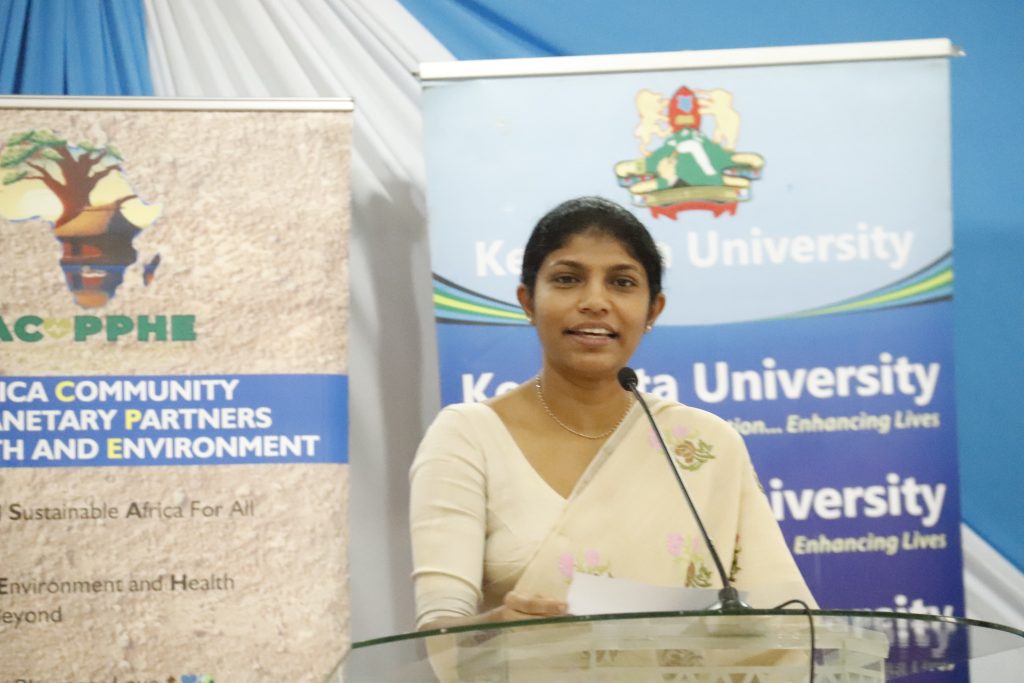
According to De Silva, these efforts demonstrate the importance of recognising local solutions alongside scientific research in addressing climate challenges.
She said the approach was captured in the theme of the conference, “One Heart, One Planet: Leveraging Local and Indigenous Innovations to Unite Urban and Rural Communities for Sustainable Development and Climate Action.”
Bringing science and indigenous knowledge together
De Silva stressed that climate action should bring scientific knowledge and indigenous experience together rather than treating them as competing approaches.
She said indigenous communities, farmers, shepherds and traditional practitioners possess generations of ecological knowledge that has helped sustain communities and landscapes.
“Our task is not to choose between scientific and indigenous knowledge, but to create spaces where they enrich one another, where evidence and experience meet with mutual respect, and where innovation grows from dialogue,” she said.
Similarly, she challenged universities to rethink their relationship with communities by treating them as equal partners in the creation and application of knowledge.
She said communities should not be viewed merely as recipients of academic research because they also possess valuable knowledge and experience that can contribute to developing effective climate solutions.
For this reason, she said partnerships between universities and communities must facilitate the exchange of knowledge in both directions.
Turning research into practical solutions
A key focus of the conference is ensuring that research does not remain confined to academic journals but is translated into policies, technologies and practices that improve people’s lives.
De Silva said the success of Hearts for Climate should ultimately be measured by the partnerships it creates, the policies it influences and the communities that benefit from the solutions developed.
She therefore urged participants to use the conference to build partnerships, connect disciplines and turn ideas into action.
“The question is not whether solutions exist, but if we have the courage to implement them together,” she said.
Meanwhile, she emphasised the importance of ensuring that young people and indigenous communities remain at the centre of climate decision-making.
She noted that indigenous communities bring generations of environmental knowledge, while young people contribute creativity, energy and determination to finding new solutions.
As a result, she said, sustainable development must be both inclusive and intergenerational.
The conference brings together researchers, academics, policymakers, development partners, community leaders, indigenous knowledge holders, students and young innovators to explore ways of strengthening climate resilience and advancing sustainable development across Africa.
De Silva declared the African Universities and Communities Climate Week 2026 officially open, calling on participants to ensure the gathering produces lasting partnerships and practical outcomes.
She urged stakeholders to move beyond discussions and presentations and focus on transforming research into solutions, knowledge into action and partnerships into lasting impact.
The conference is expected to provide a platform for participants to share research, showcase innovations and strengthen collaboration between universities and communities in responding to climate change.