
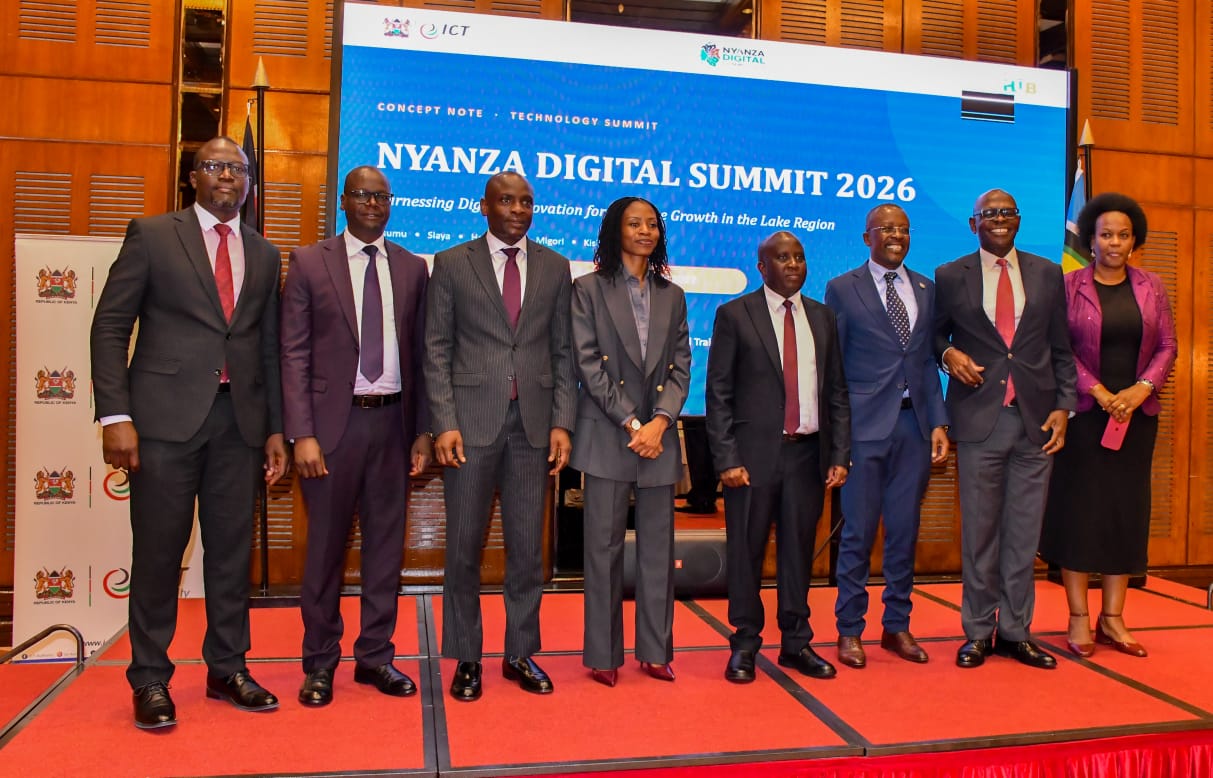
Different stakeholders present during preparations for the the inaugural Nyanza Digital Summit scheduled for December 2–4, 2026, at Bondo Technical Training Institute in Siaya County.
By Peace Muthoka
NAIROBI, November 11, 2026 — The inaugural Nyanza Digital Summit is expected to open new opportunities for young people, businesses and local communities as the Government seeks to expand digital investment and create jobs across six counties in the Lake Region.
The summit, scheduled for December 2–4, 2026, at Bondo Technical Training Institute in Siaya County, will bring together government agencies, investors, technology companies, development partners and academic institutions to explore how digital technology can drive economic growth and improve service delivery.
Preparations gathered pace on Wednesday, November 11, when the ICT Authority and Siaya Digital Hub hosted a stakeholders’ breakfast meeting at a Nairobi hotel, unveiling eight thematic areas that will guide discussions and mobilising partners to support the regional initiative.
Principal Secretary for ICT and the Digital Economy John Tanui said Nyanza had significant potential to benefit from the growing global demand for digital services, particularly business process outsourcing (BPO), which could provide employment opportunities for thousands of young people.
Tanui said Kenya could draw lessons from India, which has built a strong BPO industry, noting that local and international outsourcing firms operating in Kenya already employ more than 350,000 people.
He challenged the region to position itself as a competitive destination for BPO services, allowing local talent to serve businesses both within Kenya and internationally.
The PS said ongoing government efforts to modernise transport and port infrastructure could further strengthen the region’s ability to attract businesses and investors.
For the six counties of Siaya, Kisumu, Homa Bay, Migori, Kisii and Nyamira, the summit presents an opportunity to identify investments that respond to local economic needs while opening up new avenues for employment, particularly among young people.
ICT Authority Chief Executive Officer Jessy Maruti said the regional meeting would help identify priorities, develop projects and establish partnerships whose outcomes would inform the National ICT Summit 2027.
The eight thematic areas include digital infrastructure; AgriTech and the blue economy; financial technology and inclusion; HealthTech; e-government services; artificial intelligence and emerging technologies; cybersecurity and data; and digital skills, youth and jobs.
The discussions will examine how improved internet connectivity can reach schools, hospitals and government institutions, while stronger digital hubs and public Wi-Fi services could help more residents access online opportunities.
Agriculture and fishing communities will also feature prominently, with the summit expected to explore how digital platforms can connect farmers and fishers to markets, buyers, financing and timely information to improve their businesses.
In healthcare and public administration, participants will examine how technology can improve service delivery, information management and access to government services.
However, creating employment through the digital economy will require more than infrastructure. The summit will also focus on equipping young people with skills that match industry demands and connecting training institutions with potential employers.
Software development, artificial intelligence, cybersecurity, data services, business process outsourcing and the creative economy are among the sectors expected to offer opportunities for skilled young people.
Siaya Community Digital Hub Founder and Chairman Dr Oburu Oginga said the region needed to move beyond discussions and focus on investments and partnerships that would make a difference in people’s lives.
In a speech read on his behalf by his son, Jaoko Oburu, he said the success of the summit should be measured by the opportunities it creates rather than the speeches delivered.
“The success of this summit will not be measured by the speeches delivered today. It will be measured by the partnerships formed, the investments secured, the jobs created and the opportunities opened for our people,” he said.
Siaya Digital Hub Chief Executive Officer Tabitha Ogutu said the hub’s work demonstrated that the Government’s Bottom-Up Economic Transformation Agenda could drive development at the community level and not just in major urban centres.
The December summit is expected to produce a regional investment pipeline, a skills and employment framework, an assessment of infrastructure and service gaps, and a partnership implementation framework.
The proposed investment pipeline will identify projects, potential financiers, implementing institutions, funding requirements and timelines to guide delivery and monitor progress.
The ICT Authority will provide technical support on infrastructure development, institutional connectivity, digital skills and technology adoption, working alongside county governments and other partners.
Organisers have invited technology companies, investors, development agencies, academic institutions, businesses and innovators to participate in developing and supporting projects across the six counties.
With preparations continuing ahead of the December gathering, Oburu urged leaders and stakeholders to take responsibility for shaping the region’s digital future.