
By Steve El Sabai
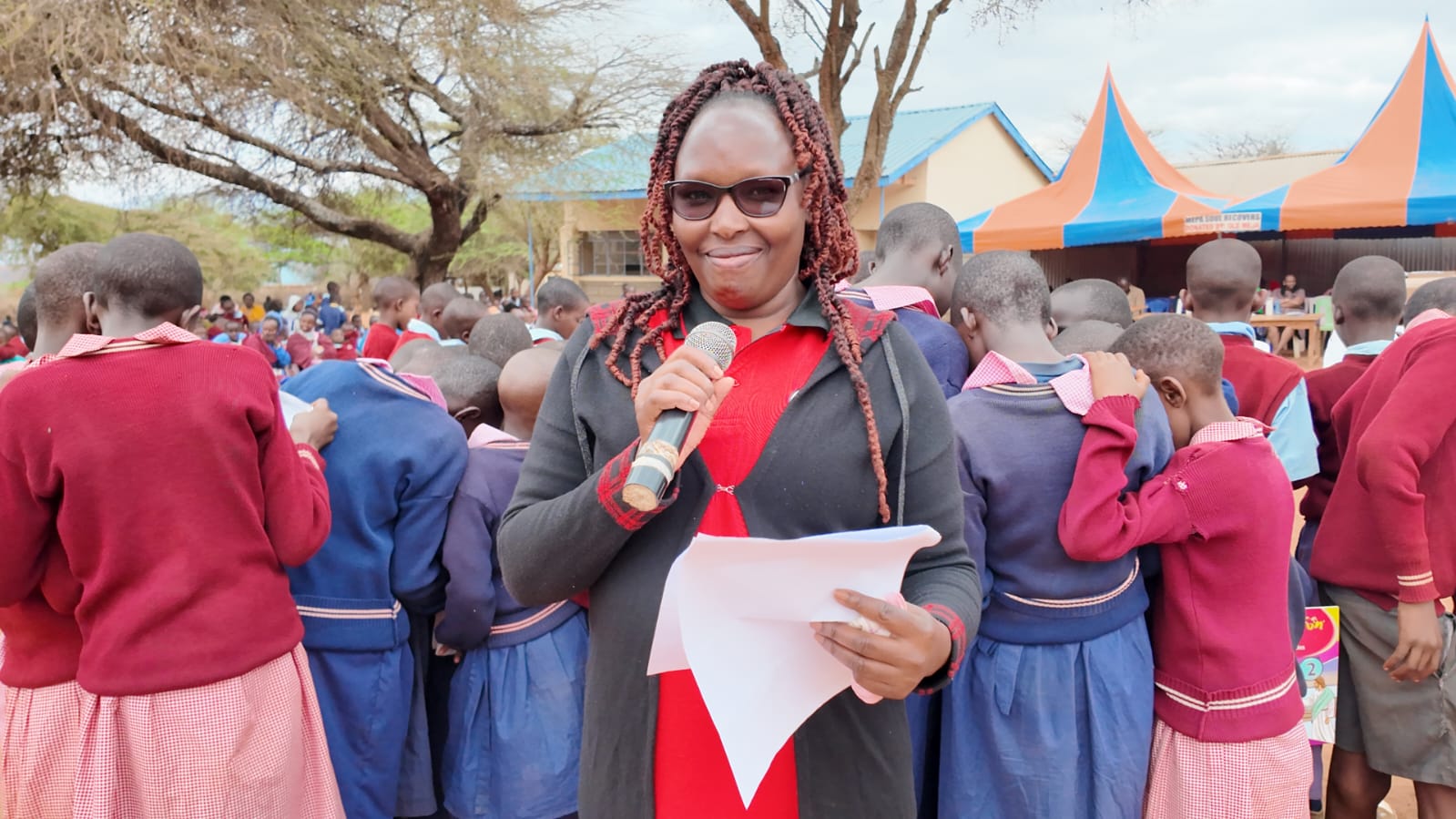
Kajiado County marked this year’s International Literacy Day with a vibrant community reading festival aimed at strengthening a culture of reading, learning and educational participation among children and families.
The celebrations, organised by Grassroot Nest for Innovation and Change (GRiC) Africa, brought together learners, parents, educators, community members, local leaders, publishers and education partners at the Kisapuk Primary and Junior School grounds in Matapato South, Kajiado County.
The initiative highlighted the shared responsibility of creating supportive learning environments in schools, homes and communities. It also promoted stronger collaboration between schools and the communities they serve through interactive learning and cultural activities.
Under the global theme “Literacy for people, the planet and prosperity,” the festival presented literacy as more than an academic discipline, positioning it as a fundamental pillar of children’s confidence, participation, lifelong learning and future opportunities.
The programme featured reading competitions, a spelling bee, debates and read-aloud sessions, while parents participated in a dedicated storytelling corner. The organisers said the activities were designed to create meaningful spaces where children and adults could exchange stories and foster a reading culture beyond the classroom.
A key component of the celebrations was the culmination of GRiC Africa’s International Literacy Day Book Drive, which mobilised storybooks and other literacy materials from partners, including the Kenya Literature Bureau.
The books will subsequently be distributed to participating schools, expanding children’s access to reading materials and ensuring that the festival’s impact extends beyond the celebrations.
The festival also highlighted the contribution of Africa’s rich cultural heritage to literacy development. Local stories, languages, traditions and creative expressions were incorporated into the celebrations to demonstrate how culture can serve as a powerful catalyst for reading, learning and educational achievement.
Speaking during the event, Mr Salat Mohamed , a representative from Ministry of Education, urged parents to take an active role in supporting their children’s learning, emphasising that literacy begins at home and that education is a shared responsibility among families, schools and the wider community.
“We commend GRiC for its commendable initiatives at Kisapuk Primary School and its broader community-based interventions, which are making a meaningful contribution towards improving literacy and strengthening educational opportunities for our children,” he said.
Kisapuk Primary and Junior School Head Teacher Mr Stanley Letuya thanked all stakeholders led by GRiC Africa for coming together to commemorate International Literacy Day. He said literacy goes beyond the ability to read and write, adding that the skills empower learners with knowledge, confidence and the capacity to participate meaningfully in society.
He called for continued collaboration among teachers, parents, community leaders and partners to ensure every child gets an opportunity to learn.
GRiC Africa maintains that literacy cannot be left to schools alone, arguing that families, communities, educators, development partners and children all have a critical role to play in creating environments where young people can read, listen, ask questions and confidently tell their own stories.
Through its Pammoja Twasoma Programme, GRiC Africa, in partnership with community-based organisations, currently supports 70 schools in Kajiado County and informal urban settlements in Nairobi through an accelerated learning initiative focused on improving foundational literacy and numeracy outcomes.
The organisation also works with schools in Northern Uganda and Tanzania’s Arusha and Manyara regions as part of its broader East African efforts to expand educational access and improve learning outcomes.
The Kajiado celebration reinforced a broader message: when communities deliberately create space for children to read, learn, share stories and engage with knowledge, literacy evolves from a basic educational skill into a powerful pathway towards confidence, opportunity and a more prosperous future.